How to Fill, Prime and Use a Continuous Mist Spray Bottle
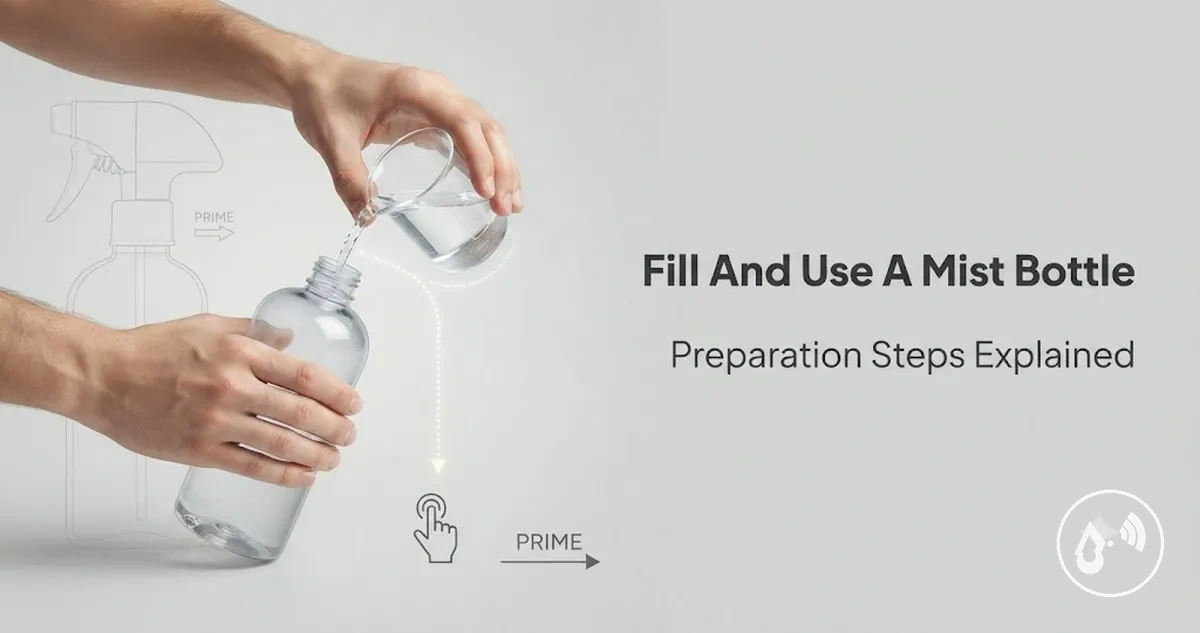
A continuous mist spray bottle starts with correct preparation, filling, priming, and operation conditions that allow the bottle, liquid, trigger, nozzle, and spray mechanism to work together. The setup process can vary depending on the bottle design and the type of liquid being used, so each component should be considered as part of the complete spraying process.
Filling a continuous mist spray bottle involves preparing the bottle body, adding a suitable liquid, securing the cap, and checking that the trigger and nozzle are ready for use. Priming connects the filled bottle with the spray mechanism by preparing the liquid movement needed for mist output.
Understanding the relationship between the liquid, container, trigger, nozzle, and spray mechanism creates a clear starting point before moving into the preparation and operation process.
Continuous Mist Spray Bottle First Use and Operating Basics
A continuous mist spray bottle is ready for first use when the bottle condition, liquid level, seal, trigger, and nozzle are prepared to support the spraying process. Filling, priming, and spraying connect because the liquid supply and spray mechanism need suitable conditions before the bottle can produce mist output. The trigger transfers user input to the spray mechanism, while the nozzle directs the resulting spray output.
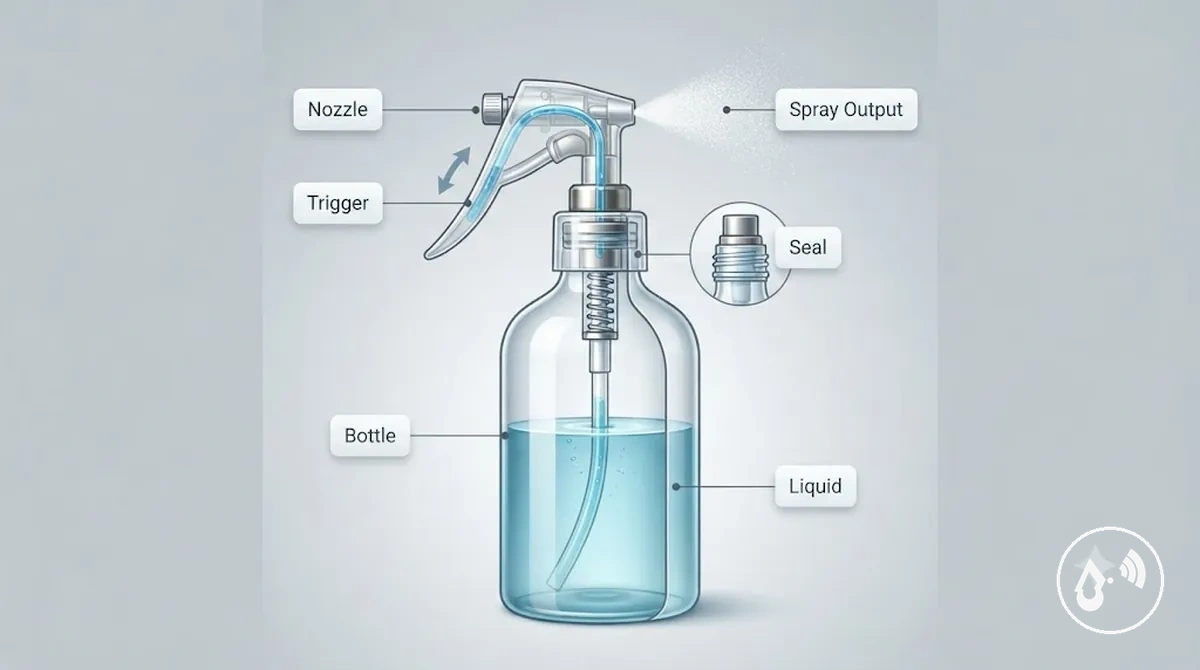
The first-use operation depends on the bottle design and the liquid being used. A secure seal supports the connection between the bottle and spray components, while the liquid level can influence how the trigger and nozzle perform during operation. The relationship between priming, pressure, and spray behaviour is explained further through how continuous mist pressure is created.
Before using a continuous mist spray bottle, check these basic operating conditions:
- Bottle condition: The bottle body and connected components should be prepared for operation.
- Liquid level: The liquid amount should suit the bottle design and intended use conditions.
- Seal: The cap and connected parts should be secured before spraying.
- Trigger and nozzle: The trigger mechanism and nozzle should be positioned for normal spray operation.
- Initial spray output: Spray behaviour may vary depending on bottle construction, liquid properties, and operating conditions.
Preparing a Continuous Mist Bottle Before Filling
Preparing a continuous mist spray bottle before filling starts with checking the bottle opening, cap connection, trigger condition, and visible components. These preparation checks help confirm that the bottle body and spray components are ready for adding liquid, while allowing for differences between bottle designs.
- Check the bottle opening: Inspect the bottle opening before adding liquid. The opening should be ready for filling according to the bottle design.
- Check the cap and seal connection: Confirm that the cap connection and sealing components are positioned correctly. The bottle body, cap, and seal should be prepared to support the connection between components.
- Check the trigger condition: Review the trigger and connected mechanism before filling. The trigger should be ready to interact with the spray system during later operation.
- Check visible components: Inspect the nozzle, bottle body, and other visible parts before adding liquid. These component checks help establish readiness before moving to the filling stage.
Filling a Continuous Mist Spray Bottle Correctly
Filling a continuous mist spray bottle starts with preparing the bottle opening, selecting a suitable liquid, adding the liquid under appropriate conditions, and securing the cap before operation. The filling process depends on the bottle design and liquid properties, so the refill method, fill level, and sealing approach may vary between bottles.
Before adding liquid, check whether the liquid suits the bottle and intended use conditions by checking liquid compatibility. This helps maintain a clear relationship between the liquid, bottle, cap, trigger mechanism, and spray operation.
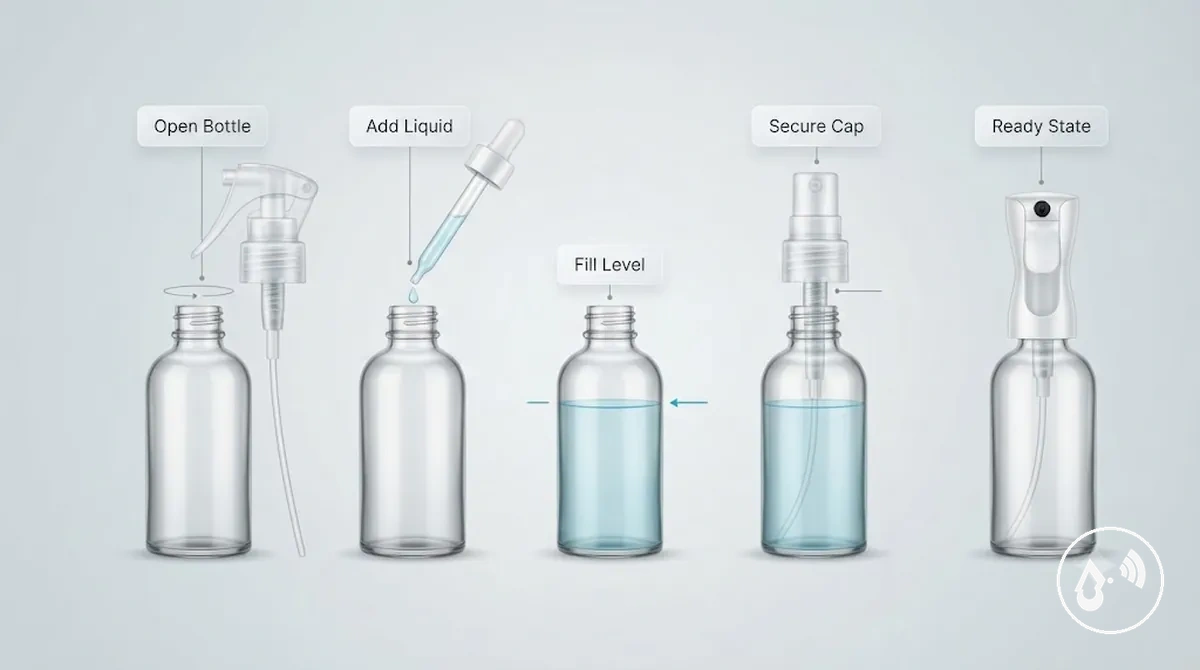
- Open the bottle: Prepare the bottle opening according to the bottle design before adding liquid.
- Add the liquid: Fill the bottle with a suitable liquid while considering the bottle capacity and intended operating conditions.
- Check the fill level: Review the liquid level before closing the bottle. The suitable amount can depend on the bottle design and available internal space.
- Secure the cap: Close the cap connection and check the seal before use. The cap and seal support the connection between the bottle, liquid, and spray mechanism.
- Confirm refill readiness: Check that the bottle opening, cap, and spray components remain prepared for later operation.
Choosing the Fill Level and Securing the Bottle
The fill level and cap security of a continuous mist spray bottle can influence the conditions needed before operation. The available space inside the bottle, liquid amount, and closure condition should be considered together because the bottle design can affect spray consistency.
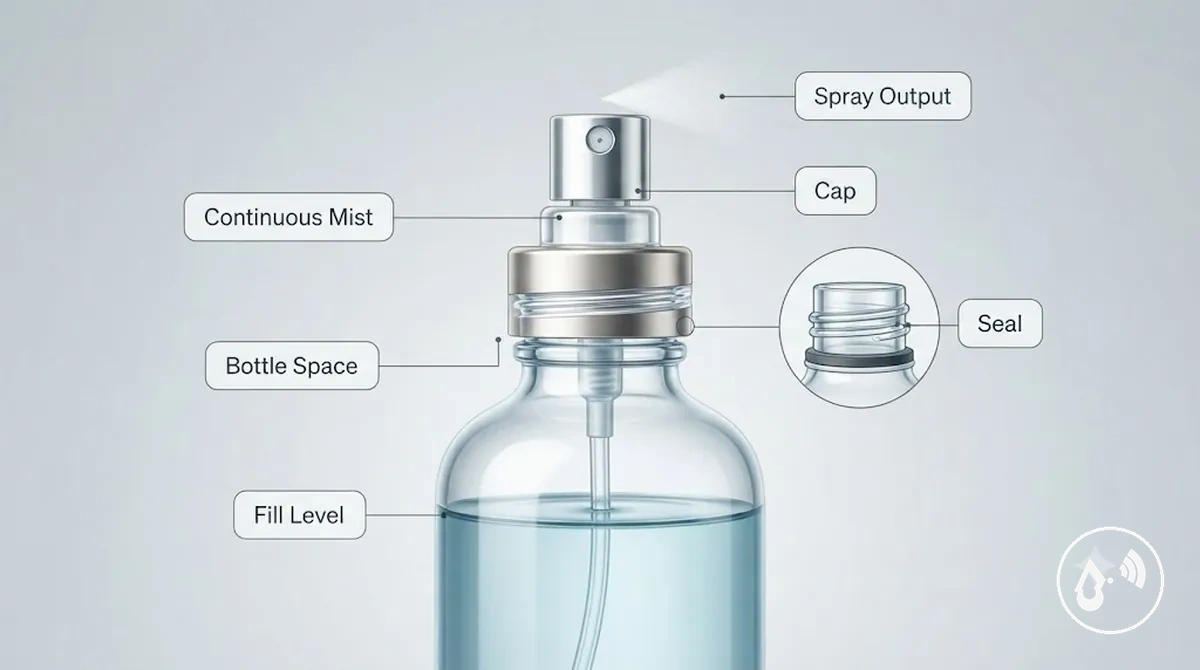
Check these filling conditions before using the bottle:
- Available space: Consider the remaining space inside the bottle after adding liquid. The suitable fill level depends on the bottle design and operating conditions.
- Liquid amount: Review the liquid level to ensure it matches the bottle capacity and filling requirements.
- Cap and seal: Confirm that the cap is secured and the seal connection is positioned correctly before operation.
- Spray consistency: Spray output can vary depending on the bottle design, liquid conditions, and closure state.
Priming the Continuous Spray Mechanism
Priming a continuous mist spray bottle helps establish the spraying conditions needed after filling. The priming process connects trigger action, liquid movement, pressure, nozzle output, and spray behaviour so the bottle can begin operating under suitable conditions.
The trigger, liquid path, and spray mechanism work together during priming, while the exact response can depend on the bottle design and liquid conditions. The relationship between priming and pressure creation is explained further through how continuous mist pressure is created.
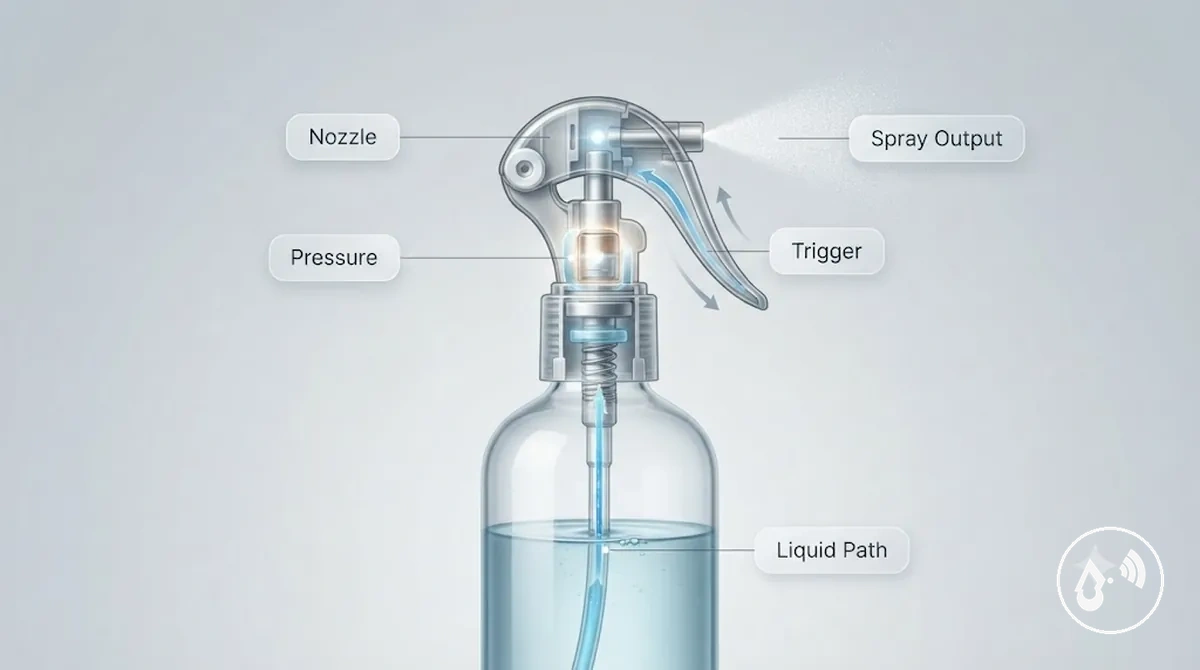
- Activate the trigger: Apply the trigger action to begin moving liquid through the spray mechanism after filling.
- Allow liquid movement: Continue the trigger action while the liquid path and internal components establish spraying conditions.
- Observe nozzle output: Check the nozzle output during initial spray attempts. Spray behaviour may vary depending on bottle design and liquid conditions.
- Confirm priming conditions: Review the trigger response, pressure behaviour, and spray output before continuing normal operation.
Using the Continuous Mist Sprayer After Priming
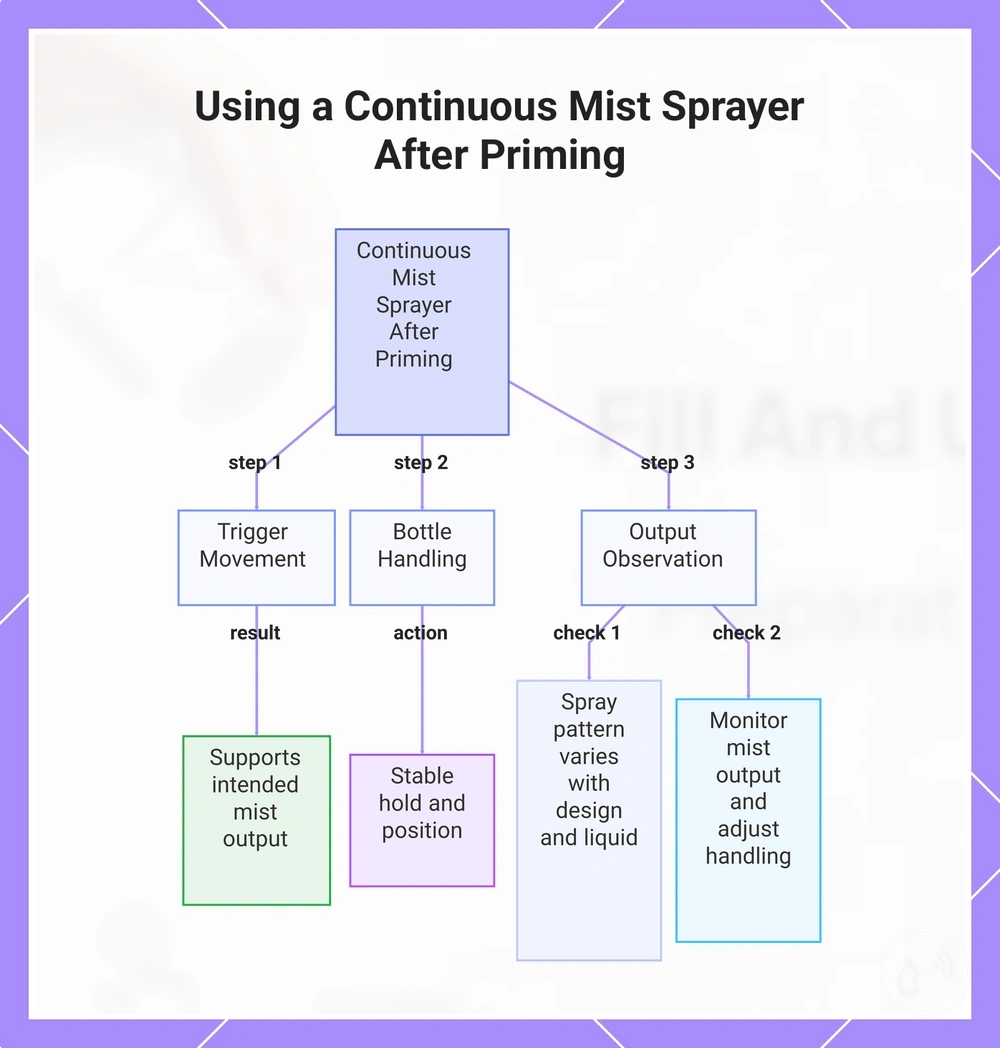
A continuous mist sprayer is operated after preparation by controlling trigger movement, handling the bottle correctly, and observing the mist output during use. The trigger action, spray pattern, and mist output can vary depending on the bottle design, liquid conditions, and operating context.
The sprayer and trigger work together during operation by converting trigger movement into spray output through the spray mechanism. For guidance on how operation connects with intended applications, see appropriate uses for continuous mist bottles.
Consider these operating conditions when using a continuous mist sprayer after priming:
- Trigger movement: Use controlled trigger movement to operate the sprayer and support the intended mist output.
- Handling: Hold and position the bottle in a stable way that supports consistent spraying conditions.
- Spray pattern: Observe the spray pattern because output behaviour can vary with bottle design and liquid conditions.
- Mist output: Monitor the mist output during use and adjust handling conditions when needed.
This chart shows the main operating steps and observations for using a continuous mist sprayer after priming, including trigger control, bottle handling, and output monitoring.
Common Continuous Mist Bottle Filling and Spraying Mistakes
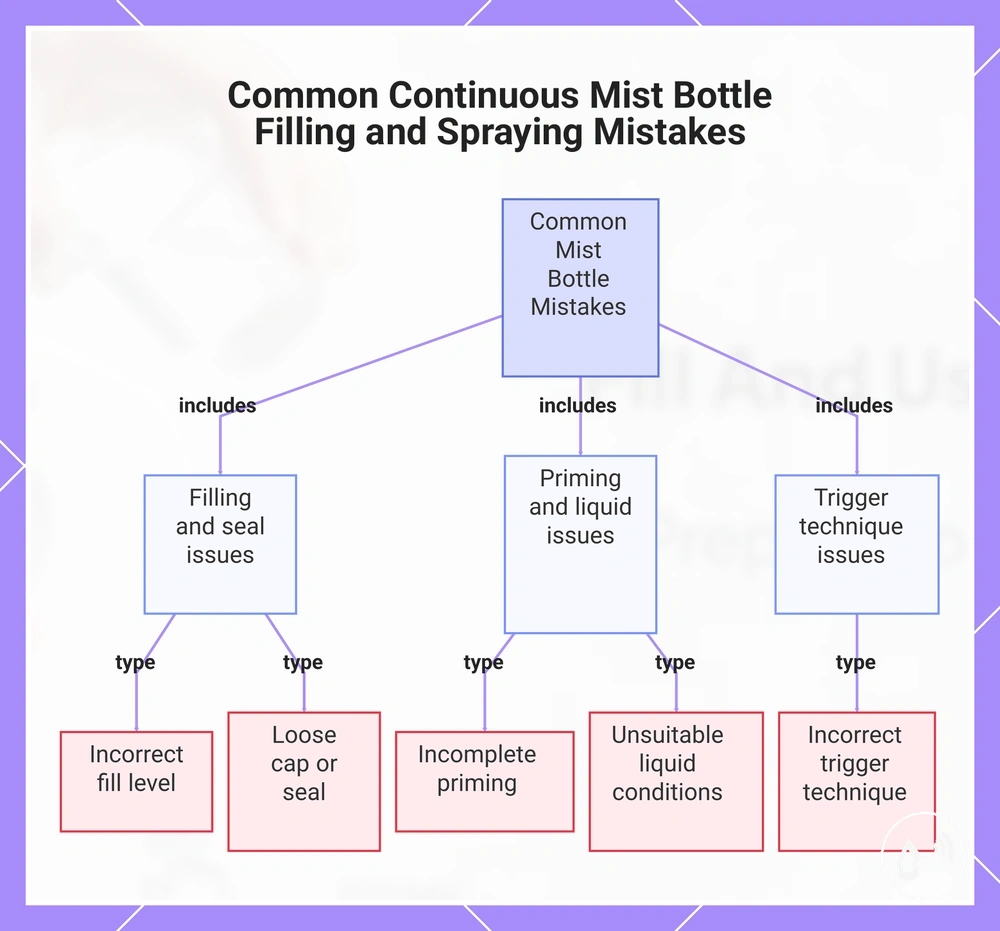
Common continuous mist spray bottle mistakes can occur when filling conditions, sealing, priming, or spraying techniques do not match the bottle design or liquid conditions. These mistakes are usually related to preparation or operation choices and should be separated from cases that may require deeper troubleshooting.
For cases where the bottle does not spray or the cause is unclear, see what to do when the bottle will not spray. The following checklist focuses on common filling and spraying conditions.
- Incorrect fill level: An unsuitable liquid amount may change the available space inside the bottle and can influence spray output depending on the bottle design.
- Loose cap or seal connection: A cap or seal that is not properly positioned may affect the connection between the bottle, liquid, and spray mechanism.
- Incomplete priming: The trigger and spray mechanism may need suitable priming conditions before liquid movement and mist output are established.
- Unsuitable liquid conditions: Liquid suitability can influence spray operation depending on the liquid properties and bottle design.
- Incorrect trigger technique: Trigger movement and handling technique may influence spray pattern and output behaviour during use.
This chart shows the most common mistakes related to filling, sealing, priming, liquid conditions, and trigger technique, while unclear cases require deeper troubleshooting.
Continuous Mist Spray Bottle Use Questions
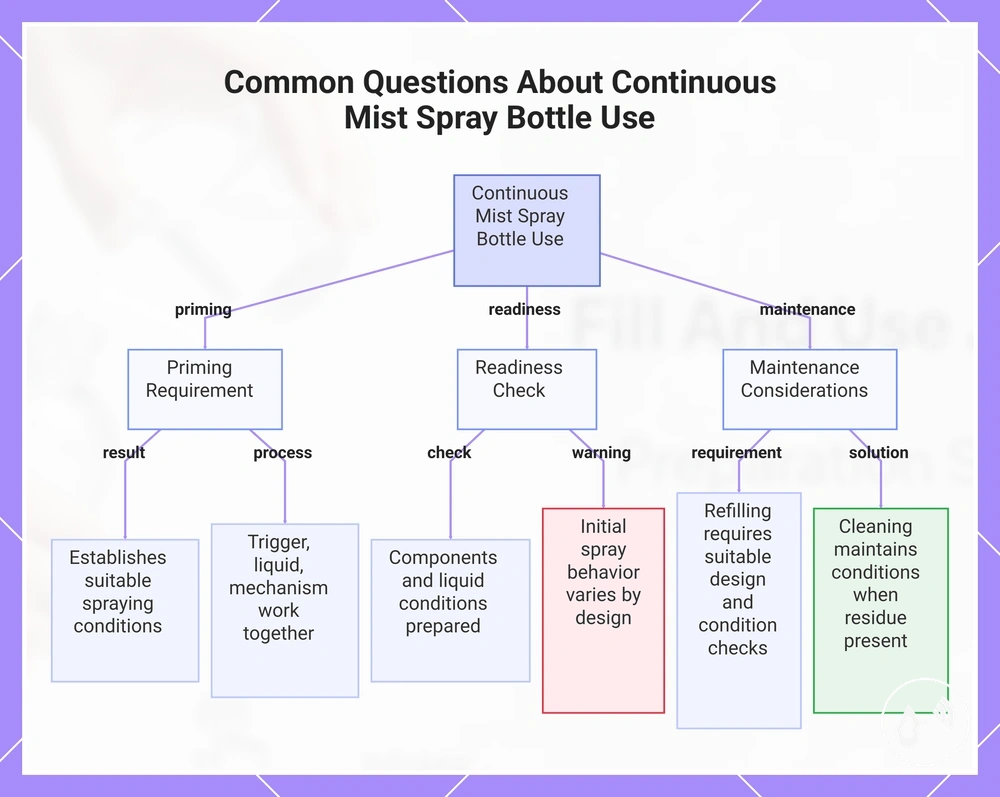
These common questions address remaining concerns about filling, priming, and operating a continuous mist spray bottle. Each answer focuses on a specific first-use or operation question while considering that bottle design and liquid conditions can affect results.
Why does a continuous mist spray bottle need priming before spraying?
A continuous mist spray bottle may need priming to establish suitable spraying conditions after filling. The trigger, liquid movement, and spray mechanism work together during this stage, and the response can vary depending on the bottle design.
How do you know when a continuous mist spray bottle is ready to use?
A continuous mist spray bottle is ready for operation when the bottle components, liquid conditions, trigger, and nozzle are prepared for use. Initial spray behaviour can vary depending on the bottle design and operating conditions.
Can a continuous mist spray bottle be opened and refilled?
A continuous mist spray bottle can be refilled when the bottle design allows access to the opening and the components remain suitable for continued use. The cap connection, liquid conditions, and bottle condition should be considered before refilling.
How does cleaning relate to continued bottle operation?
Cleaning after use can help maintain suitable bottle conditions when residue or remaining liquid affects operation. For more information about continued care, see cleaning after use.
This chart shows the main topics covered in the FAQ about using a continuous mist spray bottle, including priming, readiness checks, refilling, and cleaning.