
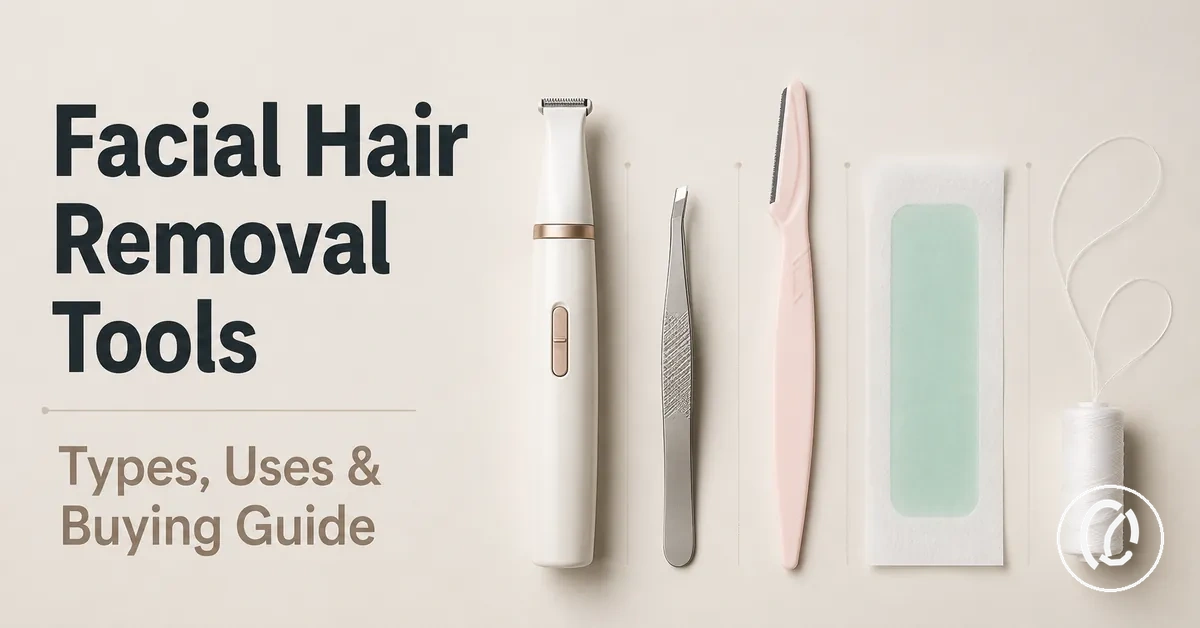
Facial Hair Removal Tools for At-Home Comparison and Buying Decisions
Facial hair removal tools are at-home grooming products designed to remove visible facial hair through temporary methods using manual or electric tools rather than permanent hair reduction. This decision category includes facial razors, dermaplaning tools, electric trimmers, epilators, waxing products, threading tools, and depilatory creams, each using a different hair-removal mechanism and offering different trade-offs for comfort, precision, maintenance, and cost.
People comparing facial hair removal tools typically want an option that matches their skin sensitivity, hair type, facial area, and maintenance routine.
People comparing facial hair removal tools typically want an option that matches their skin sensitivity, hair type, facial area, and maintenance routine. Electric and manual tools are commonly chosen for areas such as the upper lip, chin, and fine peach fuzz because they provide controlled, at-home use, while creams, wax, and epilators remove hair through different mechanisms and therefore differ in comfort, irritation risk, upkeep, and regrowth experience. The American Academy of Dermatology notes that shaving, tweezing, waxing, depilatories, threading, laser hair removal, and electrolysis are distinct hair-removal methods with different benefits, limitations, and suitability depending on the individual and the treatment area.
Facial hair removal tools are intended for comparing temporary at-home removal options before choosing the most appropriate tool type.
Facial hair removal tools are intended for comparing temporary at-home removal options before choosing the most appropriate tool type. Manual and electric facial hair removers should be evaluated separately from waxing, threading, laser hair removal, and intense pulsed light (IPL) because these approaches use different technologies and produce different durations of hair reduction. For example, a precision electric trimmer may suit routine maintenance of the upper lip or chin, while a manual dermaplaning tool may be preferred for removing fine peach fuzz across broader facial areas when used according to the manufacturer's instructions and individual skin tolerance.
The following sections compare the main facial hair removal tool types, explain how each works, identify the situations where each option is most appropriate, and outline the practical buying factors that influence comfort, value, upkeep, and long-term satisfaction.
Table of Contents
What Facial Hair Removal Tools Include
Facial hair removal tools are at-home tools and kits designed for the temporary removal of facial hair. This tool category includes handheld devices, manual implements, cream kits, wax kits, and other at-home devices that remove hair by cutting, pulling, or chemically dissolving it rather than providing permanent hair reduction. What facial hair removal tools include is limited to products intended for personal at-home facial grooming and excludes salon laser treatments and medical procedures.
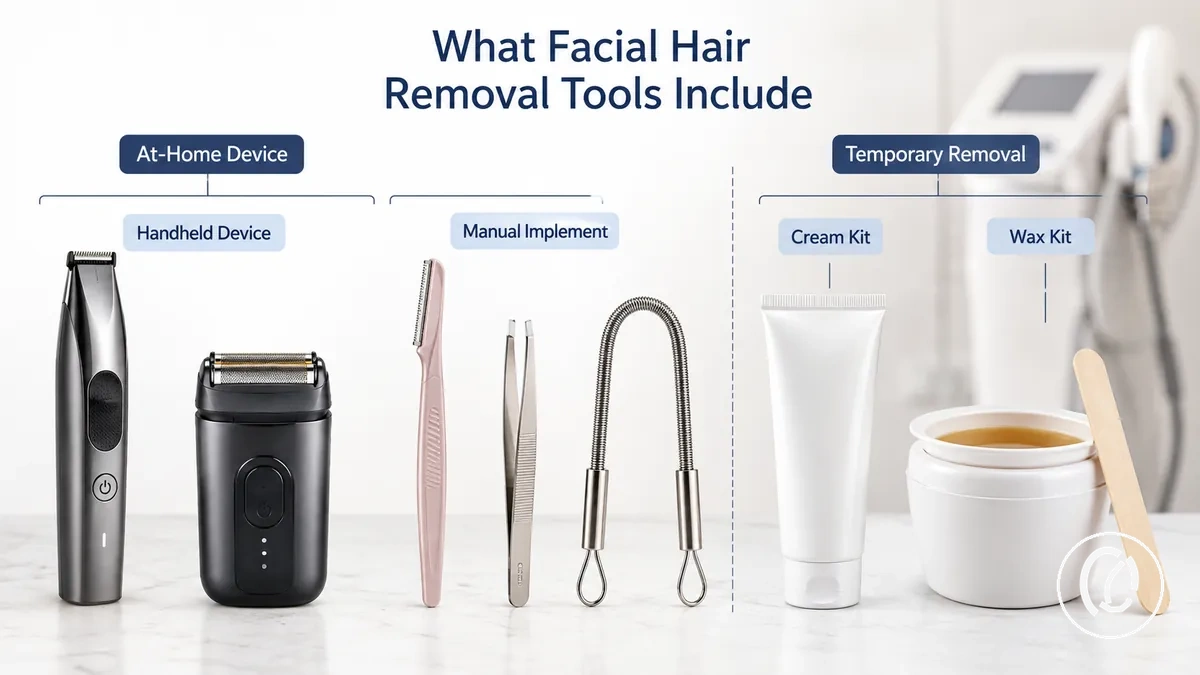
Facial hair removal tools include handheld devices such as electric facial trimmers and compact electric shavers, manual implements such as facial razors, dermaplaning tools, tweezers, threading tools, and spring removers, cream kits that use chemical depilatory ingredients to dissolve the visible hair shaft, wax kits that remove hair from the root, and at-home devices intended for routine facial grooming. According to the American Academy of Dermatology, shaving, tweezing, waxing, threading, depilatory creams, and epilation are recognised temporary hair-removal methods that differ by removal mechanism rather than purpose, supporting this grouping of tool forms. The image above illustrates the main included categories rather than a complete product catalogue.
The image above illustrates the main included categories rather than a complete product catalogue.
Laser hair removal, intense pulsed light (IPL) devices, and salon-based treatments are related hair-removal options but are not the central category defined by facial hair removal tools in this guide because they use light-based or professional treatment methods instead of the handheld devices, manual implements, cream kits, and wax kits used for routine temporary facial hair management at home.
Main Facial Hair Removal Tool Types
Main facial hair removal tool types are classified by their removal mechanism and contact method rather than by product design. The six primary categories are electric tools, manual tools, depilatory cream removers, wax kits, epilators, and longer-term light-based devices. According to the American Academy of Dermatology, these methods differ in how hair is removed, how long results typically last, and the conditions under which each method is most suitable, making mechanism the most useful comparison point before evaluating individual products.
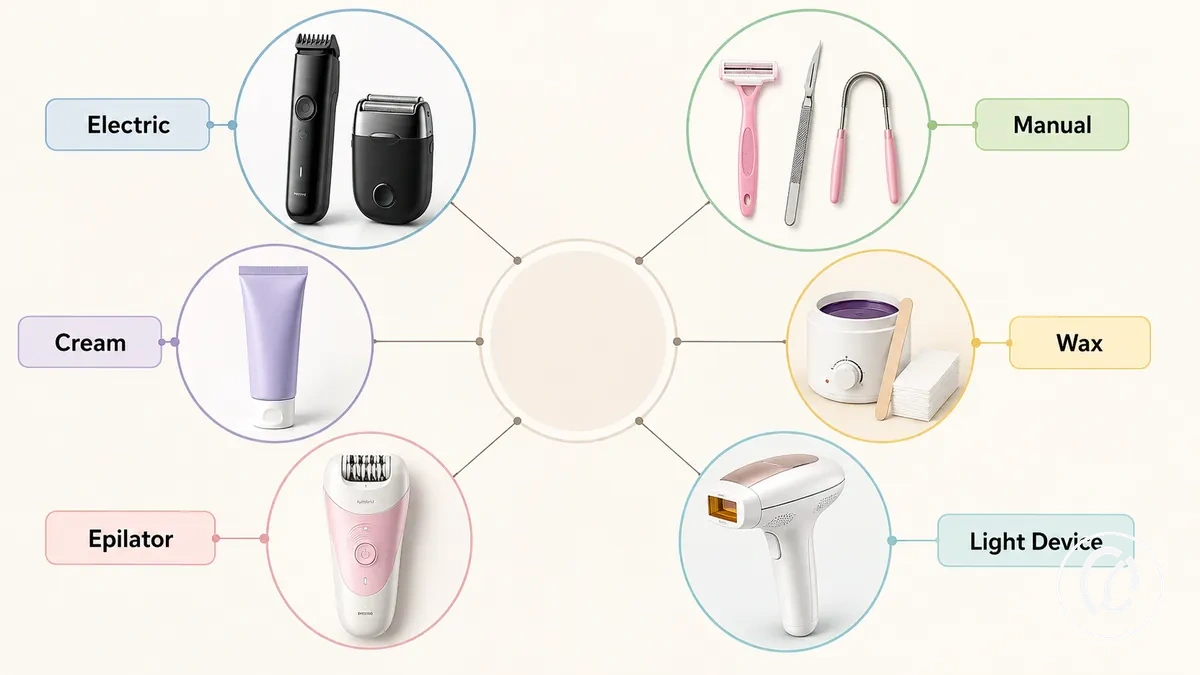
| Tool type | How it works | Common use condition | Main trade-off |
|---|---|---|---|
| Electric tools | Battery-powered trimmer or shaver cuts hair at the skin surface. | Routine maintenance of the upper lip, chin, sideburns, and peach fuzz where speed and precision are important. | Comfort is generally higher because hair is cut rather than removed from the root, but visible regrowth usually appears sooner. |
| Manual tools | Facial razor, dermaplaning tool, or spring tool removes surface hair manually. | Suitable for shaping eyebrows, removing peach fuzz, or precise facial detailing. | Requires careful technique and regular maintenance because removal is temporary. |
| Creams | Chemical depilatory ingredients dissolve the exposed hair shaft. | Suitable only after a successful patch test on sensitive facial skin. | Possible skin irritation means manufacturers commonly recommend patch testing before full application. |
| Wax kits | Wax grips hair and removes it from the root. | Suitable when longer intervals between hair removal sessions are preferred. | Root removal can increase temporary discomfort and skin redness. |
| Epilators | Mechanical tweezers pull multiple hairs from the root. | Suitable for compatible facial attachments and repeated root removal. | Often less comfortable than shaving or trimming but generally provides longer-lasting temporary results. |
| Longer-term devices | IPL and other home light-based devices repeatedly target hair follicles to reduce future growth. | Suitable only for skin tone and hair colour combinations specified by the device manufacturer. | Hair reduction develops gradually after repeated treatment cycles rather than after a single session. |
For example, a person removing upper-lip hair twice each week may prefer an electric trimmer because each session takes only a few minutes, while someone prepared for greater temporary discomfort may choose waxing every three to four weeks to reduce grooming frequency. The American Academy of Dermatology distinguishes shaving, waxing, depilatory creams, epilation, and light-based treatments as separate hair-removal methods because each uses a different mechanism with different maintenance intervals and suitability.
If you want a detailed breakdown of every category, continue to the guide on types of facial hair removal tools .
Each category represents a different removal method rather than a ranking of product quality, so the most suitable use depends on skin sensitivity, facial area, hair characteristics, and maintenance preference. If you want a detailed breakdown of every category, continue to the guide on types of facial hair removal tools.
Electric Trimmers and Mini Shavers
Electric trimmers and mini shavers are powered facial hair remover devices that remove surface hair by cutting it at or just above the skin instead of removing it from the root. Electric trimmers use a narrow cutting head with reciprocating blades for controlled trimming, while mini shavers use a foil or rotary shaving head for closer skin contact. According to the American Academy of Dermatology, shaving cuts hair at the skin surface, so regrowth appears sooner than with root-removal methods such as waxing or epilation.
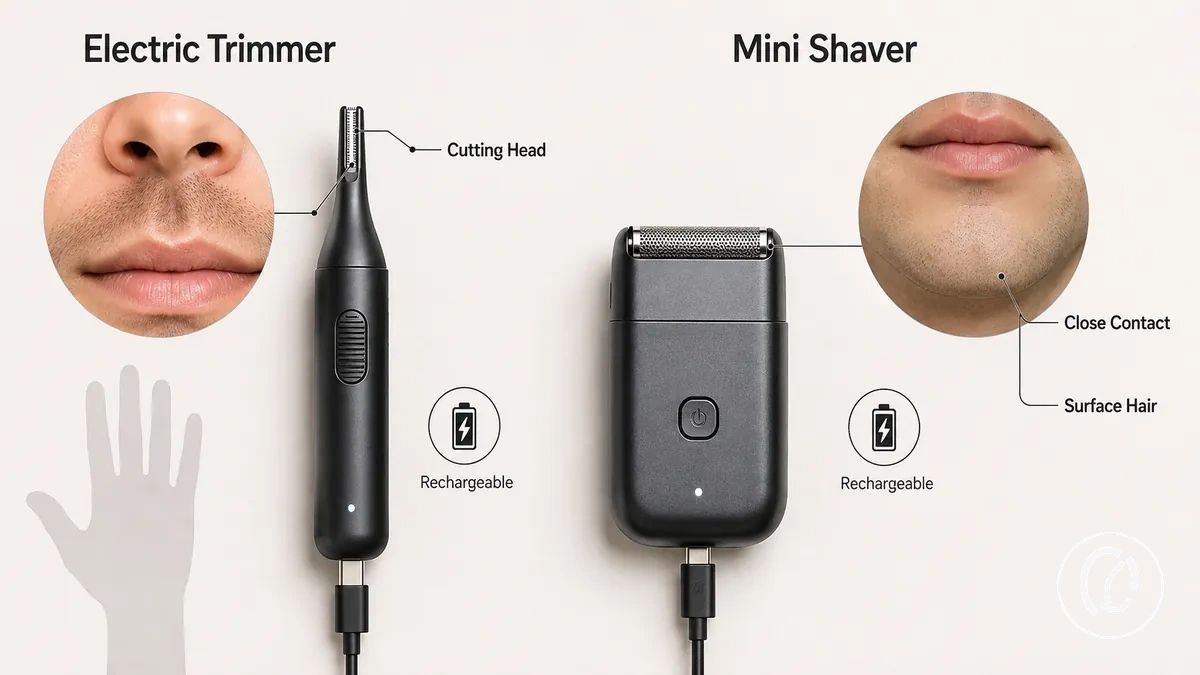
- Cutting head: Electric trimmers use slim precision cutting heads for shaping the upper lip, chin, and other small facial areas, while mini shavers use foil or rotary heads designed for closer contact with flat skin surfaces.
- Power source: Most facial models operate with a rechargeable lithium-ion battery or replaceable AA or AAA batteries, allowing cordless and portable use according to manufacturer specifications.
- Precision: Compact device bodies and narrow cutting heads improve control around facial contours where accurate trimming is required.
- Finish: A mini shaver generally produces a closer surface finish than an electric trimmer, but both leave the hair follicle intact, so they do not provide root removal.
- Upkeep: Manufacturers commonly recommend cleaning the cutting head after each use and replacing worn blades or foils at the maintenance interval specified for the individual model to maintain cutting performance.
For example, an electric trimmer can shape a narrow upper-lip outline with its precision cutting head, while a mini shaver can smooth the same area immediately afterwards for a closer surface finish. Because both devices cut rather than extract hair, routine maintenance is typically needed more frequently than with waxing or epilation, as explained by the American Academy of Dermatology.
Manual Razors, Dermaplaners, and Spring Tools
Manual razors, dermaplaners, and spring tools are manual facial hair removers that differ by their hair-removal mechanism. Manual razors and dermaplaners use a blade edge to cut surface hair, including peach fuzz, at skin level, while spring tools use a coiled spring mechanism to grip and pull hair from the root. According to the American Academy of Dermatology, shaving removes hair at the skin surface, whereas plucking-based methods remove hair from the follicle, creating different regrowth expectations and skin sensations. :contentReference[oaicite:0]{index=0}

Manual razors and dermaplaners generally provide greater precision for the upper lip, chin, and fine peach fuzz because the exposed blade edge allows controlled skin contact with light pressure. Spring tools use repeated pulling action instead of cutting, so they may leave the skin hair-free for longer than surface-cutting tools but can create a stronger pulling sensation and a higher irritation risk on sensitive areas. The evidence reviewed for this section consistently distinguishes edge-based manual tools from spring removers by their cutting-versus-pulling mechanism rather than by product category. :contentReference[oaicite:1]{index=1}
Technique-sensitive differences:
- Pressure control: Manual razors and dermaplaners are designed for light, controlled pressure because excessive force increases irritation risk.
- Skin contact: Consistent blade-edge contact supports more precise removal of surface hair and peach fuzz on small facial areas.
- Tool cleanliness: Clean blade edges and spring mechanisms help maintain cutting or gripping performance and reduce residue build-up.
- Area suitability: Blade-edge tools are commonly used across broader facial areas with fine hair, while spring tools are generally better suited to smaller areas such as the upper lip or chin where root removal is preferred.
Creams, Wax Kits, Epilators, and Longer-Term Devices
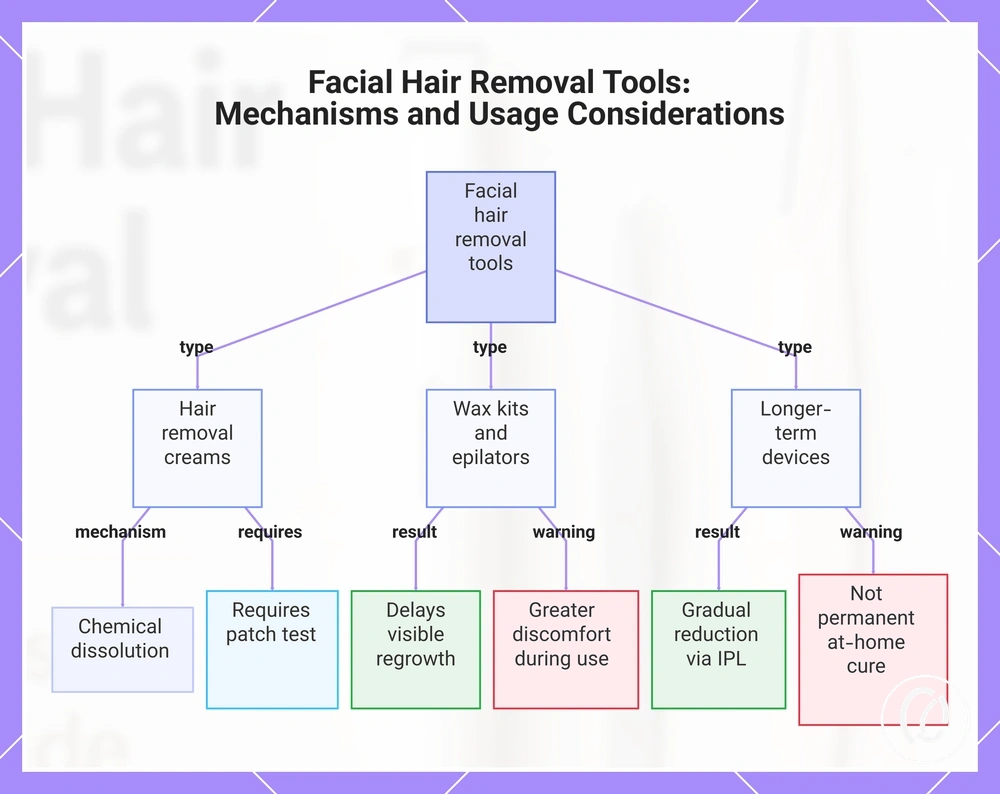
Hair removal creams, wax kits, epilators, and longer-term devices belong to the facial hair removal tool category because they remove hair through different mechanisms rather than surface trimming. Hair removal cream uses chemical removal to dissolve the exposed hair shaft, while a wax kit and an epilator perform root removal by extracting hair from the follicle. According to the American Academy of Dermatology, depilatory creams, waxing, epilation, and light-based devices are distinct hair-removal methods with different timing, suitability, and expected maintenance needs. :contentReference[oaicite:0]{index=0}
Hair removal cream requires a patch test because skin reaction depends on the product formulation and individual skin sensitivity. Wax kits and epilators generally delay visible regrowth for longer than surface-cutting tools because the hair is removed from the root, although the pulling mechanism usually creates greater discomfort during use. Longer-term devices, including IPL devices, reduce hair growth gradually through repeated treatment sessions, whereas professional laser treatment is a separate clinical procedure rather than an at-home device. Claims about longer-term reduction should therefore be interpreted only within the suitability limits defined by the device instructions, compatible skin tone, and hair color, and not as a permanent at-home cure. :contentReference[oaicite:1]{index=1}
This chart shows the main types of facial hair removal tools, their removal mechanisms, and important usage considerations including patch tests, discomfort, and device limitations.
How Facial Hair Removal Tools Differ From Other Removal Options
Facial hair removal tools differ from other removal options mainly by mechanism, user control, outcome duration, skin response, and professional involvement. At-home tools and creams provide direct personal control and temporary removal, waxing and threading remove hair from the root, and laser or IPL aim for longer-term reduction under specific suitability conditions. These five attributes form the practical comparison basis rather than a universal ranking of methods. :contentReference[oaicite:0]{index=0}
| Option | Mechanism | Typical control level | Outcome range | Suitability caution |
|---|---|---|---|---|
| At-home tools | Trimmers, shavers, manual razors, and dermaplaners cut hair at or near the skin surface. | The user controls the facial area, timing, angle, and contact pressure. | Temporary surface removal; the follicle remains intact and visible regrowth requires repeat grooming. | Unsuitable pressure, technique, or tool condition can increase cuts and irritation. |
| Creams | Depilatory creams chemically weaken and dissolve the exposed hair shaft. | The user controls the application area and follows the product-specific contact time. | Temporary chemical removal without extracting the hair from its root. | The American Academy of Dermatology recommends testing the cream on a small area and checking for a skin reaction after 24 hours before wider use. |
| Waxing | Wax grips multiple hairs and pulls them from the root. | Control may be at-home with a wax kit or practitioner-led through a service. | Temporary root removal with a longer interval before visible regrowth than surface cutting. | Heat, adhesion, pulling force, skin condition, and recent use of certain topical medicines can affect irritation and skin injury risk. |
| Threading | Twisted thread traps and extracts individual hairs from the root. | Usually practitioner-controlled, with precise targeting of the eyebrows, upper lip, or another small area. | Temporary root removal that supports detailed shaping but does not prevent future growth. | Suitability depends on practitioner technique, treatment area, and the skin response to repeated pulling. |
| Laser | Laser energy targets pigment associated with the hair follicle to reduce future growth. | Professional removal uses practitioner-selected settings and supervised treatment. | Longer-term reduction generally requires a treatment course, and complete removal is not assured for every person. | The American Academy of Dermatology identifies burns, scarring, and lasting skin-colour changes as possible risks, particularly when treatment is performed by an inexperienced operator. |
| IPL | Intense pulsed light delivers broad-spectrum light to reduce future hair growth. | Control is device-guided at home or practitioner-led, depending on the system. | Gradual longer-term reduction after repeated sessions rather than immediate removal from one use. | Suitability is limited by the device instructions, treatment area, skin tone, hair colour, and required skin contact. |
| Professional services | Services may include practitioner-performed waxing, threading, laser, electrolysis, or another supervised method. | The practitioner controls technique, settings, treatment timing, and method-specific supervision. | Outcomes range from temporary removal to longer-term reduction according to the chosen method. | Training, treatment type, skin and hair characteristics, appointment access, cost, and individual risk determine suitability. |
A person seeking immediate at-home control may use a trimmer, razor, shaver, or cream without arranging professional removal, but the outcome remains temporary because these methods cut or dissolve the visible hair rather than producing sustained follicle reduction. Waxing and threading exchange some convenience and comfort for root removal and greater precision, while laser and IPL require suitability checks related to skin tone, hair colour, treatment area, device instructions, and operator competence. The U.S. Food and Drug Administration states that aesthetic procedures can involve temporary effects and adverse-event risks, while the American Academy of Dermatology advises using appropriately trained professionals for laser treatment because technique and settings affect both results and complications.
Longer-term routes may reduce future growth, but professional involvement, laser, or IPL does not establish a guaranteed result or universal suitability.
Facial hair removal tools are therefore not lesser versions of professional treatments; they serve a different need centred on convenience, personal control, and temporary grooming. Longer-term routes may reduce future growth, but professional involvement, laser, or IPL does not establish a guaranteed result or universal suitability.
Where Facial Hair Removal Tools Are Used
Facial hair removal tools are used across different facial areas according to tool shape, hair texture, skin sensitivity, and the amount of tool contact required for effective grooming. Precision tools are generally matched to small areas such as the upper lip and chin, while wider cutting tools are better suited to broader facial zones such as the cheeks and areas with peach fuzz. Area compatibility therefore depends on matching the tool's removal mechanism and contact surface to the facial area rather than assuming one tool is appropriate for every face. :contentReference[oaicite:0]{index=0}
| Facial area | Common hair concern | Tool-fit cue | Caution |
|---|---|---|---|
| Upper lip | Fine or noticeable hair across a narrow curved area. | Compact electric trimmers, mini shavers, precision facial razors, or spring tools provide controlled contact on a small area where accuracy is important. | Sensitive skin and repeated blade or spring contact can increase temporary irritation risk if the tool is unsuitable or used with excessive pressure. |
| Chin | Coarser isolated hairs or mixed hair texture. | Tweezers and spring tools suit individual root removal, while electric trimmers or mini shavers support faster surface maintenance across clustered hairs. | Root-removal methods may create greater temporary discomfort, while shaving tools require clean blades and controlled contact. |
| Cheeks | Fine surface hair and light peach fuzz. | Facial razors and dermaplaning tools cover wider facial areas efficiently because the blade contacts a broader surface. | Active irritation, damaged skin, or excessive pressure can reduce comfort during broad-area use. |
| Peach fuzz | Soft vellus hair affecting skin texture or makeup application. | Dermaplaning tools, facial razors, and compact electric shavers remove surface hair without extracting the follicle. | Surface cutting removes visible hair only and does not permanently change future hair growth. |
| Portable touch-up | Visible regrowth during travel or away from home. | Compact battery-powered or rechargeable facial hair removers fit travel bags and support quick maintenance of small facial areas. | Portable devices should remain clean, protected during transport, and used only on facial areas approved by the manufacturer. |
For example, someone maintaining peach fuzz across both cheeks may prefer a dermaplaning tool because one pass covers a wider surface than precision tweezers, while a person removing a few chin hairs may benefit from a smaller precision tool designed for isolated growth. The appropriate choice still depends on hair texture, skin sensitivity, tool contact, and the intended facial area rather than a universal compatibility rule. More detailed area-specific guidance is available in tools for upper lip and chin hair. :contentReference[oaicite:1]{index=1}
Upper Lip, Chin, and Small-Area Use
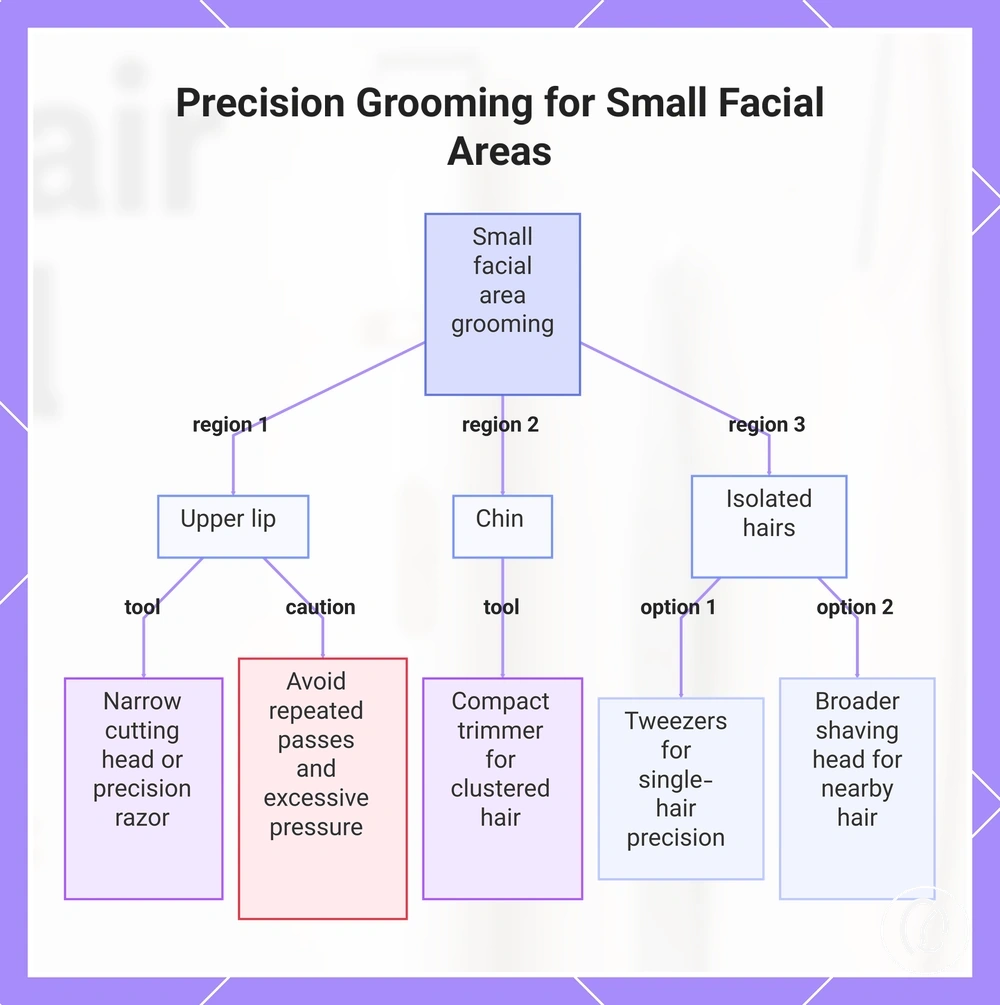
The upper lip, chin, and other small facial areas require a narrow contact surface and stable tool control because curved contours and isolated hairs leave less room for imprecise movement. Compact trimmers, mini shavers, precision razors, tweezers, and spring tools can match this small-area need when their head shape and removal mechanism suit the local hair pattern and the user’s skin tolerance. Precision is the main compatibility condition because broader contact can expose more surrounding skin to pressure, friction, or pulling. :contentReference[oaicite:0]{index=0}
- Upper lip: A narrow cutting head or precision razor supports controlled surface removal along the curved lip boundary, while repeated passes or excessive pressure can increase irritation and produce an uneven finish.
- Chin: A compact trimmer or mini shaver suits clustered surface hair, whereas tweezers or a spring tool target isolated hairs through root removal; the preferred contact method depends on hair thickness and pulling tolerance.
- Isolated hairs: Tweezers provide single-hair precision with minimal surrounding contact, while a broader shaving head removes the target hair together with nearby surface hair.
For example, a narrow trimmer head can follow the upper-lip contour with more tool control than a broad shaving surface, while tweezers can remove one isolated chin hair without contacting the surrounding area. The resulting finish and irritation risk remain conditional on the contact surface, applied pressure, hair texture, tool condition, and individual skin response. :contentReference[oaicite:1]{index=1}
The resulting finish and irritation risk remain conditional on the contact surface, applied pressure, hair texture, tool condition, and individual skin response.
This chart shows the recommended tools and techniques for grooming the upper lip, chin, and isolated hairs on small facial areas, based on precision requirements and area-specific conditions.
Peach Fuzz and Fine Facial Hair Use
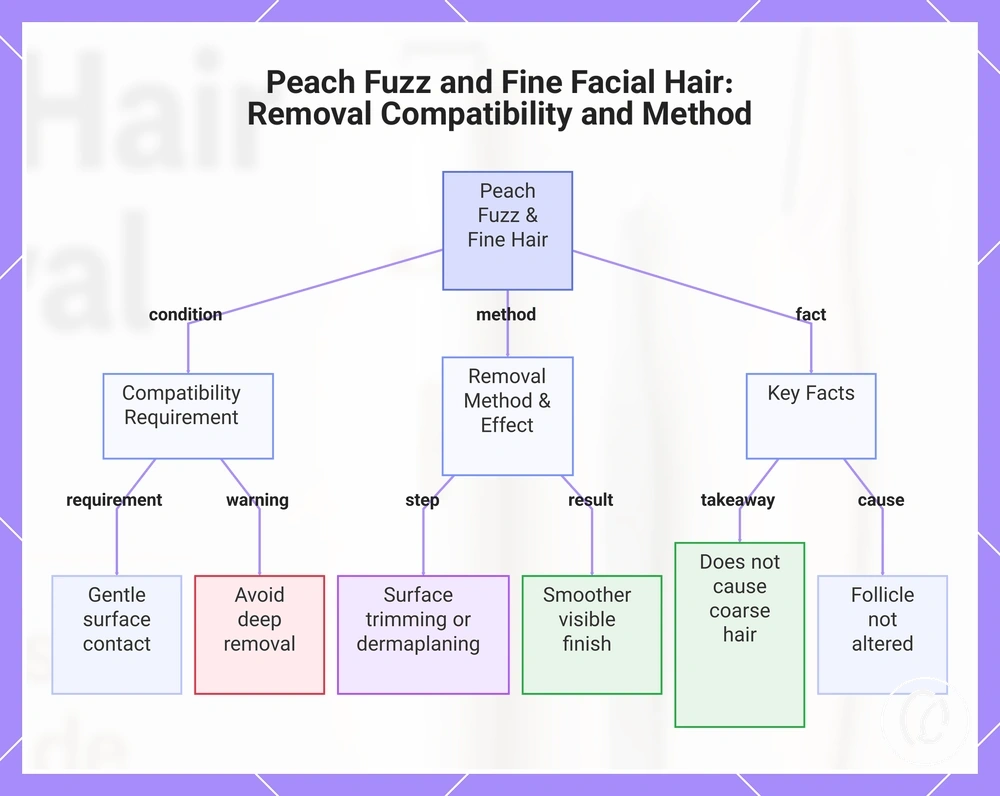
Peach fuzz is fine, soft vellus hair, and its main compatibility requirement is gentle surface contact rather than deep or forceful removal. Surface trimming and dermaplaning remove fine facial hair at skin level, so the visible finish can appear smoother when the cutting surface matches the facial area and tool contact remains controlled. Skin comfort is therefore conditional on pressure, blade or head condition, and individual sensitivity. :contentReference[oaicite:0]{index=0}
Skin comfort is therefore conditional on pressure, blade or head condition, and individual sensitivity.
Removing peach fuzz by surface trimming or dermaplaning does not convert fine hair into coarse hair because these methods do not alter the follicle that produces the strand. Fine facial hair may suit gentle removal focused on surface finish, while coarse or hormonal chin hair can require a different mechanism and tolerance for repeated contact or pulling. :contentReference[oaicite:1]{index=1}
This chart outlines the compatibility requirements, removal method, and key facts about removing peach fuzz and fine facial hair.
This chart outlines the compatibility requirements, removal method, and key facts about removing peach fuzz and fine facial hair.
Portable and Travel-Friendly Use
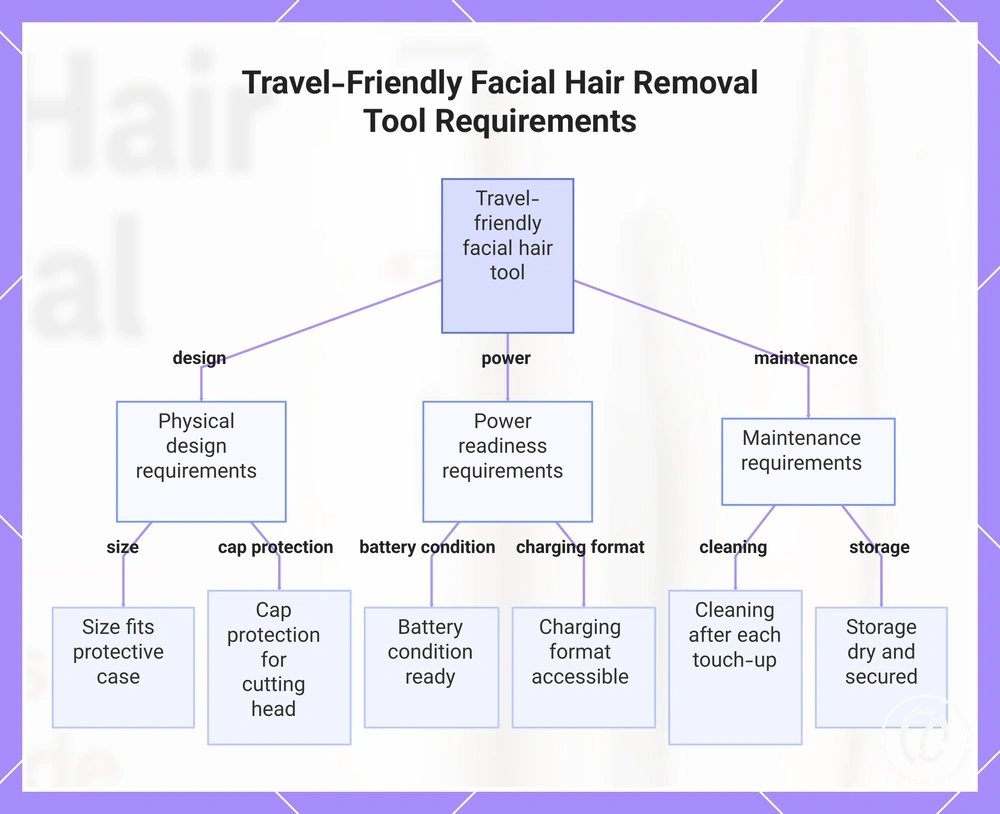
Travel use favours a portable, compact facial hair removal tool that supports a quick touch-up without creating difficult charging, cleaning, or storage requirements. A travel-friendly tool should have a protected cutting head, a power source that matches the trip, and a design that can be cleaned and stored without exposing the working surface to bag contents. Portability therefore depends on size, battery condition, charging format, cap protection, and cleaning access rather than compactness alone. :contentReference[oaicite:0]{index=0}
Portability therefore depends on size, battery condition, charging format, cap protection, and cleaning access rather than compactness alone.
For an upper-lip or chin touch-up away from home, a compact rechargeable or replaceable-battery tool can be practical when the battery is ready, the cutting head has cap protection, and the device can be cleaned after use. The convenience remains conditional on user behaviour: an uncovered, unclean, or uncharged tool is less suitable for on-the-go use even when its body is small. :contentReference[oaicite:1]{index=1}
Travel-friendly criteria:
- Size: The tool should fit inside its protective cap or case and remain compact enough for the intended storage space.
- Power: The battery type or charging format should match the trip length and available power access.
- Cap protection: A fitted cap or case should cover the cutting head during transport to reduce contact with loose items and debris.
- Cleaning: The head should be accessible for cleaning after each touch-up according to the manufacturer’s instructions.
- Storage: The tool should be stored dry and secured so the switch, blade, foil, or attachment is not pressed or damaged in transit.
This chart outlines the essential criteria for a travel-friendly facial hair removal tool, covering physical design, power readiness, and maintenance requirements.
Skin Comfort and Safety Considerations
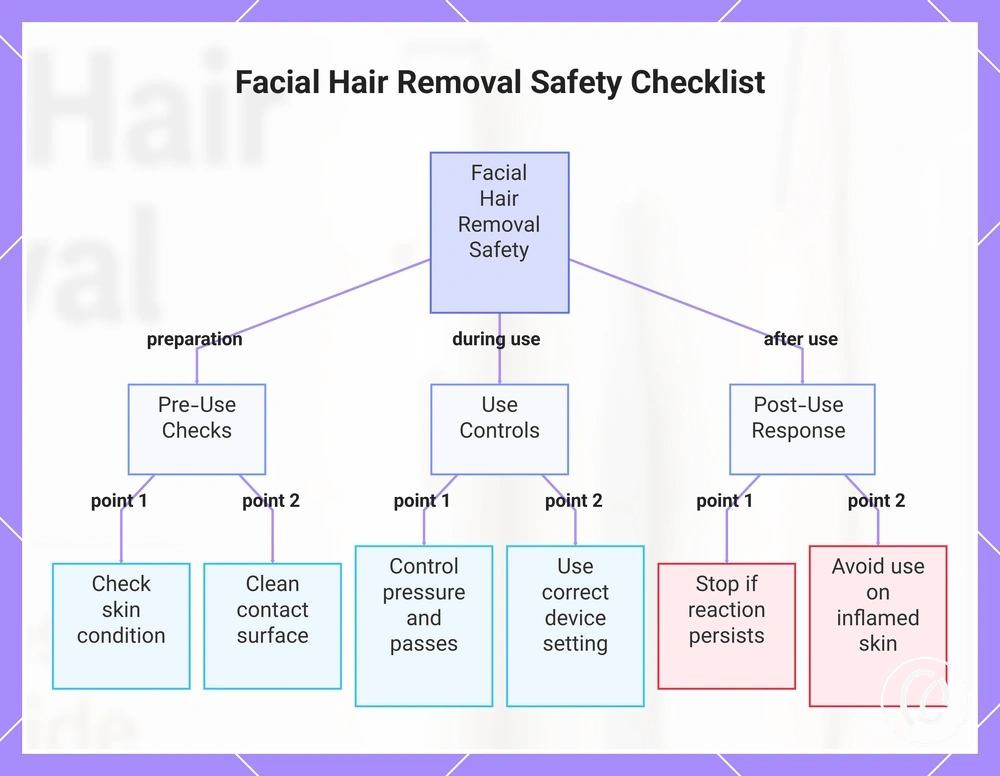
Skin comfort and safety should be assessed before choosing a facial hair removal tool because irritation, nick, burn, and reaction risk changes with skin condition, removal method, tool contact, preparation, and hygiene. Blades create cutting and friction risks, creams create ingredient-reaction risks, waxing creates pulling and redness risks, and powered devices create setting-related risks. Comfort and safety are therefore conditional on the user’s skin tolerance, the tool design, and correct use rather than being fixed qualities of one method. :contentReference[oaicite:0]{index=0}
Comfort and safety are therefore conditional on the user’s skin tolerance, the tool design, and correct use rather than being fixed qualities of one method.
Preventable problems commonly arise when a tool is used on irritated skin, a blade is dull or unclean, pressure is excessive, a cream is applied without a patch test, or a powered device is used outside its stated intensity guidance. The practical response is to check skin condition first, keep the contact surface clean, follow the product instructions, and stop if the skin develops an unexpected reaction. These checks address the main risk factors: damaged skin, unsuitable ingredients, contaminated surfaces, repeated friction, pulling force, and incorrect device settings. :contentReference[oaicite:1]{index=1}
Skin comfort and safety checklist:
- Skin condition: Avoid direct tool contact on active irritation, cuts, sunburn, infection, or an unexplained rash because damaged skin has a greater chance of discomfort or further irritation.
- Patch test: Complete the manufacturer’s recommended patch test before wider use of a facial cream or another ingredient-based remover, and do not continue if the test area develops a reaction.
- Clean contact surface: Clean blades, foils, trimmer heads, tweezers, wax applicators, and removable attachments before and after use to limit residue and contamination.
- Pressure and passes: Use controlled pressure and limit repeated passes over the same area because excess friction increases the likelihood of irritation or a nick.
- Device setting: Use only the intensity level and facial areas authorised in the device instructions; a setting that exceeds the stated skin-tone, hair-colour, or contact requirements can increase burn or reaction risk.
- After-use response: Stop using the method if redness progresses to persistent pain, swelling, blistering, or another unexpected reaction rather than settling after the session.
- When to avoid use: Delay treatment when the skin is inflamed, recently injured, or unable to tolerate the required cutting, pulling, chemical, heat, or light contact.
For sensitive skin, compare removal mechanism, contact area, ingredient exposure, pressure requirements, and likely recovery response before prioritising speed or closeness of finish. Criteria for sensitive skin facial hair removal tools should therefore focus on controlled contact, suitable preparation, and the individual skin response rather than assuming one method fits every user. :contentReference[oaicite:2]{index=2}
For sensitive skin, compare removal mechanism, contact area, ingredient exposure, pressure requirements, and likely recovery response before prioritising speed or closeness of finish.
Reviewing the safe use of facial hair removal tools before the first session provides the method-specific preparation, cleaning, contact, and stopping conditions needed to apply these safety checks in practice.
This chart shows the key safety checks to perform before, during, and after facial hair removal to prevent irritation, nicks, burns, and reactions.
This chart shows the key safety checks to perform before, during, and after facial hair removal to prevent irritation, nicks, burns, and reactions.
Sensitive Skin and Irritation Risk
Facial hair removal tools may suit sensitive skin only when the tool mechanism, ingredient exposure, and level of skin contact match the user’s skin tolerance. Repeated blade pressure, root-pulling methods, depilatory ingredients, or unsuitable device settings can increase irritation risk, redness, nicks, or another skin reaction. Gentle use therefore means reducing unnecessary contact and avoiding methods that have previously caused a reaction rather than treating any tool as inherently safe. :contentReference[oaicite:0]{index=0}
These conditions qualify suitability because sensitive skin responds to both the removal method and the condition of the skin at the time of use.
Ingredient exposure should be assessed with the manufacturer-recommended patch test before wider use of a facial cream, while blade-based tools require controlled pressure and limited repeated passes over the same area. Active irritation, broken or sunburnt skin, recent cosmetic treatments, or a known ingredient reaction are practical reasons to delay use or choose a method with less contact until the skin has recovered. These conditions qualify suitability because sensitive skin responds to both the removal method and the condition of the skin at the time of use. :contentReference[oaicite:1]{index=1}
Cleanliness, Blade Contact, and Skin Preparation
Cleanliness, blade contact, and skin preparation affect facial hair removal safety because residue, worn cutting surfaces, excessive pressure, and unsuitable skin condition increase drag, irritation, and contamination risk. A clean tool with an intact, sharp cutting surface supports smoother contact, while controlled pressure and preparation matched to the manufacturer’s instructions reduce unnecessary friction. Hygiene and contact control therefore lower risk conditions without preventing every infection, irritation, or reaction. :contentReference[oaicite:0]{index=0}
Hygiene and contact control therefore lower risk conditions without preventing every infection, irritation, or reaction.
Blade contact becomes less comfortable when a dull or damaged edge pulls against the skin instead of moving cleanly across it, and the same contact can cause more irritation when the skin is already inflamed, broken, or improperly prepared. The practical safety check is to confirm tool cleanliness, cutting-surface condition, skin state, and contact pressure before use, then stop if persistent redness, pain, or another unexpected reaction appears. :contentReference[oaicite:1]{index=1}
Local preparation checklist:
- Cleaning: Remove visible hair, skin residue, and debris from the tool surface before use so blade contact begins with a clean tool.
- Tool condition: Replace or avoid a blade, foil, or cutting head that is dull, damaged, or producing noticeable drag.
- Skin state: Prepare dry or damp skin only as directed for the specific tool, and avoid active irritation, cuts, or broken skin.
- Pressure: Use light, controlled contact pressure because extra force increases friction without improving the cutting mechanism.
- Stopping condition: Discontinue use if irritation, persistent redness, pain, or another unexpected skin response develops.
Choosing Facial Hair Removal Tools by Need
Choose a facial hair removal tool by matching your need with five practical selection criteria: skin type, hair texture, use frequency, precision, and maintenance tolerance. The most suitable choice depends on how these criteria align with the intended grooming task rather than on a universal product ranking. A criteria-led approach helps connect each user need to an appropriate tool attribute and decision outcome. :contentReference[oaicite:0]{index=0}
A criteria-led approach helps connect each user need to an appropriate tool attribute and decision outcome.
If sensitive skin is your main concern, prioritise a facial hair removal tool that reduces unnecessary blade contact, repeated pulling, or ingredient exposure because comfort becomes the primary decision criterion. If you mainly remove peach fuzz or other fine facial hair, choose a surface-cutting method designed for a smooth finish, whereas coarse or isolated chin hairs may justify a root-removal method when greater temporary discomfort is acceptable. Frequent weekly or daily use also increases the importance of cleaning, replacement parts, and maintenance, while occasional travel use shifts the decision toward portability and convenience. These situations demonstrate that the correct choice depends on matching user needs with practical selection criteria rather than comparing products. :contentReference[oaicite:1]{index=1}
| User need | Attribute or criterion | Useful condition | Decision cue |
|---|---|---|---|
| Sensitive skin | Skin type and comfort | Reduce friction, repeated pulling, and unnecessary ingredient exposure when irritation risk is a concern. | Prioritise skin tolerance before closeness of hair removal. |
| Fine hair or peach fuzz | Hair texture and finish | Surface-cutting methods suit soft vellus hair when a smooth cosmetic finish is the objective. | Select controlled surface contact instead of root removal. |
| Coarse or isolated hair | Hair texture and removal mechanism | Root-removal methods suit individual coarse hairs when temporary pulling discomfort is acceptable. | Match the removal mechanism to hair thickness rather than choosing the closest shave. |
| Precision areas | Precision and control | Narrow contact surfaces improve control around the upper lip, chin, eyebrows, and other confined facial areas. | Choose precision when facial contours or isolated hairs require accurate targeting. |
| Portability | Convenience and use frequency | Compact rechargeable or battery-powered tools suit travel and occasional touch-ups. | Consider storage size, charging method, and cleaning access. |
| Upkeep tolerance | Maintenance | Cleaning frequency, replacement components, and charging requirements should match expected use frequency. | Choose maintenance demands that fit long-term grooming habits. |
When choosing between different facial hair removal tools, begin with your primary need and then compare skin type, hair texture, precision, convenience, use frequency, and maintenance requirements before considering individual tool styles. This criteria-first approach supports more consistent decision-making without assuming one solution fits every user. For a step-by-step decision process, see how to choose a facial hair removal tool. :contentReference[oaicite:2]{index=2}
Hair Texture and Removal Frequency
Hair texture and removal frequency are practical selection criteria because they determine which hair removal mechanism is more suitable for the intended grooming routine. Fine hair and peach fuzz generally suit surface removal when a smooth finish and convenient repeat use are the priority, while coarse hair may suit a stronger cutting mechanism or root removal if the user accepts the associated comfort trade-off. The choice therefore links hair texture to removal depth, expected regrowth visibility, and ongoing maintenance rather than to permanent results. :contentReference[oaicite:0]{index=0}
- Fine hair and peach fuzz: Surface removal is suitable when the goal is a smooth cosmetic finish with convenient repeat grooming.
- Coarse hair: A stronger cutting mechanism or root removal can suit thicker or isolated chin hair when greater pulling or cutting force is acceptable.
- Frequent removal: Regular grooming increases the importance of easy cleaning, low upkeep, controlled skin contact, and convenience because the tool is used repeatedly.
- Occasional removal: Less frequent grooming may justify a root-removal mechanism when a longer interval before visible regrowth is preferred and temporary discomfort is acceptable.
- Sensitivity overlap: If coarse hair and frequent use also increase irritation risk, prioritise a mechanism that balances skin comfort with the required removal depth instead of pursuing the closest possible result.
Pain Level, Precision, and Finish
Facial hair removal tools should be compared by pain level, precision, and finish because the removal mechanism determines how much pulling or skin contact occurs and how the treated facial area looks immediately afterwards. Surface-cutting methods such as trimming, shaving, and dermaplaning generally involve less pulling than root-removal methods, while waxing, threading, and tweezing remove hair from the follicle and therefore require greater user tolerance for pulling. Comfort and finish are consequently qualified by the removal mechanism, the facial area, and individual tolerance rather than by any method being painless or universally superior. :contentReference[oaicite:0]{index=0}
For precision work on the upper lip, chin, or another small facial area, the trade-off between comfort and finish becomes more important than broad coverage.
For precision work on the upper lip, chin, or another small facial area, the trade-off between comfort and finish becomes more important than broad coverage.
| Mechanism-driven comfort | Precision-driven finish |
|---|---|
| Trimming, shaving, and dermaplaning cut hair at the skin surface, so they avoid root pulling and are commonly chosen when lower pulling discomfort and convenient repeat grooming are priorities. | Surface-cutting methods create a smooth visible finish by removing hair at skin level, but because the follicle remains intact, visible regrowth occurs as new hair emerges. |
| Waxing, threading, tweezing, and other root-removal methods extract the hair from the follicle, increasing pulling sensation and making user tolerance a more important selection criterion. | Precision-focused methods allow accurate removal of isolated hairs on the upper lip, chin, and other small facial areas, although the resulting finish and comfort remain dependent on the mechanism used and the user's tolerance for pulling. |
Power Source, Size, and Upkeep
Power source, size, and upkeep determine whether a facial hair removal tool suits day-to-day use because they set the conditions for charging, grip control, cleaning, replacement, and storage. A rechargeable battery supports cordless convenience when charging access is available, while manual operation avoids charging but requires consistent hand control and attention to tool condition. Long-term suitability therefore depends on matching the tool’s ownership burden to the intended routine rather than selecting features in isolation. :contentReference[oaicite:0]{index=0}
Long-term suitability therefore depends on matching the tool’s ownership burden to the intended routine rather than selecting features in isolation.
Use these ownership criteria to compare practical suitability:
- Charging: Choose a rechargeable design when regular cordless use and reliable charging access are available; choose replaceable-battery or manual operation when charging access is limited.
- Grip: The tool size and grip should allow stable control on the intended facial area, because an awkward handle can reduce precision even when the head is compact.
- Head size: A narrow head supports controlled work on small areas such as the upper lip or chin, while a broader head increases coverage at the cost of local precision.
- Cleaning: Cleaning requirements should match the user’s upkeep tolerance, and waterproofing claims should be followed only for the parts and cleaning methods specified by the manufacturer.
- Replacement head: A replaceable blade, foil, or cutting head supports continued use when compatible parts remain available, but replacement timing and fit are model-specific.
- Storage: A protective cap or case keeps the working surface covered, while the overall size should fit the intended storage space without placing pressure on the head.
Cost and Value Factors Before Buying
Facial hair removal tool value is determined by how the upfront cost compares with use frequency, replacement heads, upkeep, comfort, and result duration, rather than by purchase price alone. A higher upfront cost can represent better long-term value when the tool is used frequently, requires manageable upkeep, and provides consistent comfort over repeated sessions, while a lower-cost option may represent better value for occasional use. Value is therefore conditional on ownership factors rather than being a fixed characteristic. :contentReference[oaicite:0]{index=0}
Cost should therefore be evaluated together with use frequency and upkeep.
If facial hair is removed regularly, replacement heads, cleaning effort, charging requirements, and expected result duration become more important than the initial purchase price because ownership costs accumulate over time. For example, a hypothetical user grooming twice each week is likely to replace consumable parts sooner than someone grooming once each month, making upkeep a larger part of the overall buying decision. Comfort also contributes to practical value because a tool that remains comfortable during repeated use is more suitable for long-term routines. Cost should therefore be evaluated together with use frequency and upkeep. :contentReference[oaicite:1]{index=1}
| Cost factor | What changes value | Useful condition | Decision caution |
|---|---|---|---|
| Upfront cost | Expected service life and planned use frequency | Frequent grooming | Do not judge value from purchase price alone. |
| Replacement heads | Replacement availability and maintenance needs | Long-term ownership | Replacement intervals are model-specific. |
| Comfort | Skin tolerance during repeated sessions | Frequent or sensitive-skin use | Higher comfort can justify greater ownership cost. |
| Result duration | Time before visible regrowth | Users seeking fewer touch-ups | Longer-lasting methods may involve different comfort trade-offs. |
| Use frequency | Number of grooming sessions over time | Regular maintenance | Frequent use increases the importance of ownership costs. |
| Cleaning and upkeep | Routine hygiene and maintenance effort | Repeated long-term use | Ignoring upkeep can reduce long-term practical value. |
Choosing a tool primarily because it has the lowest purchase price can reduce long-term value if replacement heads, upkeep requirements, or limited comfort increase ownership burden. Comparing tool category, comfort, upkeep, and expected result duration alongside cost creates a more reliable buying decision than using price alone. Price-only decisions should therefore be avoided when comparing facial hair removal tools. :contentReference[oaicite:2]{index=2}
Price-only decisions should therefore be avoided when comparing facial hair removal tools.
Before making a buying decision, compare each tool using the same criteria: upfront cost, replacement heads, upkeep, use frequency, comfort, and expected result duration. This criteria-led approach remains affiliate-safe because it supports informed comparison without implying fixed prices, guaranteed savings, merchant availability, or direct sales. Practical value should always be interpreted in relation to the intended pattern of ownership and use. :contentReference[oaicite:3]{index=3}
The products below are useful examples for comparing available options.
The products below are useful examples for comparing available options. Before buying, check that the compatibility criteria, key features, and product details match your needs.
Representative Facial Hair Removal Tool Options
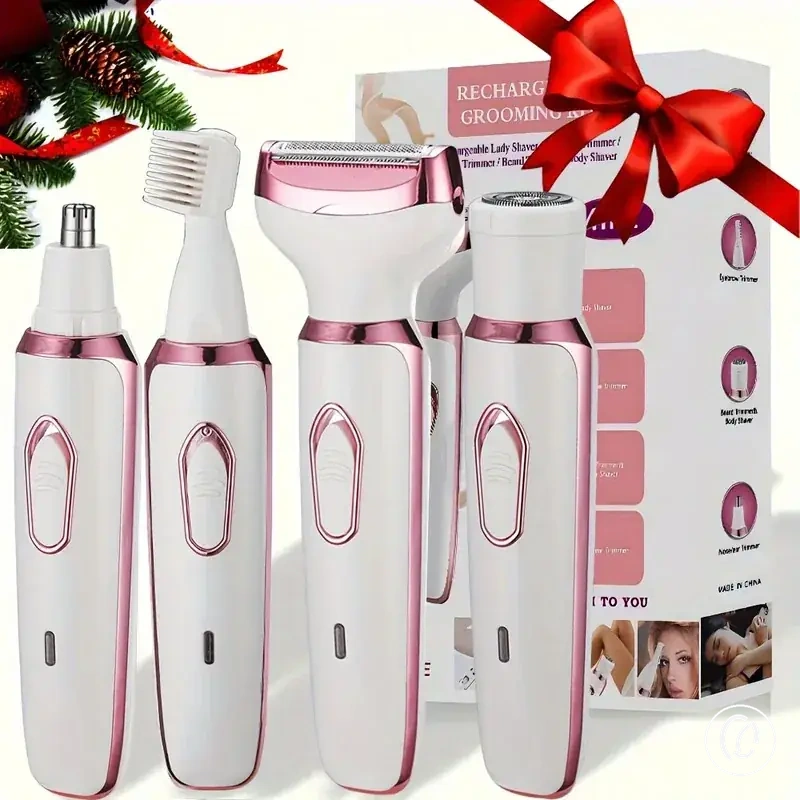
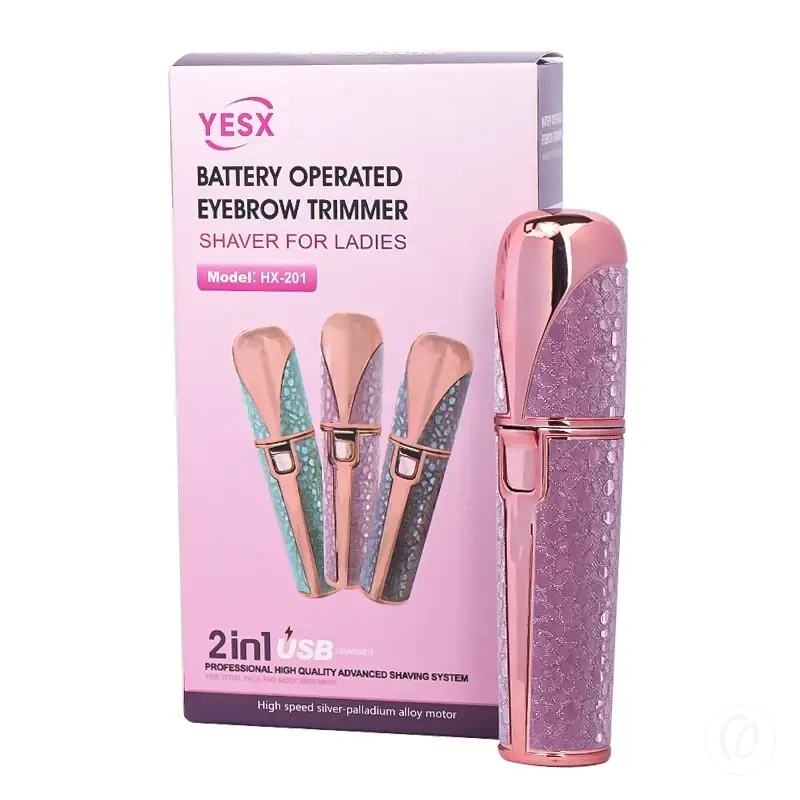
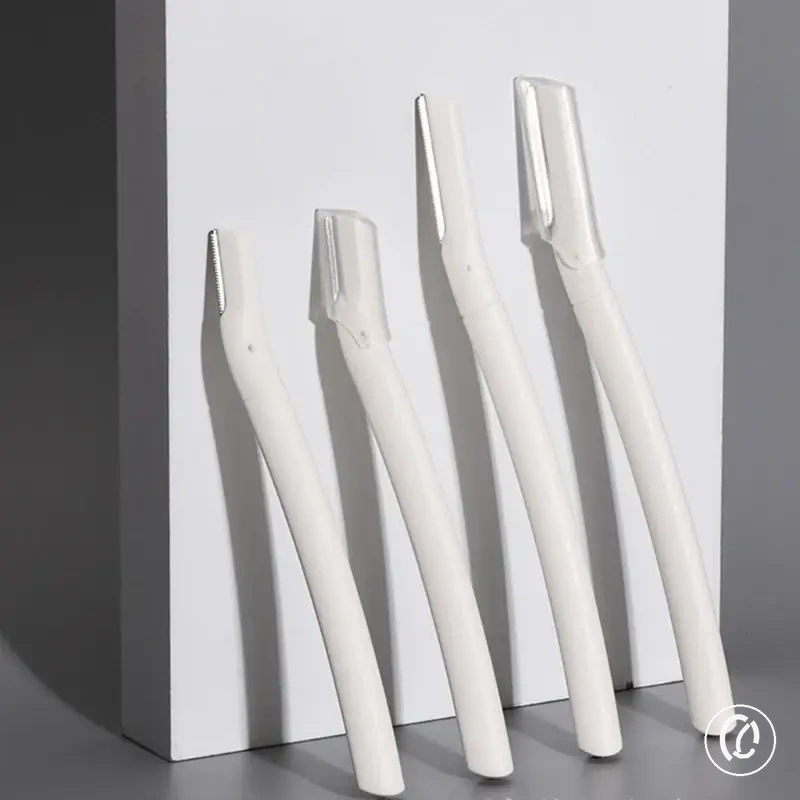
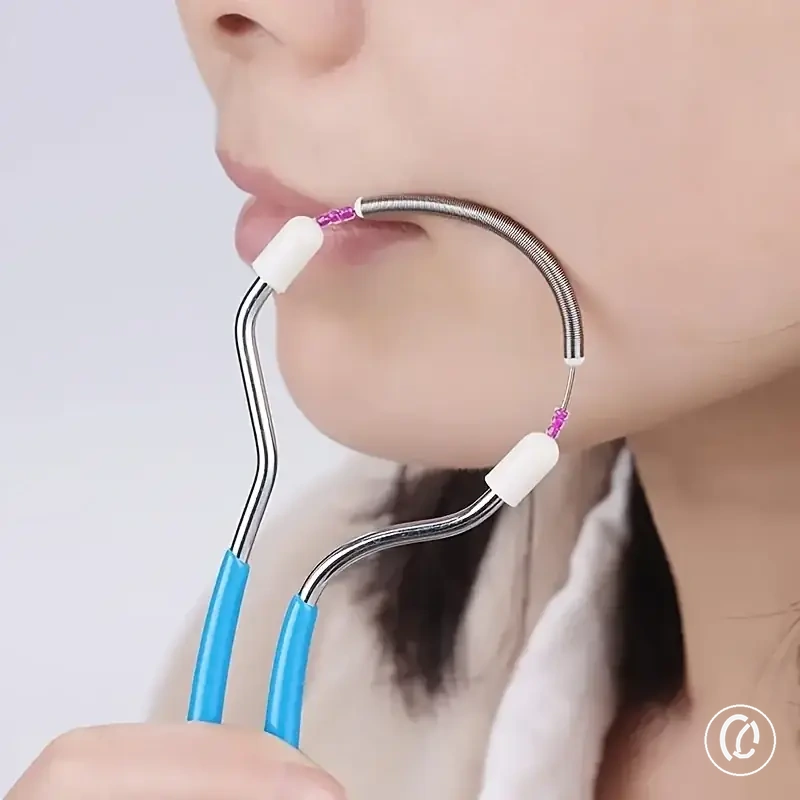
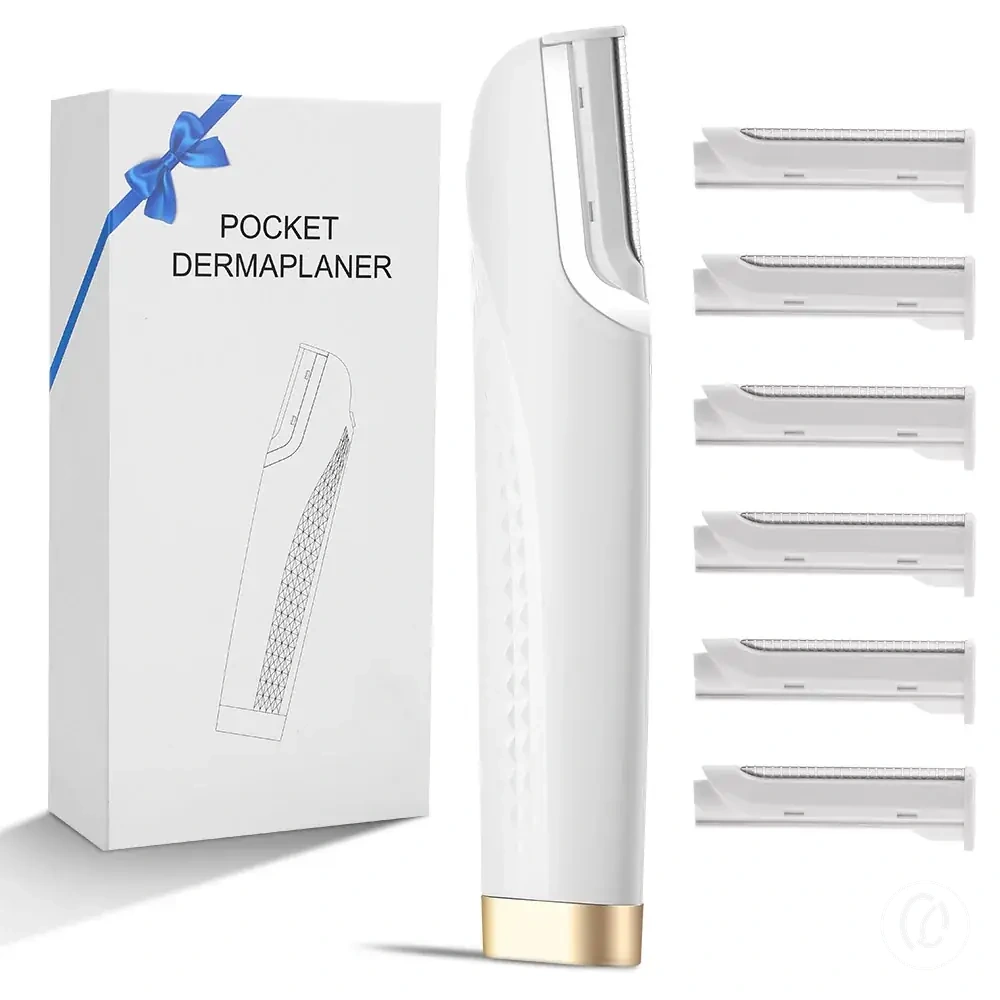
Representative options help readers connect facial hair removal tools with a matching need after comfort, precision, hair texture, and portability have been assessed. An enclosed electric remover can illustrate convenient surface removal, while a narrow manual tool can illustrate precision for the upper lip, chin, or another small facial area. These option examples are illustrative decision-support tools rather than rankings or universal recommendations. :contentReference[oaicite:0]{index=0}
For deeper decision support, compare the best facial hair removal tools by need .
Interpret each representative option by identifying its main attribute cue and checking whether that attribute supports the intended condition. Sensitive skin requires qualified comfort and contact considerations, precision work requires a controlled head or edge, and portable use favours a compact or rechargeable format suited to the expected routine. For deeper decision support, compare the best facial hair removal tools by need.
| Option type | Relevant attribute cue | Suitable need | Caution |
|---|---|---|---|
| Compact electric remover | Enclosed cutting head and portable body | Convenient surface removal and travel touch-ups | Check the approved facial areas, power source, cleaning method, and model instructions. |
| Precision trimmer | Narrow head with controlled contact | Upper-lip, chin, and other small-area grooming | Confirm that the head size matches the required precision and hair texture. |
| Manual facial razor or dermaplaning tool | Direct blade control and broad surface contact | Fine hair or peach-fuzz removal where surface finish is the priority | Comfort is qualified by blade condition, pressure, technique, and skin tolerance. |
| Tweezers or spring tool | Targeted root removal | Isolated coarse hairs where precision matters more than speed | Pulling increases discomfort for some users, so suitability requires adequate tolerance. |
| Rechargeable facial shaver | Cordless operation and reusable cutting head | Frequent grooming where portability and convenience matter | Check charging requirements, replacement-part availability, and cleaning access. |
Use the options block to compare attributes rather than assuming that one example fits every user. Before you check availability or view partner details, confirm that the option's mechanism, facial-area precision, comfort condition, power format, and upkeep requirements support the matching need. This keeps the comparison affiliate-safe and focused on decision support rather than merchant-style claims. :contentReference[oaicite:1]{index=1}
Use the options block to compare attributes rather than assuming that one example fits every user.
The products below are useful examples for comparing available options. Before buying, check that the compatibility criteria, key features, and product details match your needs.