Facial Hair Removal Tool Types and Method Differences
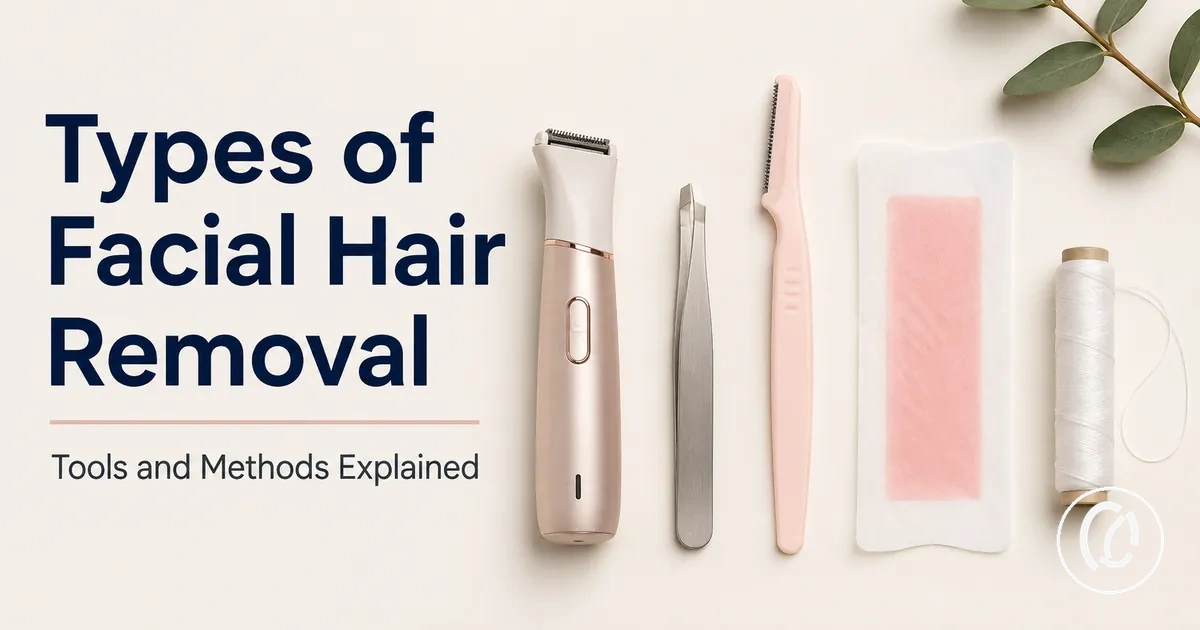
Facial hair removal tools are at-home methods that cut, trim, scrape, grip, pull, or thread visible facial hair. This page groups the tool types into seven practical families—electric trimmers and shavers, manual razors, dermaplaning blades, epilators, spring tools, tweezers, and threading tools—according to their mechanism, removal depth, precision, comfort, regrowth feel, and maintenance burden.
The mechanism determines whether a tool cuts hair at the skin surface or removes it from the root.
The mechanism determines whether a tool cuts hair at the skin surface or removes it from the root. The American Academy of Dermatology explains that threading rolls two twisted cotton threads over unwanted hairs and pulls them out, while Cleveland Clinic distinguishes shaving, which trims hair, from root-removal methods such as threading and plucking. :contentReference[oaicite:0]{index=0} These removal-depth categories affect the expected regrowth feel, but comfort and irritation risk remain conditional on skin sensitivity, hair texture, facial area, tool design, technique, and user tolerance.
The seven tool families also provide different levels of facial-area control: compact electric heads, manual razors, and dermaplaning blades use a cutting edge for surface removal, whereas epilators, springs, tweezers, and threading tools grip hair for root removal. A narrow tool may provide greater precision around an eyebrow or upper-lip edge, while a broader cutting head may cover a cheek area more efficiently; the practical result depends on the tool’s contact point and the user’s control rather than on the category name alone.
This opening covers at-home tool and method differences only.
This opening covers at-home tool and method differences only. Detailed comparisons between individual tool pairs, selection criteria, professional procedures, and product options belong to later decision contexts.
Table of Contents
What Counts as a Facial Hair Removal Tool or Method
A facial hair removal tool or method is an at-home way to cut, trim, pull, thread, or scrape visible facial hair to produce a temporary result on facial areas such as the upper lip, chin, cheeks, jawline, or eyebrows. The category includes manual tools and electric devices used for cosmetic grooming and excludes professional removal procedures and skincare treatments that do not directly remove visible facial hair.
The examples below show what is included within the scope of a facial hair removal tool or method and help separate it from adjacent hair-removal routes before comparing individual tool types.
The examples below show what is included within the scope of a facial hair removal tool or method and help separate it from adjacent hair-removal routes before comparing individual tool types.
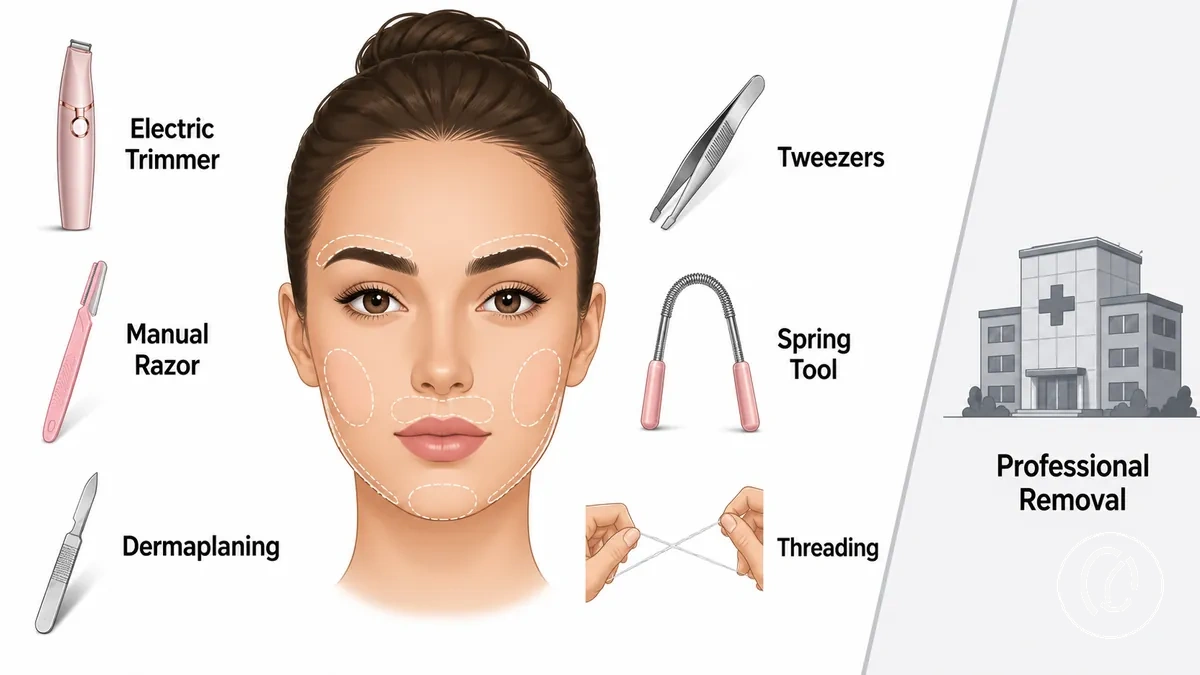
The list below separates in-scope at-home tools from methods that fall outside this page's scope.
- Included: Electric facial trimmers and shavers, manual facial razors, dermaplaning blades, tweezers, spring facial hair removers, and threading methods used to remove or trim visible facial hair at home.
- Included: Grooming methods that either cut hair at the skin surface or pull hair from the root, producing a temporary result whose regrowth feel depends on the tool mechanism, facial area, hair texture, skin sensitivity, and user technique.
- Excluded: Professional removal procedures and skincare treatments that do not directly remove visible facial hair because they belong to different treatment and decision contexts.
According to the American Academy of Dermatology, shaving, tweezing, and threading are recognised methods of removing unwanted hair, while each method removes hair using a different mechanism. These mechanism differences affect how hair is removed rather than guaranteeing a particular level of comfort, irritation, or smoothness because those outcomes remain conditional on the user and the tool.
This definition establishes the scope for the rest of the article without comparing products or professional procedures.
This definition establishes the scope for the rest of the article without comparing products or professional procedures. If you want to understand where at-home methods end and clinical options begin, see facial hair removal tools versus professional removal, where that separate decision context is explained.
Main Types of At-Home Facial Hair Removal Tools
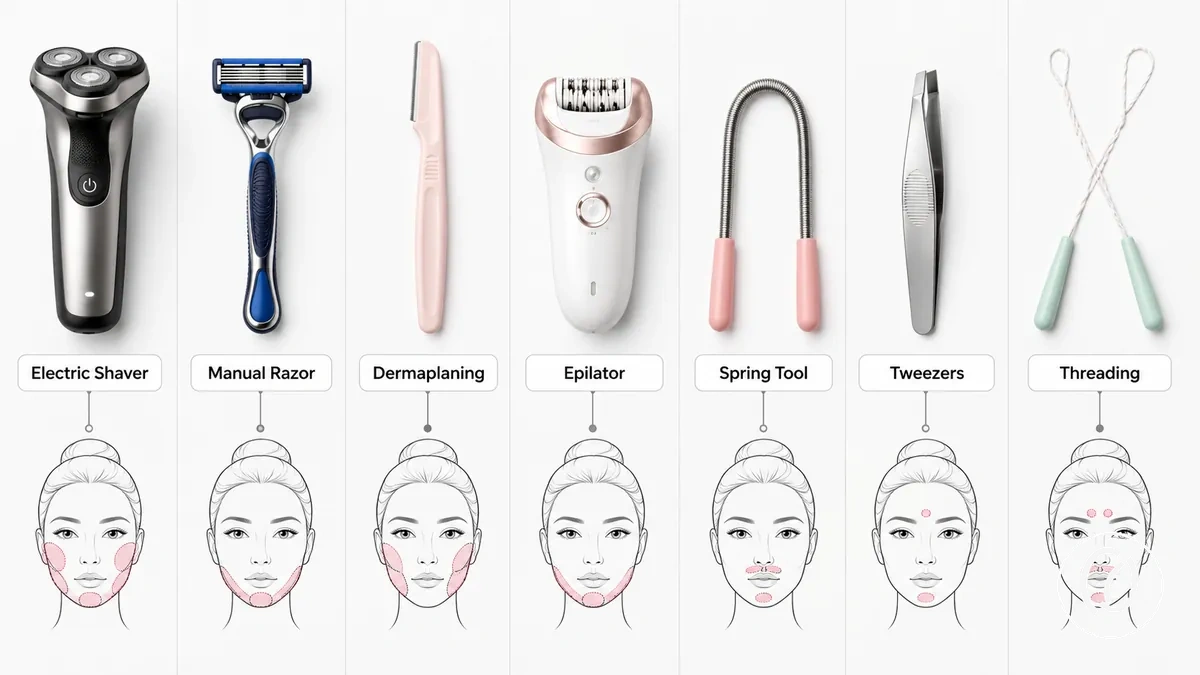
The main types of at-home facial hair removal tools are electric shavers, manual razors, dermaplaning blades, epilators, spring tools, tweezers, and threading tools. Each tool family is classified by its mechanism, whether it cuts hair at the skin surface or removes it from the root, the facial area it is typically used on, and its general comfort range, which remains conditional on hair texture, skin sensitivity, technique, and user tolerance. :contentReference[oaicite:0]{index=0}
For broader terminology and page scope, see the facial hair removal tools guide .
The table below compares the main types of at-home facial hair removal tools by mechanism and use context so the category boundaries are clear before discussing individual methods in more detail. For broader terminology and page scope, see the facial hair removal tools guide.
| Tool family | How it works | Typical facial areas | Main trade-off |
|---|---|---|---|
| Electric shaver | Cuts visible hair at the skin surface using reciprocating or rotary cutting elements. | Cheeks, chin, upper lip, jawline | Fast surface removal without pulling hair from the root. |
| Manual razor | Uses a fixed blade to shave hair at skin level. | Upper lip, cheeks, chin | Provides precise surface cutting but requires regular shaving as hair regrows. |
| Dermaplaning blade | Uses a single-edge facial blade to remove surface hair while exfoliating superficial dead skin. | Cheeks, forehead, jawline | Combines exfoliation with hair removal but depends on controlled blade angle. |
| Epilator | Mechanical tweezers rotate to pull multiple hairs from the root. | Chin, jawline, cheeks | Root removal may extend the smooth period but can feel less comfortable than surface-cutting tools. |
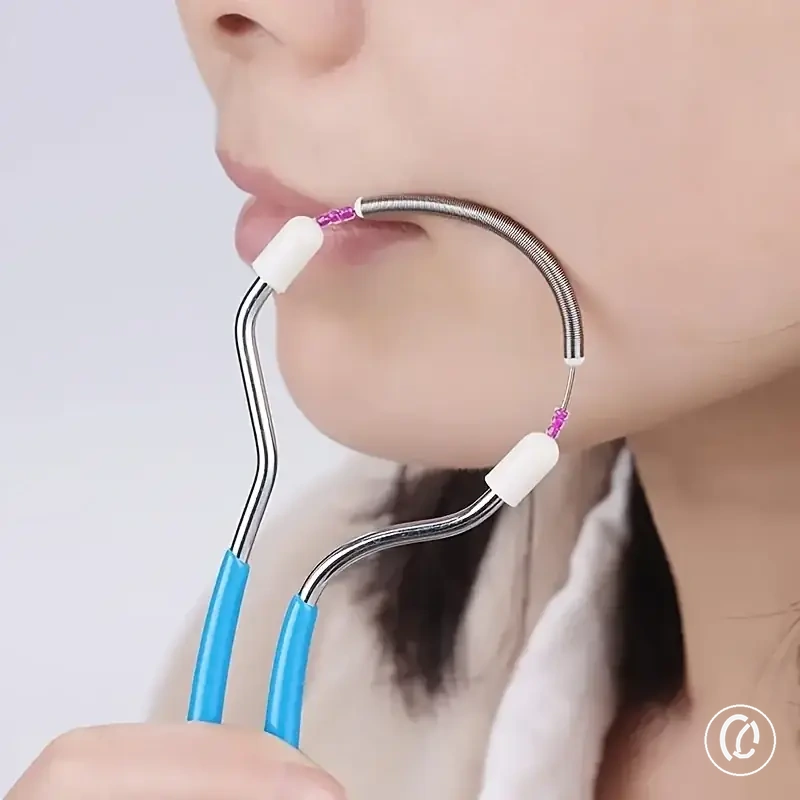
| Spring tool | A coiled spring grips and removes multiple hairs from the root. | Upper lip, chin, cheeks | Blade-free root removal that usually requires controlled rolling technique. |
| Tweezers | Grip and pull individual hairs from the root. | Eyebrows, chin, isolated facial hairs | High precision for small areas but slower for dense hair growth. |
| Threading tool | Twisted thread traps and removes multiple hairs from the root. | Eyebrows, upper lip, chin | Offers detailed shaping but generally requires more practice and hand control. |
According to the American Academy of Dermatology, shaving removes hair at the skin surface, while tweezing and threading remove hair from the root, making the removal mechanism the primary distinction between these tool families rather than comfort alone. The comfort range is therefore best understood as a conditional attribute that changes with the facial area, skin sensitivity, hair thickness, and technique instead of a fixed property of a tool category. :contentReference[oaicite:1]{index=1}
This example illustrates category differences without implying that one tool family is universally superior.
For example, someone removing a few chin hairs may use tweezers because individual root removal offers precise control, whereas a person clearing fine peach fuzz across both cheeks may choose a dermaplaning blade because its wider blade covers a larger surface area in fewer passes. This example illustrates category differences without implying that one tool family is universally superior. :contentReference[oaicite:2]{index=2}
Electric Trimmers and Facial Shavers
Electric trimmers and facial shavers cut facial hair close to the skin surface without pulling it from the root, so they produce a close cut while the remaining hair shaft stays below the skin surface. The resulting regrowth feel depends on the cutting head, guard configuration, hair texture, skin sensitivity, facial area, and user technique rather than the electric cutting method itself. :contentReference[oaicite:0]{index=0}
The illustration below labels the main parts that influence cutting performance and facial-area control.
The illustration below labels the main parts that influence cutting performance and facial-area control. It highlights the cutting head, guard, handle, and power source so the differences between a precision-focused electric trimmer and a broader facial shaver are easy to understand before comparing other tool types.
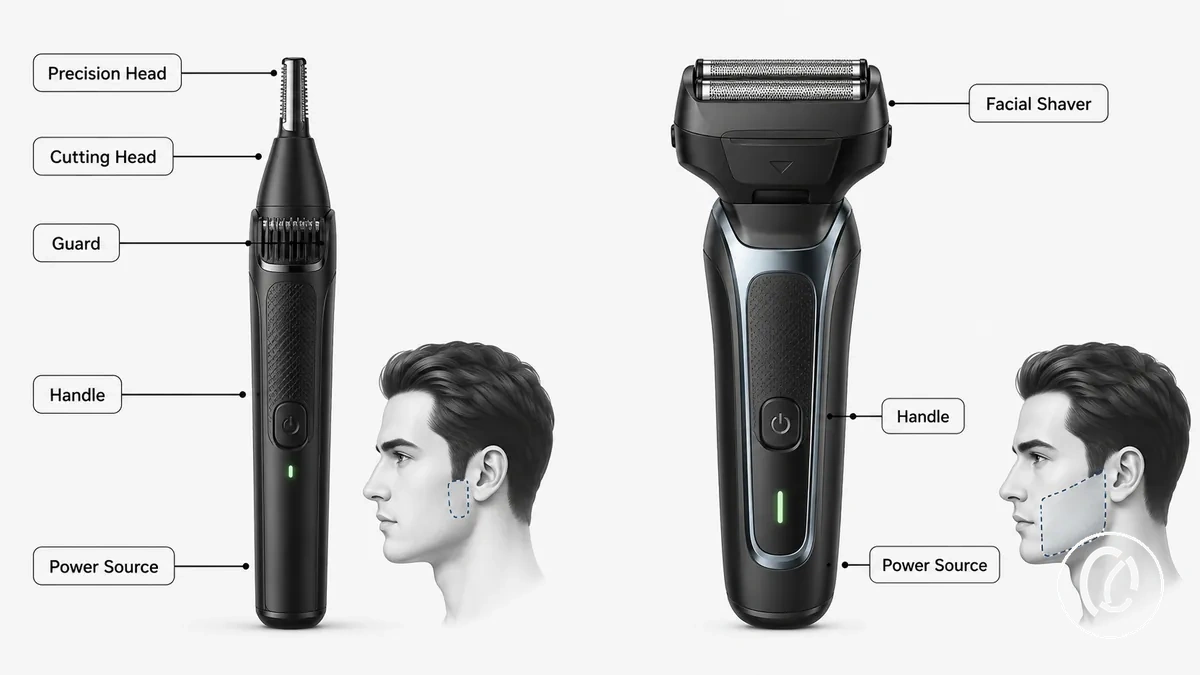
- Head shape: A precision head has a narrow cutting head for detailed trimming around the upper lip, eyebrows, or chin, while a broader facial shaver head covers flatter facial areas more efficiently. :contentReference[oaicite:1]{index=1}
- Guard design: A guard or cap helps maintain a controlled cutting distance above the skin, while removing the guard, where supported by the device, can produce a closer cut but may increase irritation risk for sensitive skin. :contentReference[oaicite:2]{index=2}
- Power source: Electric trimmers are commonly available as rechargeable trimmers or battery shavers, with the power source affecting runtime and convenience rather than the underlying cutting mechanism. :contentReference[oaicite:3]{index=3}
- Speed: A motor drives the cutting blades through repeated cutting strokes, allowing faster coverage than manually moving a blade across the same facial area, although the practical speed still depends on hair density and trimming technique. :contentReference[oaicite:4]{index=4}
- Facial-area control: Smaller cutting heads generally improve control in confined facial areas, whereas wider shaving heads are intended for larger facial surfaces where precision is less important. :contentReference[oaicite:5]{index=5}
For example, an electric trimmer with a small precision head is better suited to trimming a few chin hairs or shaping the upper-lip edge, while a facial shaver with a broader cutting head can remove fine cheek hair in fewer passes because it covers a wider contact area. For a broader comparison of cutting mechanisms and handling characteristics, see electric and manual facial hair removers. :contentReference[oaicite:6]{index=6}
Manual Razors and Dermaplaning Blades
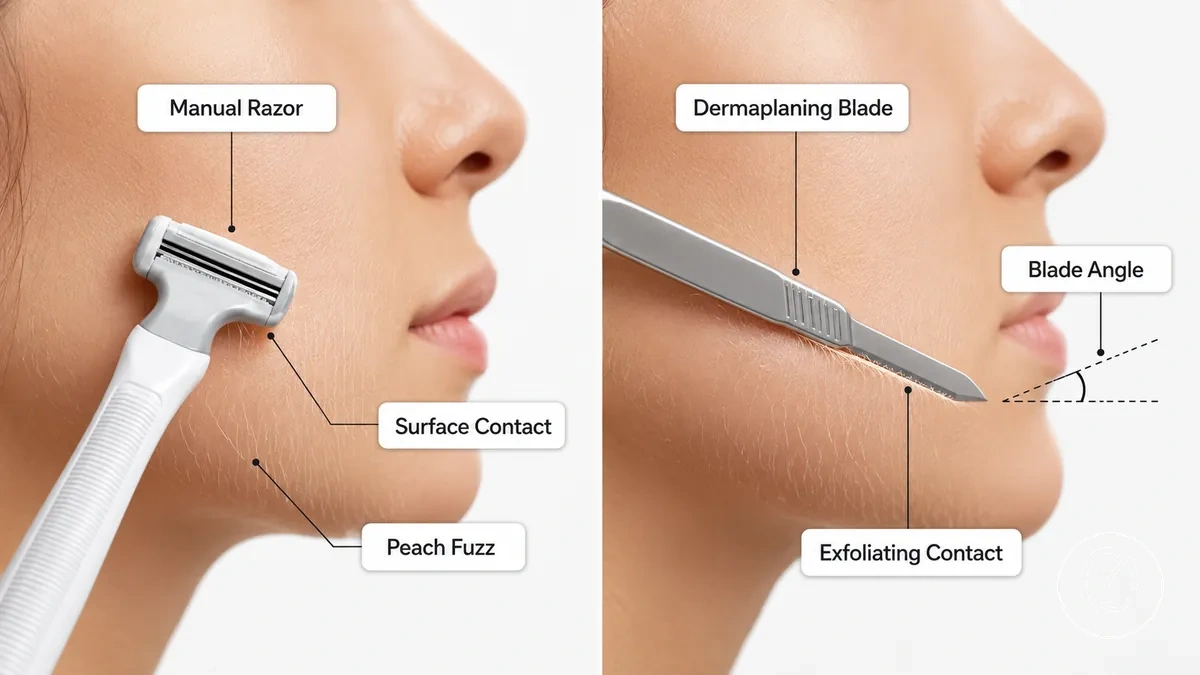
Manual razors and dermaplaning blades are surface-contact tools that cut visible hair at skin level rather than removing it from the root. A manual razor is intended primarily for shaving visible hair, whereas a dermaplaning blade is a slim facial blade that also creates controlled exfoliating contact with the outermost skin surface when used at an appropriate blade angle and with suitable technique. These differences relate to blade design and surface contact rather than to permanent hair removal or guaranteed skincare outcomes. :contentReference[oaicite:0]{index=0}
It highlights the blade attributes that distinguish the two tools without implying that one replaces the other.
The comparison below shows how manual razors and dermaplaning blades differ in blade shape, blade angle, skin contact, and peach fuzz handling. It highlights the blade attributes that distinguish the two tools without implying that one replaces the other.
| Attribute | Manual Razor | Dermaplaning Blade |
|---|---|---|
| Primary function | Cuts visible hair at the skin surface | Cuts visible hair while allowing controlled exfoliating contact with the outer skin surface |
| Blade shape | Guarded facial shaving blade | Slim precision facial blade |
| Blade angle | Designed for shaving with the blade held close to the skin | Uses a shallow blade angle to maintain controlled surface contact during the stroke |
| Peach fuzz handling | Cuts fine surface hair | Cuts fine peach fuzz while the blade may also lift loose surface skin cells |
| Skin contact | Surface-cutting contact | Surface-cutting contact with conditional exfoliating contact |
For example, a person removing fine peach fuzz from the cheeks may choose a dermaplaning blade because its slim blade allows controlled contact across broad facial areas, while someone trimming visible hair around the upper lip may prefer a manual razor designed for straightforward surface shaving. If the blade angle becomes too steep or the skin is already irritated, surface contact increases and the likelihood of discomfort can rise, so blade condition and technique remain important boundaries for both tools. :contentReference[oaicite:1]{index=1}
Facial Epilators, Springs, and Tweezing Tools
Facial epilators, spring tools, and tweezers are pulling tools whose mechanism grips facial hair and removes it from the root rather than cutting it at the skin surface. This greater removal depth changes the regrowth feel compared with surface-cutting tools, while comfort, precision, and session tolerance remain conditional on the contact point, facial area, hair texture, skin sensitivity, tool design, technique, and user tolerance. :contentReference[oaicite:0]{index=0}
The attributes below compare the main differences between these root-removal tools by grip method, area coverage, speed, comfort, and precision.
The attributes below compare the main differences between these root-removal tools by grip method, area coverage, speed, comfort, and precision.
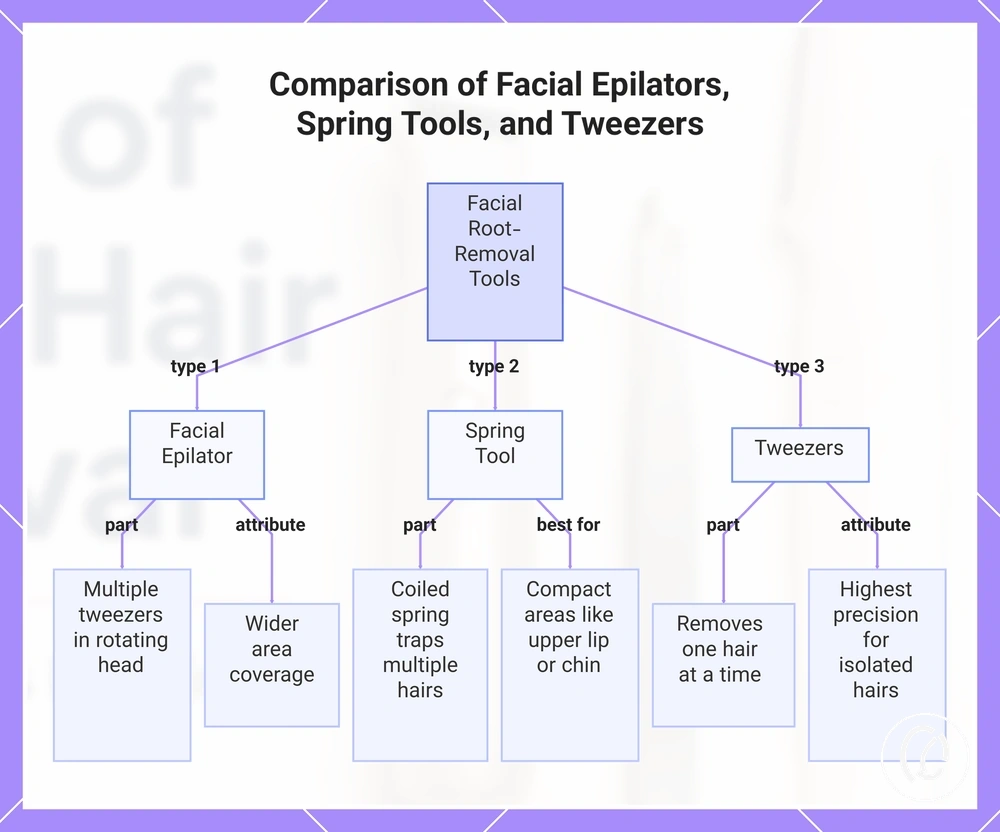
- Facial epilator: A rotating epilator head uses multiple mechanical tweezers to grip and remove several hairs during one pass. This mechanism covers a wider facial area more quickly than individual tweezing, although comfort depends on hair density, contact point, and skin sensitivity. :contentReference[oaicite:1]{index=1}
- Spring tool: A coiled spring bends and rolls across the skin so the contact point traps and removes multiple hairs from the root. It is commonly used on compact facial areas such as the upper lip or chin where manual control is important. :contentReference[oaicite:2]{index=2}
- Tweezers: Tweezers grip and remove one hair at a time from the root, providing the greatest precision for isolated hairs or eyebrow shaping, but covering the smallest facial area per movement. :contentReference[oaicite:3]{index=3}
- Comfort and regrowth feel: All three tools remove hair from the root, so the immediate effect differs from shaving. The perceived comfort and the way regrowth feels remain conditional on hair thickness, skin sensitivity, facial area, and user technique rather than the removal mechanism alone. :contentReference[oaicite:4]{index=4}
- Control: Epilators prioritise faster area coverage, spring tools balance manual control with multi-hair removal, and tweezers prioritise maximum precision over coverage speed. :contentReference[oaicite:5]{index=5}
For example, removing two isolated chin hairs is usually more practical with tweezers because each grip targets a single hair, whereas removing dozens of fine upper-lip hairs in one session may be more efficient with a spring tool or facial epilator that grips multiple hairs during each movement. The outcome depends on the facial area, the gripping mechanism, and the user's comfort tolerance rather than one pulling tool being universally more suitable. :contentReference[oaicite:6]{index=6}
This chart compares the three main types of facial root-removal tools by their mechanism, coverage, precision, and best use.
This chart compares the three main types of facial root-removal tools by their mechanism, coverage, precision, and best use.
Threading Tools and Manual Threaders
Threading tools and manual threaders use a twisted thread or a guided threading mechanism to catch facial hairs at the contact point and pull them from the root instead of cutting them at the skin surface. This root-level removal depth can change the regrowth feel compared with shaving, while the effect on comfort and precision remains conditional on the facial area, hair texture, skin sensitivity, thread tension, tool design, and user technique. The American Academy of Dermatology identifies threading as a method that removes hair from the root by trapping hairs within twisted thread. :contentReference[oaicite:0]{index=0}
The American Academy of Dermatology identifies threading as a method that removes hair from the root by trapping hairs within twisted thread.
The attributes below distinguish handheld threading tools from salon threading while keeping the focus on the local mechanism rather than the procedure.
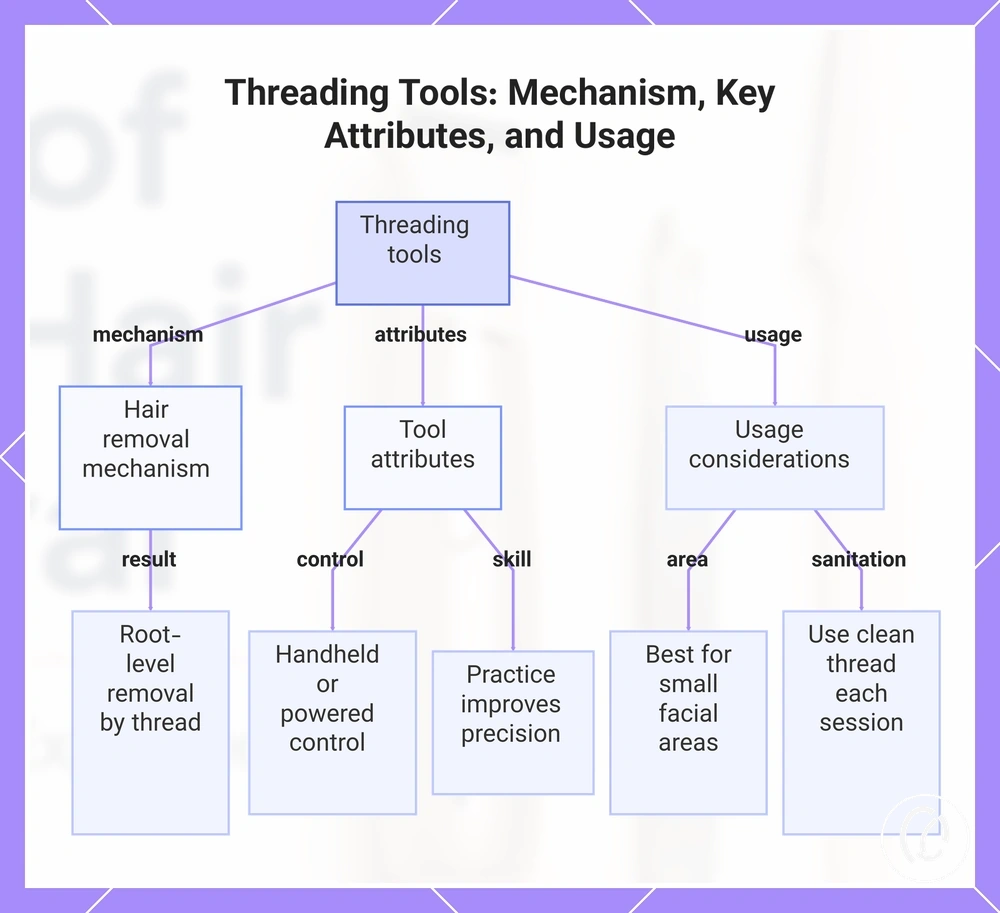
- Control: Handheld threaders guide the thread with a frame or handle, while powered threaders move the threading mechanism mechanically. In both cases, precise positioning of the contact point determines which hairs are removed.
- Practice requirement: User skill influences thread tension, movement, and facial-area control, so increased practice generally improves precision and can reduce unnecessary pulling of surrounding hairs.
- Thread contact: Twisted thread traps one hair or a narrow row of hairs before pulling them from the root, giving threading greater removal depth than surface-cutting tools.
- Small-area use: According to the American Academy of Dermatology, threading is commonly used for eyebrows, the upper lip, and other small facial areas where controlled shaping is required rather than broad-area hair removal.
- Sanitation: Clean thread should be used for each session, and reusable handles or threading devices should be cleaned according to the manufacturer's instructions because the thread and tool contact facial skin directly.
For example, a handheld manual threader can help a user control the contact point while shaping an eyebrow, whereas salon threading relies on the practitioner's manual thread control rather than a handheld device. This distinction clarifies the mechanism and user-skill condition without treating at-home threading tools as equivalent to a professional threading service. :contentReference[oaicite:1]{index=1}
This chart shows how threading tools remove hair from the root, their distinguishing attributes, and important usage considerations.
This chart shows how threading tools remove hair from the root, their distinguishing attributes, and important usage considerations.
How Facial Hair Removal Methods Work
Facial hair removal methods work by using different mechanisms and contact points that determine the hair's removal depth, which in turn influences regrowth feel, precision, comfort, and the practical effect of the method. According to the American Academy of Dermatology, shaving removes hair by cutting it at the skin surface, whereas tweezing and threading remove the hair from the root, making the removal mechanism the primary reason similar-looking methods produce different outcomes. :contentReference[oaicite:0]{index=0}
The comparison below organises the main mechanisms by the attribute that changes the result rather than by the tool itself.
The comparison below organises the main mechanisms by the attribute that changes the result rather than by the tool itself. Comfort, precision, and regrowth feel remain conditional on facial area, hair texture, skin sensitivity, technique, and user tolerance even when two methods remove the same hair. :contentReference[oaicite:1]{index=1}
| Method | Contact point | Hair-depth effect | Regrowth implication | Common limitation |
|---|---|---|---|---|
| Surface cutting | Blade or foil cuts the exposed hair shaft at skin level | Hair root remains inside the follicle | Hair becomes visible again as the remaining shaft grows beyond the skin surface | Requires repeated maintenance because the root is not removed |
| Root pulling | Tweezers, epilator, or spring grips the hair shaft before extraction | Entire hair is removed from the follicle | Visible regrowth begins only after a new hair emerges from the follicle | Comfort depends on hair thickness, facial area, and user tolerance |
| Threading | Twisted thread traps multiple hairs at the contact point | Entire hair is removed from the follicle | Produces root-level regrowth similar to other pulling methods | Precision depends on thread control, thread tension, and technique |
| Exfoliating blade contact | Facial blade contacts surface hair and the outermost skin layer | Hair is cut at the surface while superficial dead skin cells may also be lifted | Hair regrows from the intact follicle because the root is not removed | Effect depends on blade angle, skin condition, and user technique |
For example, removing the same upper-lip hair with a facial razor and with threading produces different outcomes because the razor cuts only the exposed hair shaft, whereas threading removes the entire hair from the follicle. The difference in regrowth feel therefore comes from the removal depth and contact point rather than the facial area itself, helping explain why two facial hair removal methods can deliver different practical results under the same conditions. :contentReference[oaicite:2]{index=2}
Surface Cutting and Trimming
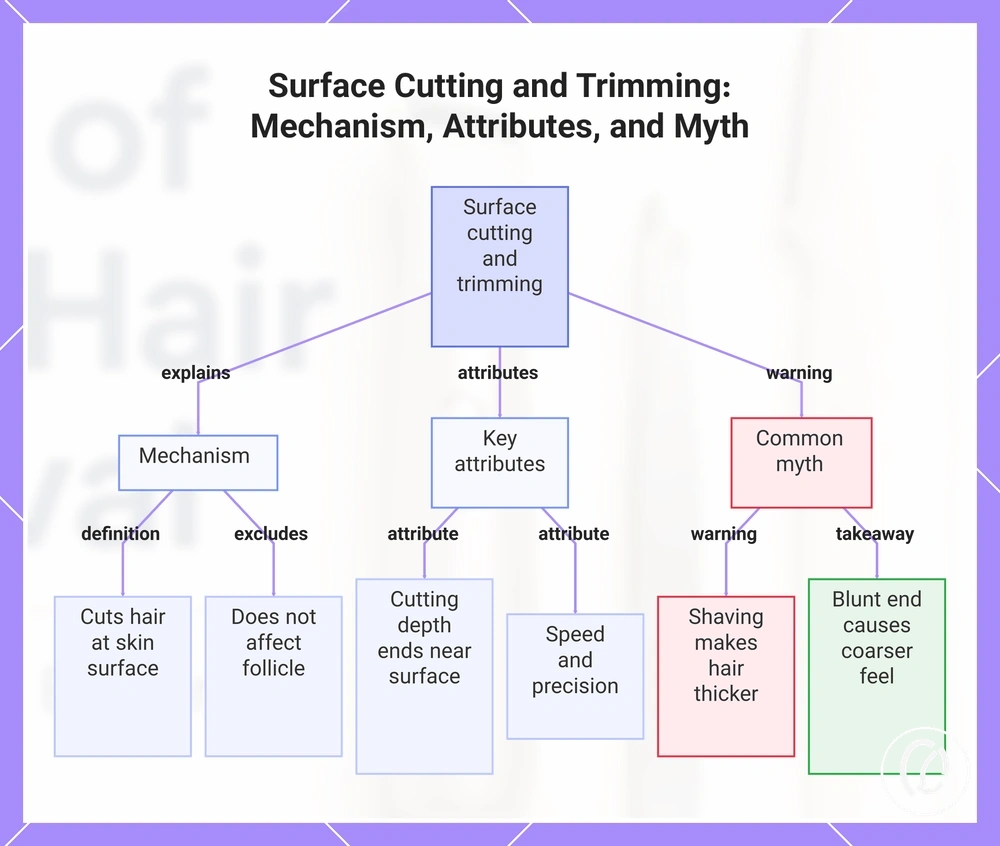
Surface cutting and trimming use a mechanism that shortens facial hair at or near the skin surface instead of removing it from the follicle, so the removal depth is limited to the exposed hair shaft. According to the American Academy of Dermatology, shaving cuts hair at the skin surface rather than removing it from the root, making surface cutting a temporary hair-removal mechanism. :contentReference[oaicite:0]{index=0}
The attributes below explain the local effects of the surface-cutting mechanism and the conditions that influence the result.
The attributes below explain the local effects of the surface-cutting mechanism and the conditions that influence the result.
- Blade or electric head: A blade or electric cutting head contacts the exposed hair shaft at the contact point and trims visible hair without affecting the follicle.
- Cutting depth: The removal depth ends at or near the skin surface because the hair root remains beneath the skin.
- Speed and precision: Surface-cutting tools can clear multiple hairs in one pass, while precision depends on the cutting-head design, facial area, and user control.
- Comfort, regrowth feel, and short-term smoothness: Comfort depends on skin sensitivity, hair texture, blade condition, and technique. Smoothness is temporary because the remaining hair continues growing, and the regrowth feel comes from the cut hair end rather than from any change in hair thickness.
For example, trimming fine cheek hair with an electric facial shaver and shaving the same area with a manual facial razor use the same surface-cutting mechanism even though their contact points and precision differ. A common myth is that shaving makes hair grow thicker, but dermatology guidance attributes the coarser feel to the blunt end of the cut hair shaft instead of changes to the follicle or hair-growth rate. :contentReference[oaicite:1]{index=1}
This chart explains the surface-cutting mechanism, its key attributes, and the common myth about hair regrowth.
This chart explains the surface-cutting mechanism, its key attributes, and the common myth about hair regrowth.
Root Removal by Pulling or Threading
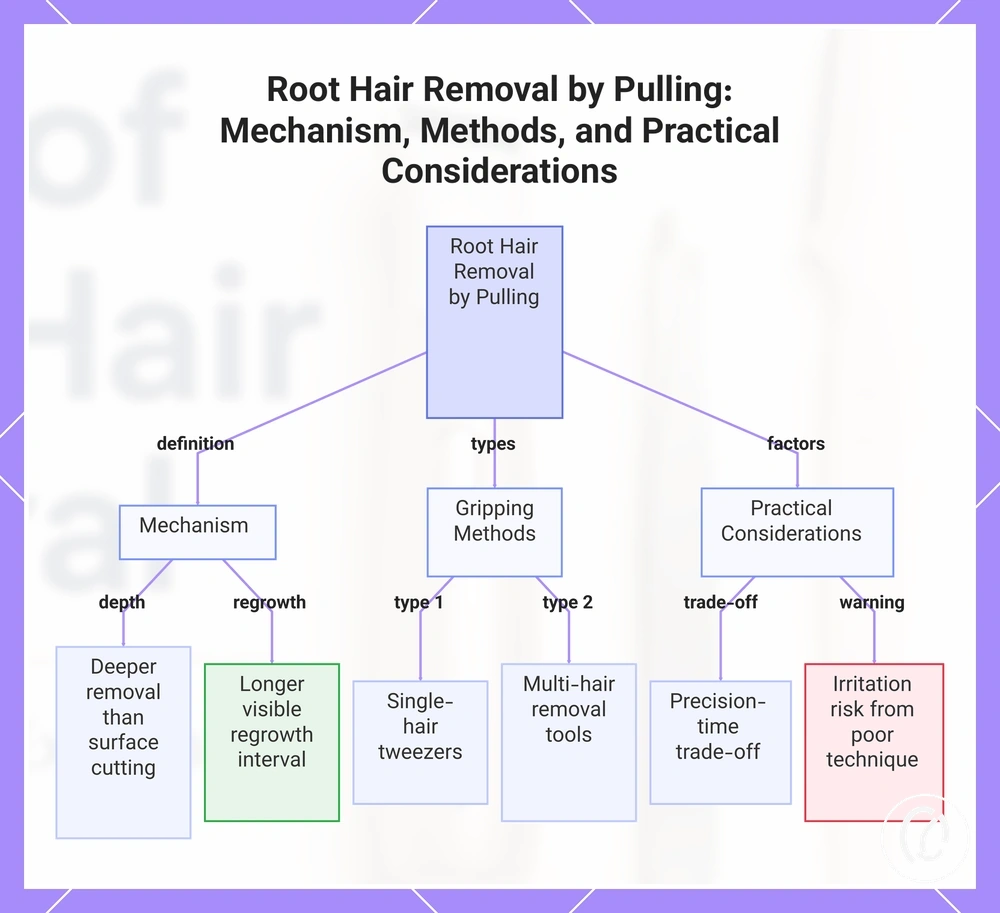
Root removal by pulling or threading is a hair-removal mechanism in which the hair is gripped at the contact point and pulled through the follicle opening instead of being cut at the skin surface, giving it a deeper removal depth than surface-cutting methods. According to the American Academy of Dermatology, tweezing and threading remove hair from the root, so the visible regrowth interval is generally longer than with shaving because a new hair must emerge from the follicle before it becomes visible. :contentReference[oaicite:0]{index=0}
The attributes below distinguish the main root-removal methods while keeping the same underlying mechanism.
The attributes below distinguish the main root-removal methods while keeping the same underlying mechanism.
- Gripping method: Epilators use multiple rotating mechanical tweezers, spring tools trap hairs with a coiled spring, tweezers grip individual hairs, and threading removes hairs using twisted thread.
- Removal depth and regrowth feel: All four methods remove the visible hair from the follicle opening rather than shortening the exposed hair shaft, so the regrowth feel differs from shaving because the hair reappears only after a new shaft grows from the follicle.
- Precision and time burden: Tweezers provide the greatest precision for individual hairs but require more time over larger facial areas, while epilators, spring tools, and threading remove multiple hairs in a single movement and can reduce treatment time.
- Comfort and condition: Comfort depends on the facial area, hair thickness, skin sensitivity, technique, and user tolerance rather than the mechanism alone, so the effect differs between users and facial regions.
For example, removing two isolated chin hairs is typically more precise with tweezers because each grip targets one follicle, whereas removing many fine upper-lip hairs may require fewer movements with threading or a spring tool because multiple hairs are captured at the same contact point. If hairs are tightly curled or the pulling angle is inconsistent, temporary irritation around the follicle opening is more likely, making technique an important condition without implying that irritation occurs in every case. :contentReference[oaicite:1]{index=1}
This chart shows the definition of root hair removal by pulling, the main gripping methods, and key practical considerations for choosing between them.
This chart shows the definition of root hair removal by pulling, the main gripping methods, and key practical considerations for choosing between them.
Skin-Surface Exfoliation with Dermaplaning
Skin-surface exfoliation with dermaplaning is a blade-contact mechanism that cuts fine facial hair at the skin surface while also contacting the outermost layer of skin, so the removal depth remains superficial because the hair follicle is not removed. According to the American Academy of Dermatology, dermaplaning removes fine facial hair with a blade while providing superficial exfoliating contact, making the resulting effect dependent on blade angle, skin condition, facial area, and user technique rather than producing a guaranteed exfoliation outcome. :contentReference[oaicite:0]{index=0}
The attributes below distinguish the local dermaplaning mechanism and explain why the outcome remains conditional.
The attributes below distinguish the local dermaplaning mechanism and explain why the outcome remains conditional.
- Hair removal: The dermaplaning blade cuts visible peach fuzz at the contact point without removing hair from the follicle, so the regrowth feel reflects a surface-cut hair rather than root extraction.
- Exfoliating contact: During the same blade stroke, loose outer skin cells may also be lifted. The amount of exfoliating contact depends on blade sharpness, facial area, skin condition, and technique instead of occurring to the same degree in every session.
- Blade angle and precision: A shallow blade angle helps maintain controlled surface contact and improves precision, whereas a steeper angle can increase skin contact and the likelihood of temporary irritation.
- Comfort and condition: Comfort depends on hair texture, skin sensitivity, user tolerance, and blade control, so the perceived effect differs between users and facial areas.
For example, using a dermaplaning blade on fine cheek peach fuzz can leave the skin feeling smoother because both surface hair and loose outer skin cells are contacted during the same stroke, whereas a standard facial razor is intended primarily to cut visible hair. Professional dermaplaning may use different blade designs and practitioner-controlled techniques than at-home tools, so differences in tool sharpness and control can influence the resulting effect without implying that either approach produces identical outcomes. :contentReference[oaicite:1]{index=1}
Tool Differences That Change Facial Hair Removal Results
Facial hair removal tool differences change visible and tactile results because each tool family combines a distinct mechanism, contact pattern, removal depth, and coverage style, creating a different trade-off between comfort, speed, precision, regrowth feel, cleaning burden, and facial-area fit. The American Academy of Dermatology distinguishes surface cutting from root removal: shaving cuts hair at skin level, while tweezing and threading pull hair from the root, which explains the main outcome difference between these tool categories. :contentReference[oaicite:0]{index=0}
The comparison below contrasts electric shavers, manual blades, pulling tools, and threading tools by the attributes that change the result.
The comparison below contrasts electric shavers, manual blades, pulling tools, and threading tools by the attributes that change the result. Comfort and suitability remain conditional on tool design, facial area, hair texture, skin sensitivity, technique, and user tolerance rather than on the category name alone.
| Tool family | Comfort | Speed | Precision | Regrowth feel | Cleaning burden | Facial-area fit |
|---|---|---|---|---|---|---|
| Electric shaver or trimmer | Cutting contact avoids root pulling; comfort is conditional on head design, pressure, and skin sensitivity. | Broad-area, multi-hair coverage per pass. | Narrow heads support edge control; wider heads prioritise coverage. | Cut hair becomes noticeable as the remaining shaft grows above the skin. | Cut hairs must be cleared from the head, with reusable parts cleaned as specified for the device. | Cheeks, chin, jawline, upper lip, and general facial maintenance. |
| Manual razor or dermaplaning blade | Direct blade contact makes comfort conditional on blade condition, angle, pressure, and skin condition. | Broad-area surface removal in repeated strokes. | Manual control supports defined edges and fine-hair removal. | The follicle remains intact, so regrowth reflects a surface-cut hair end. | The blade requires hair and residue removal during use and cleaning or replacement according to its design. | Upper lip, cheeks, chin, jawline, forehead, and peach-fuzz areas. |
| Epilator, spring tool, or tweezers | Root pulling creates a stronger contact sensation than surface cutting; the effect is conditional on hair thickness, facial area, and user tolerance. | Tweezers remove one hair per grip, while epilators and spring tools capture multiple hairs per movement. | Tweezers provide single-hair precision; epilators and springs exchange some precision for wider coverage. | Hair must re-emerge from the follicle before becoming visible at the surface. | Gripping surfaces require removal of trapped hairs and cleaning after use. | Brows, chin, upper lip, and other targeted facial areas. |
| Threading tool | Twisted-thread contact pulls hairs from the root; comfort is conditional on thread tension, facial area, and technique. | Removes a narrow line of multiple hairs per pass. | Supports detailed shaping when the contact point and thread movement are controlled. | Regrowth follows root removal rather than a cut hair end. | Thread is replaced for a new session, while reusable handles or frames require cleaning. | Eyebrows, upper lip, chin, and compact contour areas. |
For example, tweezers provide a clearer precision advantage when the condition is five isolated chin hairs because each grip targets one hair, while an electric facial shaver provides a speed advantage when fine hair covers both cheeks because one pass contacts a broader area. The difference is a mechanism-and-coverage trade-off, not a universal ranking of one tool above another.
Comfort, Speed, and Pain Level
Comfort, speed, and pain level vary mainly by mechanism: cutting and scraping methods work at the skin surface and generally cover an area faster, while pulling and threading methods use greater removal depth and can create a sharper sensation at the contact point. Pain has no universal tool-specific value because it is self-reported and changes with facial area, hair thickness, skin condition, technique, and user tolerance.
The local trade-offs below connect each mechanism with its expected effect.
The local trade-offs below connect each mechanism with its expected effect.
- Electric trimming or shaving: A moving head cuts multiple hairs at or near the skin surface in each pass, favouring session speed; comfort and precision are conditional on head design, pressure, facial-area control, and skin sensitivity.
- Manual shaving or scraping: Direct blade contact removes surface hair quickly, while sensation changes with blade condition, contact angle, pressure, skin condition, and the number of repeated passes.
- Epilation, spring removal, or tweezing: These tools pull hair from the follicle, producing a deeper removal effect and a different regrowth feel; speed decreases when hairs are removed individually, while discomfort may increase with thicker hair or repeated pulling at one contact point.
- Threading: Twisted thread removes a narrow line of hairs from the root, combining multi-hair removal with controlled precision; comfort remains conditional on thread tension, technique, facial area, and user tolerance.
For example, trimming fine hair across both cheeks usually requires fewer broad passes than removing the same area hair by hair with tweezers, while tweezers provide greater precision for two isolated chin hairs. Johns Hopkins Medicine uses a self-reported pain scale from 0 to 10, where 0 represents no pain and 10 represents the worst pain, which supports treating sensation as an individual report rather than a fixed property of a facial hair removal method. :contentReference[oaicite:0]{index=0}
Regrowth Feel and Hair Type Response
Regrowth feel depends primarily on the removal mechanism and removal depth: surface-cutting tools leave a shortened shaft with a blunt hair end, while pulling or threading removes the hair from the root and leaves no cut shaft at the contact point. The reviewed evidence does not support one universal interval between sessions because timing changes with the natural growth cycle, facial area, hair type, technique, and whether the hair was cut, fully extracted, or broken. :contentReference[oaicite:0]{index=0}
The comparison below connects hair-end condition with the expected tactile effect while preserving the distinction between coarse hair, fine hair, and peach fuzz.
The comparison below connects hair-end condition with the expected tactile effect while preserving the distinction between coarse hair, fine hair, and peach fuzz.
| Removal condition | Hair-end condition | Perceived regrowth effect | Hair-type response |
|---|---|---|---|
| Hair cut at or near the skin surface | The remaining shaft has a blunt cut end. | Regrowth can feel more noticeable when the cut end rises above the skin surface. | Coarse hair can feel firmer after cutting, while fine hair and peach fuzz usually produce a softer tactile effect because each shaft is narrower. |
| Hair removed from the root | No cut shaft remains above the follicle opening. | Visible regrowth begins after a new shaft emerges, which can feel finer at first than a recently cut blunt end. | The effect remains conditional on natural hair diameter, curl pattern, facial area, removal precision, and whether the hair was fully extracted or broken. |
For example, coarse chin hair cut at the surface may become noticeable sooner to the touch than fine cheek peach fuzz because the thicker blunt end is easier to feel, whereas root removal delays contact until a new shaft emerges. Comfort and regrowth feel can also change when repeated contact irritates the same facial area or when imprecise removal breaks the hair, but the tool does not change the hair’s natural thickness or growth biology. :contentReference[oaicite:1]{index=1}
Precision for Small Facial Areas and Peach Fuzz
For a small facial area such as the upper lip or chin, precision is highest when the tool's contact point remains fully visible and controllable within the target zone; for the cheeks, jawline, or broader peach fuzz coverage, a wider head can improve area coverage but may reduce fine-detail control. The reviewed evidence does not establish one universal head size or blade width for every face, so compatibility should be judged by facial area, head size, grip control, visibility, skin condition, and the resulting contact pattern. :contentReference[oaicite:0]{index=0}
The mini-checklist below shows the control attributes that most directly affect precision and irritation risk.
The mini-checklist below shows the control attributes that most directly affect precision and irritation risk.
- Facial area: Compact areas such as the upper lip and chin require a contact point that can stay within a narrow boundary, while the cheeks and jawline allow broader surface contact.
- Head size: A smaller head supports more local control around contours; a wider head increases coverage across broad peach-fuzz areas but reduces the margin for fine edge work.
- Blade width: A narrow blade improves placement near curves and corners, while a wider blade increases the amount of skin contacted during each pass.
- Grip control: A stable grip keeps the tool aligned with the intended hair path; poor control increases unintended movement and can raise temporary irritation risk.
- Visibility: Clear sight of the contact point improves placement precision, especially around the upper lip, chin, and jawline where contours can obscure the working edge.
For example, targeting a few hairs at the edge of the upper lip favours a narrow head and direct visibility, whereas smoothing peach fuzz across both cheeks favours a broader contact area that covers more skin per pass. The compatibility difference comes from the required control condition rather than from one tool being suitable for every facial area. :contentReference[oaicite:1]{index=1}
Common Confusions Between Similar Tool Types
Similar facial hair removal tools are commonly confused because they can produce comparable visible results while using different mechanisms, contact conditions, and removal depths. The key comparison is whether the tool cuts hair at the surface, pulls it from the root, or combines hair removal with additional skin contact, because that difference changes comfort, speed, precision, and regrowth feel. :contentReference[oaicite:0]{index=0}
The paired comparisons below show what remains similar, what changes, and when each distinction affects the user-facing trade-off.
The paired comparisons below show what remains similar, what changes, and when each distinction affects the user-facing trade-off.
| Compared tools | What stays similar | What changes | When the distinction matters |
|---|---|---|---|
| Facial razor vs dermaplaning blade | Both cut visible hair at the skin surface and leave the follicle intact. | A dermaplaning blade also creates controlled contact with the outer skin surface, while a facial razor focuses primarily on cutting hair. | The difference matters when the intended effect includes superficial exfoliating contact as well as hair removal; blade angle, skin condition, and technique influence comfort and irritation risk. |
| Electric facial shaver vs manual razor | Both use a surface-cutting mechanism and produce regrowth from an intact follicle. | An electric shaver cuts through a guarded moving head, while a manual razor places a fixed blade in more direct contact with the skin. | The distinction matters when speed, contact control, or precision is the priority, because head design, blade condition, pressure, and facial area change the outcome. |
| Facial epilator vs tweezers | Both remove hair from the root and avoid a blunt surface-cut hair end. | An epilator grips multiple hairs during one movement, while tweezers remove one hair per grip. | The trade-off matters when wider coverage favours speed but isolated hairs require greater precision and control. |
| Threading tool vs spring remover | Both capture and pull hair from the root without cutting it at the skin surface. | A threading tool uses twisted thread, while a spring remover uses a coiled spring as the contact mechanism. | The distinction matters when facial-area control, technique, comfort, and the number of hairs captured per movement affect the result. |
For example, suppose five isolated chin hairs require removal: tweezers provide single-hair precision because each grip targets one hair, while an epilator exchanges some precision for multi-hair speed. On a broader cheek area, an electric shaver may cover more surface per pass, showing that the practical difference comes from mechanism and contact area rather than a universal product ranking.
Facial Epilator vs Razor
A facial epilator removes hair from the root, while a razor cuts hair at or near the skin surface. This removal-depth difference changes the contact sensation, session speed, precision, and regrowth feel associated with each mechanism. :contentReference[oaicite:0]{index=0}
The comparison below organises the main trade-offs between a facial epilator and a razor.
The comparison below organises the main trade-offs between a facial epilator and a razor. A facial epilator prioritises root removal, while a razor prioritises faster surface cutting; comfort and outcomes remain conditional on facial area, hair texture, skin sensitivity, technique, and user tolerance.
| Attribute | Facial epilator | Razor |
|---|---|---|
| Mechanism and removal depth | Mechanical gripping elements capture hair and pull it from the root. | A blade or guarded shaving head cuts the exposed shaft at or near the skin surface. |
| Contact and comfort | Repeated root pulling creates a tugging sensation; comfort is conditional on hair thickness, facial area, skin sensitivity, technique, and user tolerance. | Surface contact avoids root pulling; comfort is conditional on blade condition, pressure, shaving-head design, skin condition, and technique. |
| Session speed | Root extraction is slower when the head must grip hairs repeatedly or when small areas require controlled passes. | Surface cutting is usually faster across broader areas because each pass shortens multiple visible hairs. |
| Regrowth feel | Hair becomes noticeable after a new shaft emerges from the follicle, so early regrowth may feel finer than a blunt cut end. | The remaining shaft has a cut end that can feel more noticeable as it rises above the skin. |
| Small-area precision | A narrow facial head can target the upper lip or chin, although precision depends on hair length, head control, and contact angle. | A narrow razor or precision head supports controlled edge work, while a wider head exchanges fine-detail control for speed. |
For example, suppose a user wants to clear fine hair across both cheeks and remove five isolated chin hairs. A razor offers the faster broad-area option, while a facial epilator offers deeper removal where the user accepts slower contact and a different comfort trade-off; neither outcome establishes one tool as preferable for every face.
Dermaplaning vs Facial Shaving
Dermaplaning and facial shaving both use a blade-based mechanism, but they differ in blade design, contact angle, and intended skin-surface contact. Facial shaving primarily cuts visible hair at the surface, while dermaplaning combines peach-fuzz removal with controlled contact against the outermost skin layer, creating a different trade-off in comfort, speed, precision, smoothness, and irritation risk. :contentReference[oaicite:0]{index=0}
The comparison below organises the main differences between hair removal, exfoliating contact, technique sensitivity, and regrowth feel.
The comparison below organises the main differences between hair removal, exfoliating contact, technique sensitivity, and regrowth feel.
| Attribute | Dermaplaning | Facial shaving |
|---|---|---|
| Blade type and intended use | A slim facial blade is used to remove peach fuzz while making controlled contact with the outer skin surface. | A guarded or standard facial razor is used primarily to cut visible hair at or near the skin surface. |
| Contact angle | A shallow, controlled angle keeps the blade close to the skin and makes the outcome more technique-sensitive. | The blade or shaving head follows the facial contour with less emphasis on deliberate exfoliating contact. |
| Hair-removal effect | Peach fuzz is cut at the surface while loose outer skin cells may also be lifted. | Visible hair is cut at the surface without intentionally creating the same exfoliating effect. |
| Comfort, speed, and precision | Precision can be high on flatter facial areas, but comfort and irritation risk depend on blade control, skin condition, facial area, and repeated contact. | Speed is generally prioritised, while comfort and precision depend on razor design, blade condition, pressure, and facial-area control. |
| Regrowth feel | The follicle remains intact, so regrowth comes from a surface-cut shaft rather than root removal. | The follicle also remains intact, producing the same basic surface-cut regrowth mechanism. |
For example, smoothing peach fuzz across both cheeks may favour dermaplaning when controlled exfoliating contact is part of the intended effect, while facial shaving may suit a user prioritising faster hair removal with less technique sensitivity. Neither method changes natural hair thickness or growth biology; a coarser regrowth feel can result from the blunt cut end becoming noticeable at the contact point rather than from the hair growing back thicker. :contentReference[oaicite:1]{index=1}
Threading Tool vs Spring Facial Hair Remover
A threading tool removes facial hair by tightening twisted thread around the hair, while a spring facial hair remover uses coil tension to trap and pull hair from the root. The primary difference is the gripping mechanism: thread tension versus spring-coil tension. Both methods remove hair from the follicle, so the regrowth feel is similar, while comfort, speed, precision, and session difficulty depend on facial area, hair texture, user technique, and tolerance rather than the tool category alone. :contentReference[oaicite:0]{index=0}
The primary difference is the gripping mechanism: thread tension versus spring-coil tension.
The comparison below organises the main attributes that change the user experience and practical trade-off between the two tools.
| Attribute | Threading tool | Spring facial hair remover |
|---|---|---|
| Mechanism | Twisted thread tightens around hairs before pulling them from the follicle. | A coiled spring flexes during rolling movement, trapping hairs between its coils before pulling them from the follicle. |
| Learning curve | Requires coordinated hand movement and consistent thread tension, so user skill has a greater effect on precision. | Rolling motion is generally easier to learn, although effective hair capture still depends on contact angle, pressure, and movement. |
| Small-area control | Supports precise shaping around eyebrows and upper-lip edges because the thread contact line can be positioned accurately. | Captures multiple hairs during each rolling movement, making broader facial strips easier to cover but reducing edge-definition precision. |
| Cleaning | Fresh thread is normally used for each session, while reusable holders should be cleaned after use. | The spring should be cleaned after each session to remove trapped hairs and skin residue. |
| Comfort and speed | Comfort depends on thread tension, facial area, hair thickness, skin sensitivity, and operator technique; speed decreases when detailed shaping is required. | Comfort depends on spring tension, rolling speed, facial area, hair thickness, skin sensitivity, and user tolerance; broader peach-fuzz removal may require fewer passes than threading. |
For example, removing approximately 20 upper-lip hairs along a narrow contour generally favours threading because the contact line can follow the lip edge more precisely, whereas removing a similar number of fine hairs across a wider cheek area can require fewer rolling movements with a spring remover because multiple hairs are captured in each pass. This example illustrates the trade-off between edge precision and broader coverage rather than ranking one removal option above the other. :contentReference[oaicite:1]{index=1}
Where Tool Types End and Selection Criteria Begin
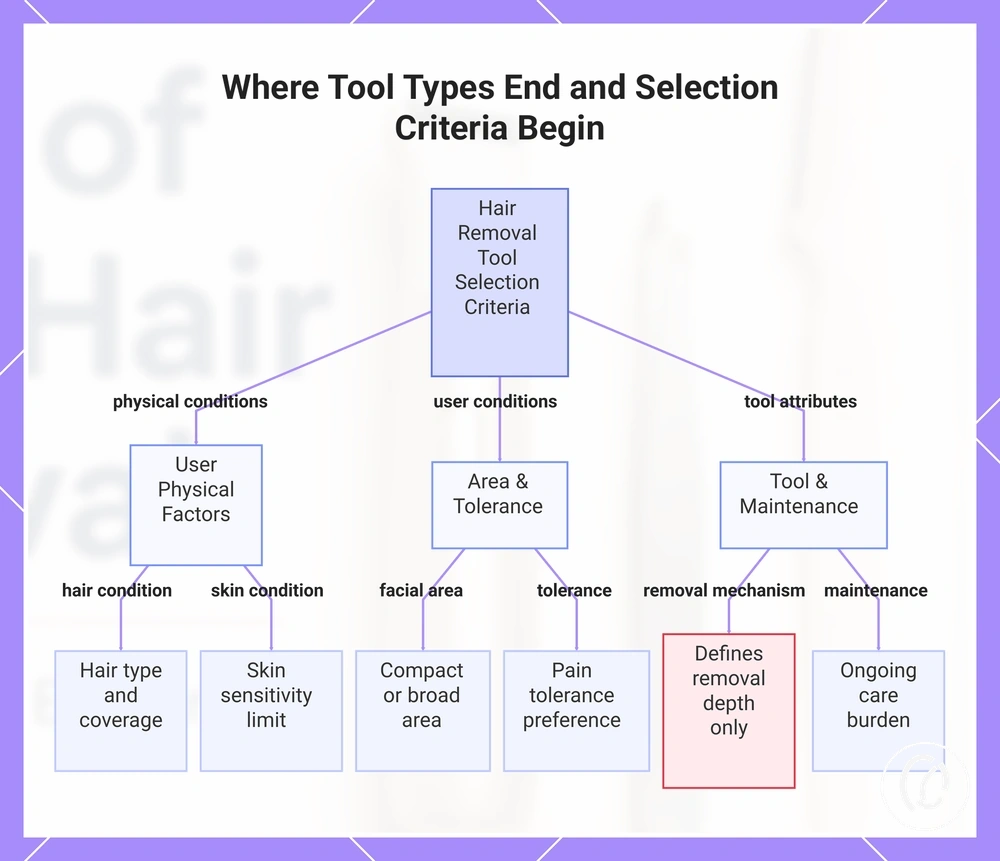
A tool type identifies the hair-removal mechanism, while selection criteria determine whether that mechanism matches a user’s skin, hair, facial area, tolerance, and maintenance needs. The decision implication comes from matching user conditions to tool attributes rather than treating the category name as a complete recommendation. :contentReference[oaicite:0]{index=0}
The checklist below separates tool-type knowledge from the selection criteria that influence the likely outcome.
The checklist below separates tool-type knowledge from the selection criteria that influence the likely outcome.
- Removal mechanism: Surface cutting, root pulling, threading, and exfoliating blade contact define the tool type; the mechanism establishes removal depth but not individual suitability.
- Hair condition: Fine peach fuzz, isolated coarse hairs, and wider hair coverage create different needs for grip, cutting contact, speed, and precision.
- Skin condition: Existing sensitivity or irritation lowers the acceptable level of repeated contact and pressure because additional friction can increase temporary discomfort.
- Facial area: Compact areas such as the upper lip and chin require controlled contact, while the cheeks and jawline allow broader coverage.
- User tolerance: Acceptance of root-pulling sensation supports consideration of pulling methods, while a preference for faster surface removal supports consideration of cutting methods.
- Maintenance: Cleaning, blade or thread replacement, charging, storage, and repeat-session frequency determine the ongoing care burden of the removal option.
For example, a narrow razor and tweezers can both remove upper-lip hair, but the razor prioritises faster surface cutting while tweezers prioritise single-hair precision and root removal. The relevant selection criteria are therefore the preferred balance of speed, contact sensation, regrowth feel, control, and maintenance rather than the facial area alone.
The relevant selection criteria are therefore the preferred balance of speed, contact sensation, regrowth feel, control, and maintenance rather than the facial area alone.
The next step is choosing the right facial hair removal tool by applying these criteria to the user’s specific hair, skin, facial area, tolerance, and maintenance conditions.
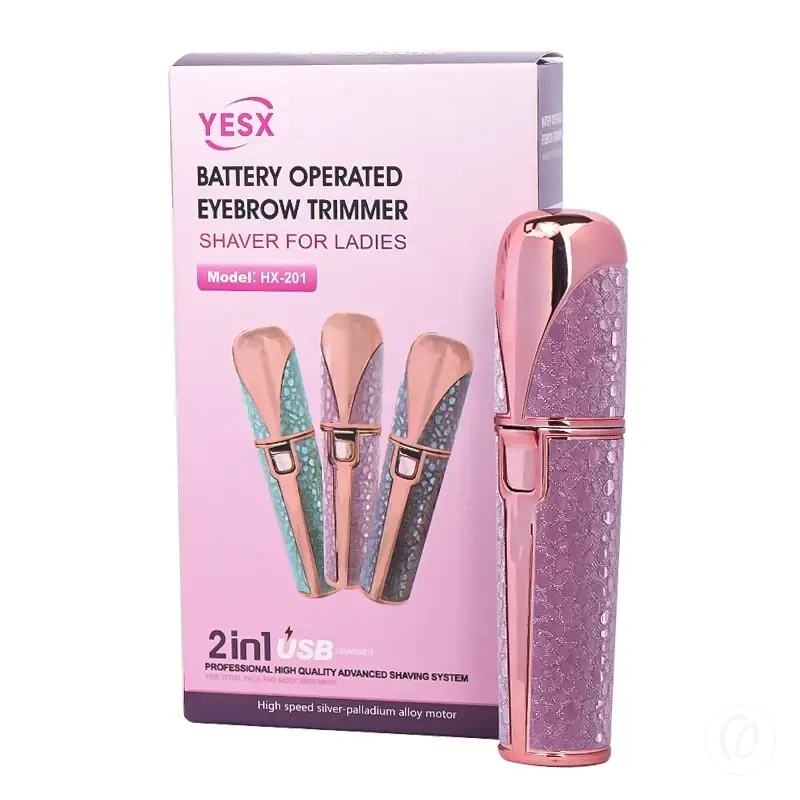
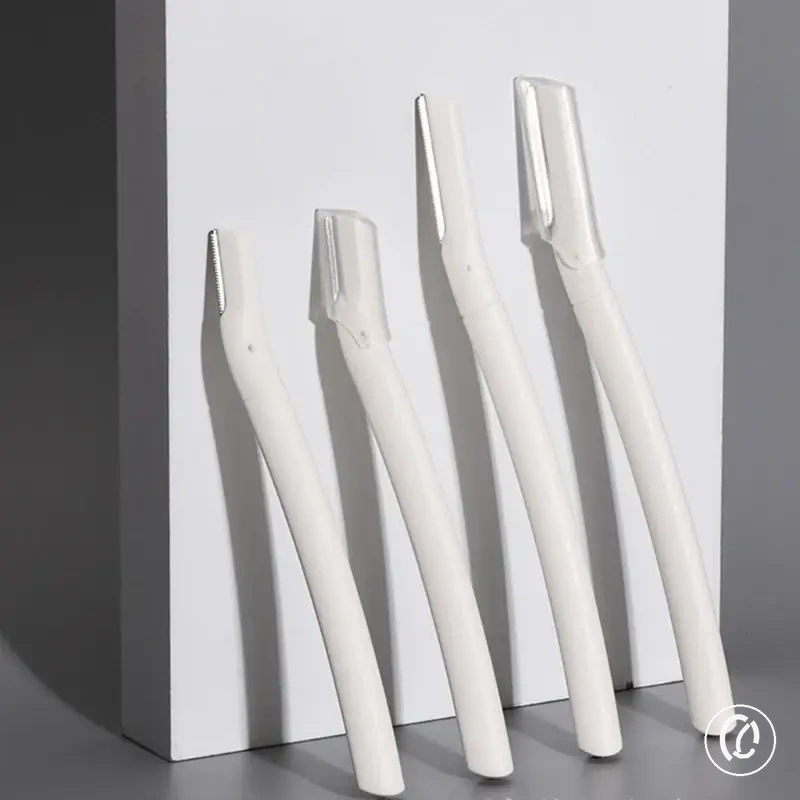
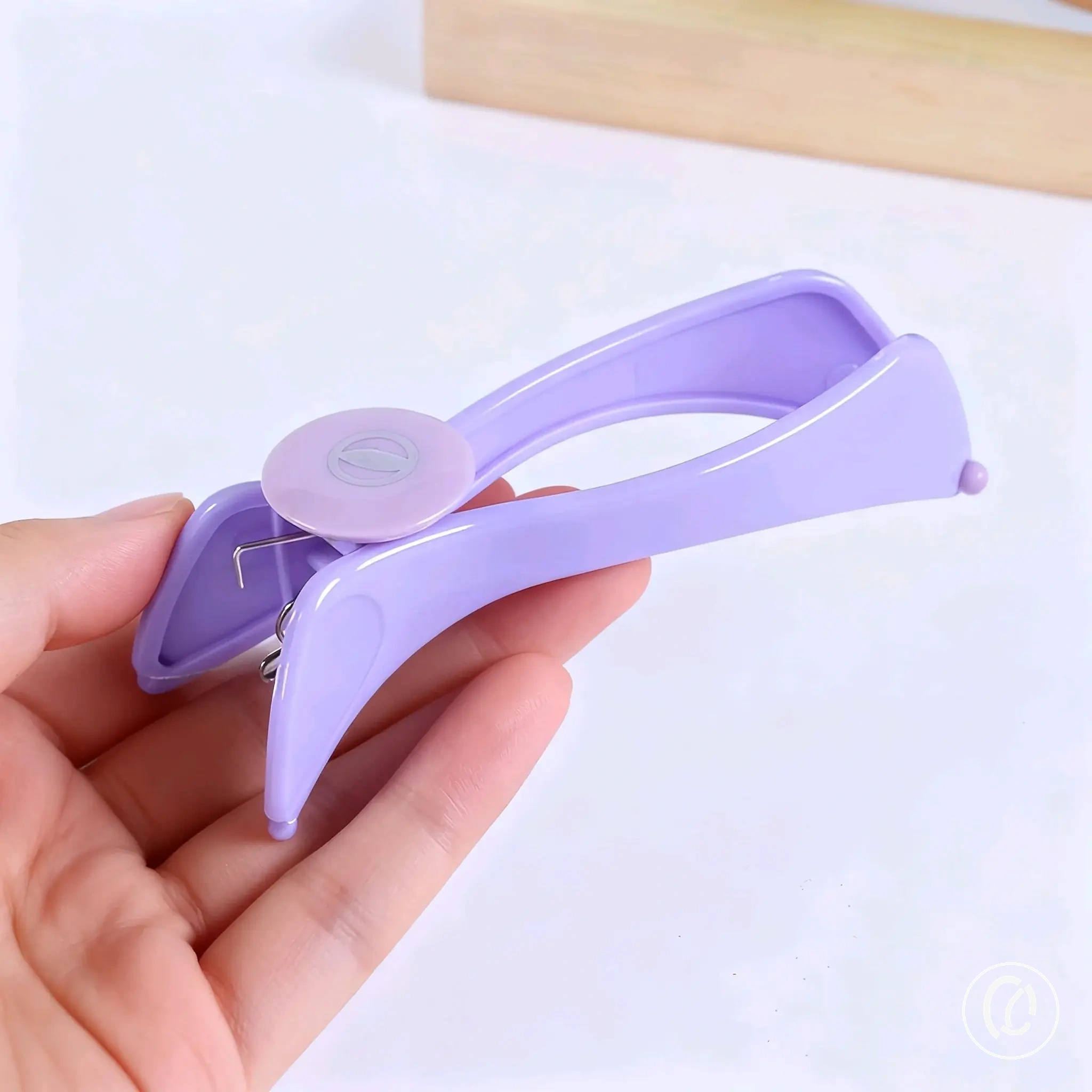
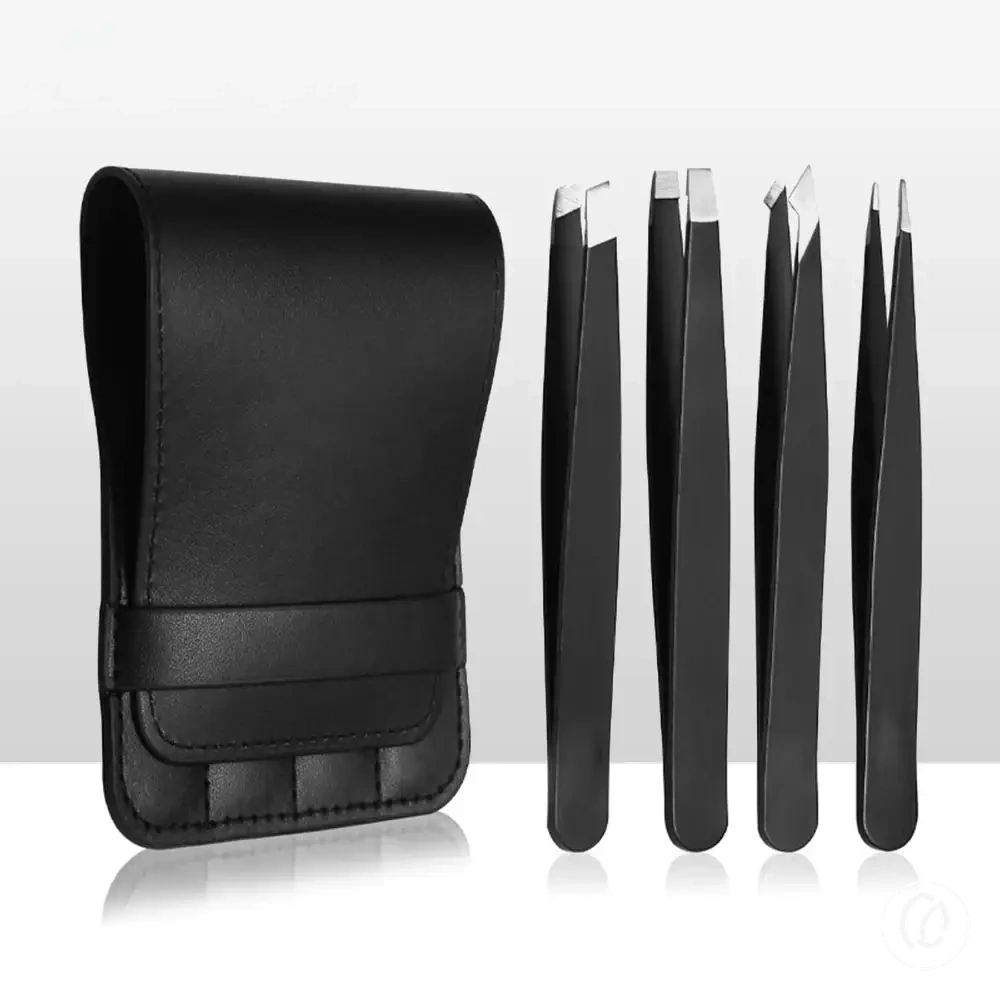
Here are product examples that may make comparison easier.
Here are product examples that may make comparison easier. Before buying, always review the compatibility criteria, essential features, and product details.
This chart shows the key selection criteria that determine the best facial hair removal tool based on user conditions, rather than relying solely on tool type.