At-Home Facial Hair Removal Tools vs Professional Removal
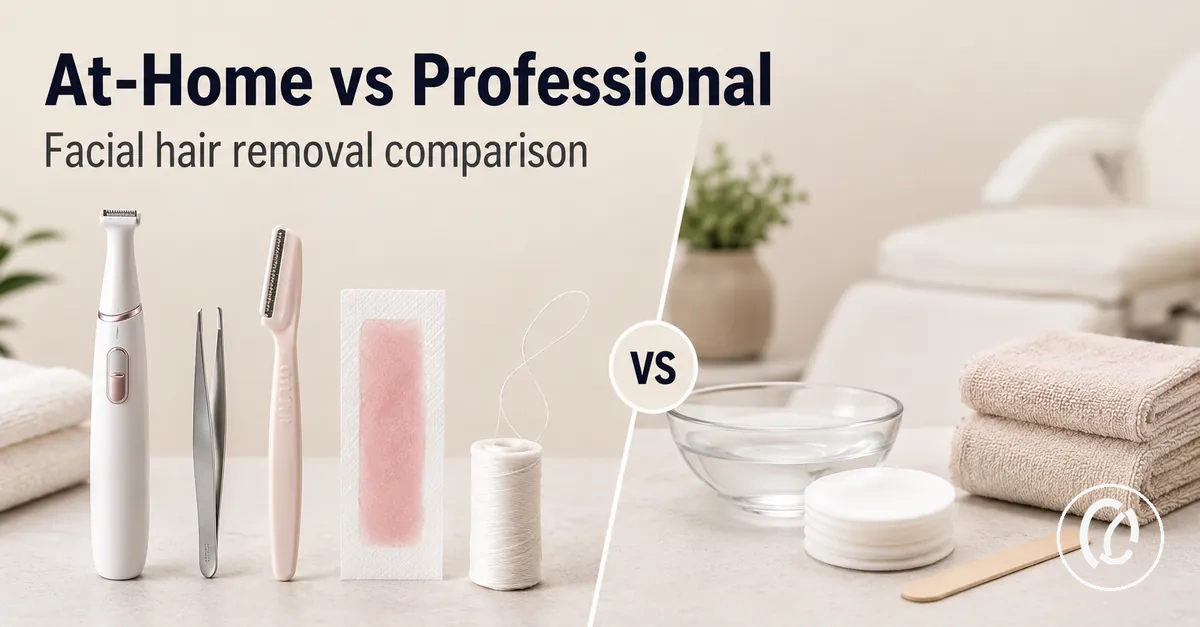
At-home facial hair removal tools and professional removal are designed for different goals, so the better option depends on your facial hair, hair type, skin sensitivity, budget, and expectations for result duration. At-home facial hair removal tools are generally intended for routine surface or root hair removal that requires repeat use, while professional removal includes treatments that may provide longer-lasting hair reduction for suitable candidates after multiple planned sessions. Neither approach is universally superior because suitability is determined by your treatment goals rather than the removal setting.
Neither approach is universally superior because suitability is determined by your treatment goals rather than the removal setting.
If you mainly want convenient maintenance of small facial areas, at-home facial hair removal tools can fit regular touch-ups with a lower upfront commitment. If your priority is reducing the frequency of regrowth or pursuing longer-term hair reduction, professional removal may be a better decision path because treatment planning, equipment, and clinical oversight differ from home use. The American Academy of Dermatology notes that treatment response varies according to factors such as hair colour, hair thickness, skin tone, and the removal technology used, so the same method does not produce identical outcomes for every person.
A common misconception is that home tools replace professional removal or that professional treatment is necessary for everyone.
A common misconception is that home tools replace professional removal or that professional treatment is necessary for everyone. In practice, at-home facial hair removal tools focus on ongoing facial hair management, whereas professional removal may offer longer-lasting reduction when the chosen treatment is appropriate for the individual's hair and skin characteristics. The following sections compare method type, treatment setting, result duration, repeat use, cost, safety, and suitability so you can evaluate each option against your own expectations rather than assuming one approach fits every situation.
Table of Contents
What Counts as At-Home vs Professional Facial Hair Removal
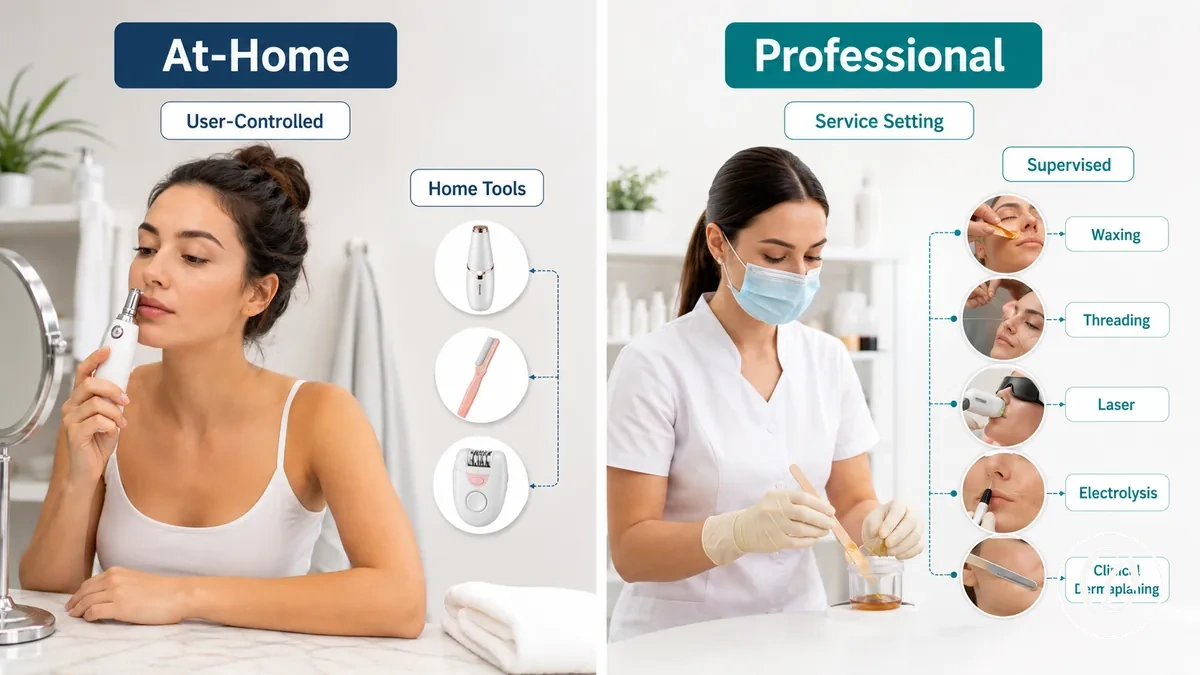
At-home facial hair removal is user-controlled facial hair management performed with tools used outside a clinic or service setting, while professional facial hair removal is facial hair removal performed or supervised by a trained provider in a service setting. The distinction is defined by the treatment setting, user control, supervision, and the type of equipment used rather than by guaranteed results. At-home facial hair removal therefore refers to user-controlled tools, whereas professional facial hair removal refers to supervised service-based procedures.
The distinction is defined by the treatment setting, user control, supervision, and the type of equipment used rather than by guaranteed results.
What Counts as At-Home vs Professional Facial Hair Removal is primarily a distinction between decision paths, not between brands, clinics, or promised outcomes. In this article, facial hair removal tools refers to user-operated devices such as an electric remover, dermaplaning tool, or facial epilator, while professional facial hair removal includes method categories such as waxing, threading, laser, electrolysis, and clinical dermaplaning performed in a supervised service setting. Professional organisations, including the American Academy of Dermatology, distinguish home-use devices from professionally supervised procedures because provider training, treatment setting, and device capability differ between the two categories. :contentReference[oaicite:0]{index=0}
| Path | Who performs it | Typical method categories | What the distinction means |
|---|---|---|---|
| At-home | User-controlled | Electric remover, dermaplaning tool, facial epilator | Hair removal is carried out outside a clinic using consumer tools under the user's control. |
| Professional | Trained provider or supervised practitioner | Waxing, threading, laser, electrolysis, clinical dermaplaning | Hair removal is delivered or supervised within a professional service setting using methods appropriate to that environment. |
A common misconception is that professional facial hair removal automatically replaces at-home facial hair removal or that home tools are intended to duplicate professional procedures. In reality, these categories describe different settings, levels of supervision, and tool capabilities rather than identical treatment goals. For a broader classification beyond this category-level distinction, see the guide to tool and method types. :contentReference[oaicite:1]{index=1}
How Home Tools and Professional Treatments Differ
Home tools and professional treatments differ mainly in user control, treatment setting, treatment intensity, precision, learning curve, and follow-up rather than in one approach being universally better. Home tools are operated by the user in a home environment, while professional treatments are performed or supervised by a trained practitioner in a professional service setting. These structural differences determine who controls the procedure, how treatment is delivered, and how repeat-use responsibility is managed. :contentReference[oaicite:0]{index=0}
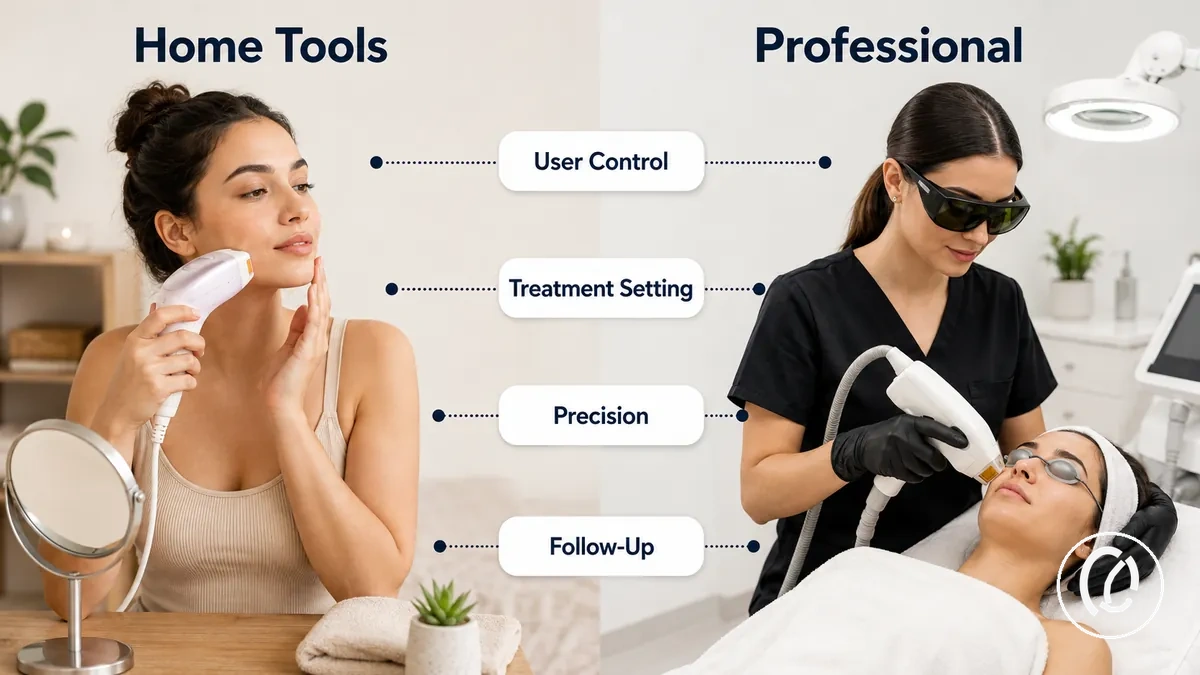
If a person values privacy and flexible scheduling, home tools place the user in direct control of technique and maintenance. If another person prefers practitioner-guided execution for a visible facial area, professional treatments shift responsibility for treatment delivery and follow-up to the service provider. How Home Tools and Professional Treatments Differ is therefore best understood by comparing control, setting, treatment intensity, precision, learning curve, and repeat-use burden rather than expected outcomes. The table below separates these structural attributes without repeating later discussions about cost, safety, or suitability. :contentReference[oaicite:1]{index=1}
| Comparison factor | Home tools | Professional treatments | Decision effect |
|---|---|---|---|
| User control | The user performs every treatment step. | A trained practitioner performs or supervises treatment. | Determines who controls technique and application. |
| Treatment setting | Home or other private environment. | Professional service setting by appointment. | Changes preparation, supervision, and treatment workflow. |
| Treatment intensity | Consumer devices and methods designed for self-use. | Professional equipment or practitioner-delivered methods intended for supervised use. | Influences how treatment is delivered without guaranteeing a specific result. |
| Precision | Depends on user technique, visibility, and hand positioning. | Depends on practitioner technique and controlled application. | Affects consistency across small facial areas. |
| Learning curve | User develops skill through repeated practice. | Technical execution is handled by the practitioner. | Determines how much technique the user must learn. |
| Follow-up | User manages maintenance and repeat-use burden. | Follow-up is typically scheduled according to the selected treatment method. | Changes long-term maintenance planning and treatment continuity. |
Tool Control, Treatment Setting, and User Skill
Tool control, treatment setting, and user skill shape the practical experience of at-home facial hair removal by determining who performs the treatment, who manages preparation, and who is responsible for technique. In a home setting, the user controls preparation, hand positioning, facial area visibility, and the timing of repeat use, while an appointment setting relies on trained execution by a practitioner. This difference means user skill has a greater influence on treatment consistency and perceived comfort when using home tools than when the procedure is professionally performed or supervised. :contentReference[oaicite:0]{index=0}
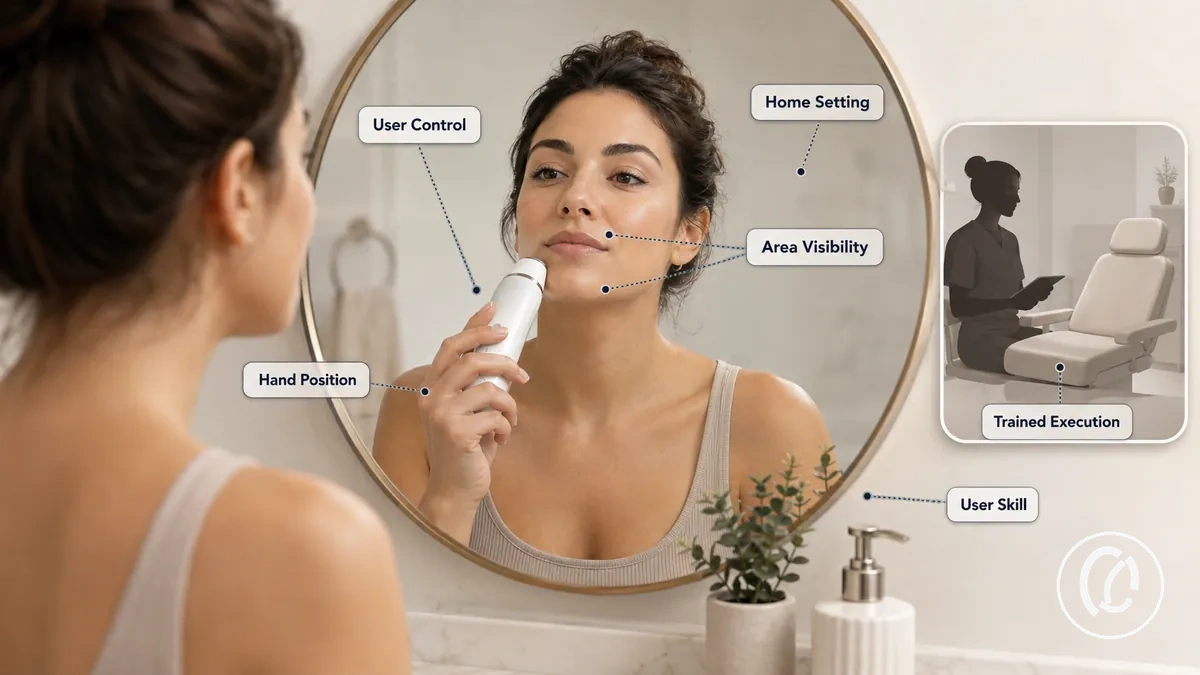
Tool control, treatment setting, and user skill can be compared through these practical control factors:
- User control: At-home tools place treatment timing, handling, and control level in the user's hands, while professional appointments transfer treatment execution to a trained practitioner. :contentReference[oaicite:1]{index=1}
- Privacy and convenience: A home setting allows private treatment at a chosen time, whereas an appointment setting requires scheduled visits and travel.
- Hand positioning and area visibility: Facial areas such as the upper lip, chin, and jawline require clear visibility and steady positioning, so user technique influences how consistently each area is treated.
- Preparation and trained execution: Home users prepare the treatment area themselves, while professional providers perform or supervise preparation and treatment according to the selected removal method.
- User skill: Experience with handling the tool improves control and familiarity over repeated use, but it does not mean every user will achieve the same level of consistency or comfort with the same device.
Power Level, Precision, and Treatment Intensity
Power level, precision, and treatment intensity differ by method category rather than by whether facial hair removal is performed at home or in a professional setting. Electric trimming, dermaplaning, epilation, clinic laser, and electrolysis each use a different treatment approach, so their precision, discomfort, and expected change are method-dependent rather than determined by the home or professional label. This distinction helps compare treatment characteristics without implying that greater treatment intensity is automatically more suitable. :contentReference[oaicite:0]{index=0}
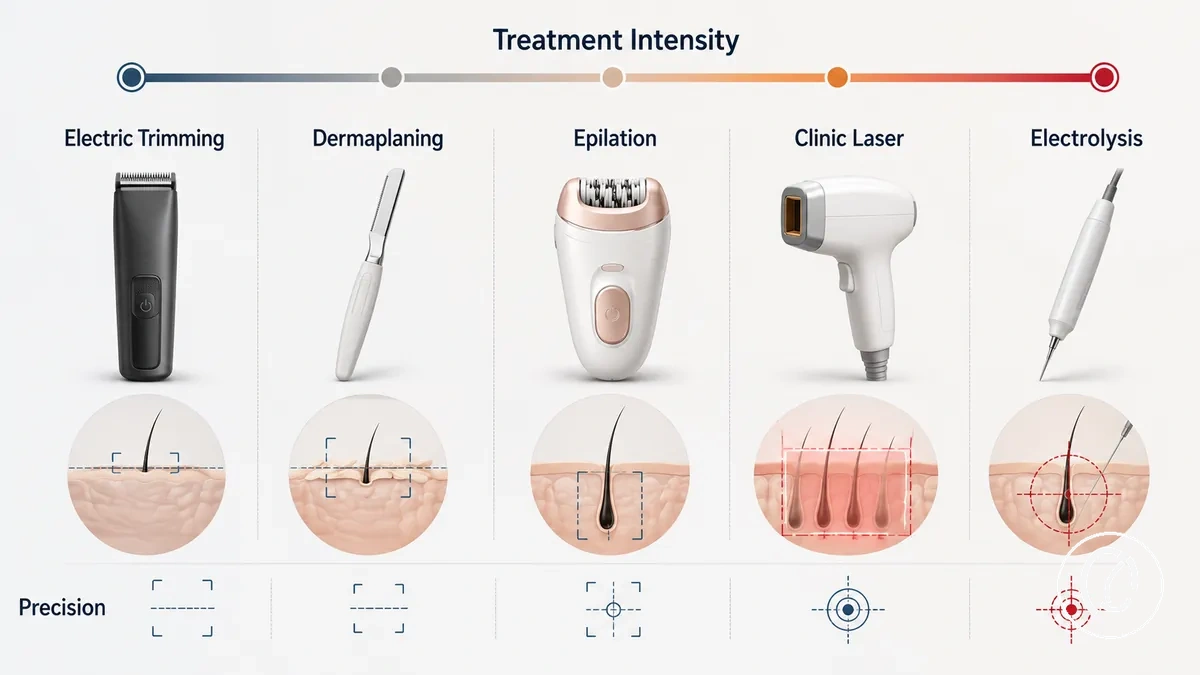
A common misconception is that stronger treatment intensity always produces better results. In practice, clinic laser and electrolysis use follicle-level treatment under professional supervision, while electric trimming, dermaplaning, and epilation differ in how they remove or target hair. Discomfort, expected change, and suitability should therefore be assessed according to the method category, hair type, skin response, and treatment goal rather than treatment intensity alone. :contentReference[oaicite:1]{index=1}
A common misconception is that stronger treatment intensity always produces better results.
Power level, precision, and treatment intensity are compared below to highlight how each method category differs in targeting and expected use.
| Method category | Typical intensity | Precision role | Suitability caution |
|---|---|---|---|
| Electric trimming | Surface hair cutting without follicle treatment | Good control for shaping small facial areas | Hair regrowth remains visible because only surface hair is trimmed. |
| Dermaplaning | Surface exfoliation combined with fine hair removal | Accurate for flat facial surfaces and fine facial hair | Requires careful technique to avoid unnecessary skin irritation. |
| Epilation | Mechanical removal of hair from the root | Suitable for targeting individual hairs and small facial areas | Discomfort commonly increases on more sensitive facial areas. |
| Clinic laser | Follicle-targeted light treatment performed under professional supervision | Treats multiple follicles across a defined treatment area | Expected change depends on hair colour, skin characteristics, and the prescribed treatment plan. |
| Electrolysis | Individual follicle treatment performed under professional supervision | Highest targeting accuracy for individual follicles | Treatment duration and discomfort increase with the number of hairs requiring treatment. |
Effectiveness and Result Longevity
Effectiveness and result longevity are determined by how a facial hair removal method affects the hair rather than whether it is performed at home or professionally. Methods that cut hair at the skin surface provide immediate surface smoothness but require routine maintenance because the hair shaft remains intact, while methods that remove hair from the root usually create a longer interval before visible regrowth. Methods intended for hair reduction, such as professionally performed laser treatments and electrolysis, aim to reduce future hair growth over multiple treatment sessions rather than provide a single permanent result. :contentReference[oaicite:0]{index=0}
Effectiveness and result longevity are determined by how a facial hair removal method affects the hair rather than whether it is performed at home or professionally.
Effectiveness describes how well a method achieves its intended outcome, while result longevity refers to how long that outcome typically lasts before maintenance sessions are needed. Surface-cutting methods such as electric trimming and dermaplaning focus on cosmetic surface smoothness, whereas epilation and waxing remove hair from the root and are commonly associated with a longer regrowth interval. Hair reduction methods rely on repeated professionally delivered treatments, and their consistency is influenced by hair type, hair growth cycle, skin characteristics, and adherence to the recommended treatment schedule rather than a single session. :contentReference[oaicite:1]{index=1}
Effectiveness describes how well a method achieves its intended outcome, while result longevity refers to how long that outcome typically lasts before maintenance sessions are needed.
For routine maintenance, at-home facial hair removal is generally effective when the goal is managing recurring facial hair with regular touch-ups rather than reducing long-term hair growth. If extending the interval between treatments or pursuing hair reduction is the priority, professionally delivered follicle-targeting methods may be a more appropriate choice, provided the selected method is suitable for the individual's hair type and treatment objectives. :contentReference[oaicite:2]{index=2}
For routine maintenance, at-home facial hair removal is generally effective when the goal is managing recurring facial hair with regular touch-ups rather than reducing long-term hair growth.
Effectiveness and Result Longevity become easier to evaluate when each outcome category is compared according to what the method is designed to achieve rather than where the treatment is performed.
| Outcome goal | Methods usually associated | Result pattern | Decision caution |
|---|---|---|---|
| Surface smoothness | Electric trimming, dermaplaning | Immediate cosmetic smoothness with regular touch-up needs because hair is cut at the skin surface. | Does not provide root removal or hair reduction. |
| Root removal | Epilation, waxing | Hair is removed from the root, so visible regrowth usually occurs after a longer interval than with surface-cutting methods. | Consistency and comfort are influenced by hair type and the treated facial area. |
| Longer-term reduction | Professional laser treatments, electrolysis | Designed to reduce hair growth progressively through multiple treatment sessions rather than deliver a one-time cosmetic result. | Treatment suitability and expected reduction depend on professional assessment, hair type, and adherence to the treatment plan. |
Surface Removal, Root Removal, and Hair Reduction
Surface removal, root removal, and hair reduction are three distinct outcome categories because each affects a different part of the hair process. Surface removal cuts the visible hair shaft at the skin surface, root removal extracts the entire hair from the follicle without destroying the follicle, and hair reduction uses follicle-targeting methods intended to decrease future hair growth over multiple treatment sessions under appropriate conditions. These three outcome categories should be compared by the part of the hair process they affect rather than treated as interchangeable. :contentReference[oaicite:0]{index=0}
This distinction prevents confusion between temporary hair removal and reduction-oriented treatment.
A common misconception is that shaving, dermaplaning, epilation, waxing, laser, and electrolysis produce identical outcomes. Instead, shaving and dermaplaning are surface removal methods, epilation and waxing are root removal methods, and laser and electrolysis are follicle-targeting methods intended for hair reduction when an appropriate treatment plan is completed. This distinction prevents confusion between temporary hair removal and reduction-oriented treatment. :contentReference[oaicite:1]{index=1}
A common misconception is that shaving, dermaplaning, epilation, waxing, laser, and electrolysis produce identical outcomes.
Surface removal, root removal, and hair reduction become easier to compare when the focus remains on which stage of the hair process each outcome category affects.
| Outcome category | What it affects | Common method examples | What the reader should not assume |
|---|---|---|---|
| Surface removal | The visible hair shaft at the skin surface. | Shaving, dermaplaning | Surface smoothness does not mean root removal or hair reduction. |
| Root removal | The complete hair is removed from the follicle while the follicle remains capable of producing another hair. | Epilation, waxing | A longer regrowth interval should not be interpreted as permanent hair removal. |
| Hair reduction | The follicle is targeted to reduce future hair growth over repeated treatment sessions. | Laser, electrolysis | Follicle-targeting treatment does not guarantee complete elimination of future hair growth for every person. |
Repeat Use, Maintenance, and Session Expectations
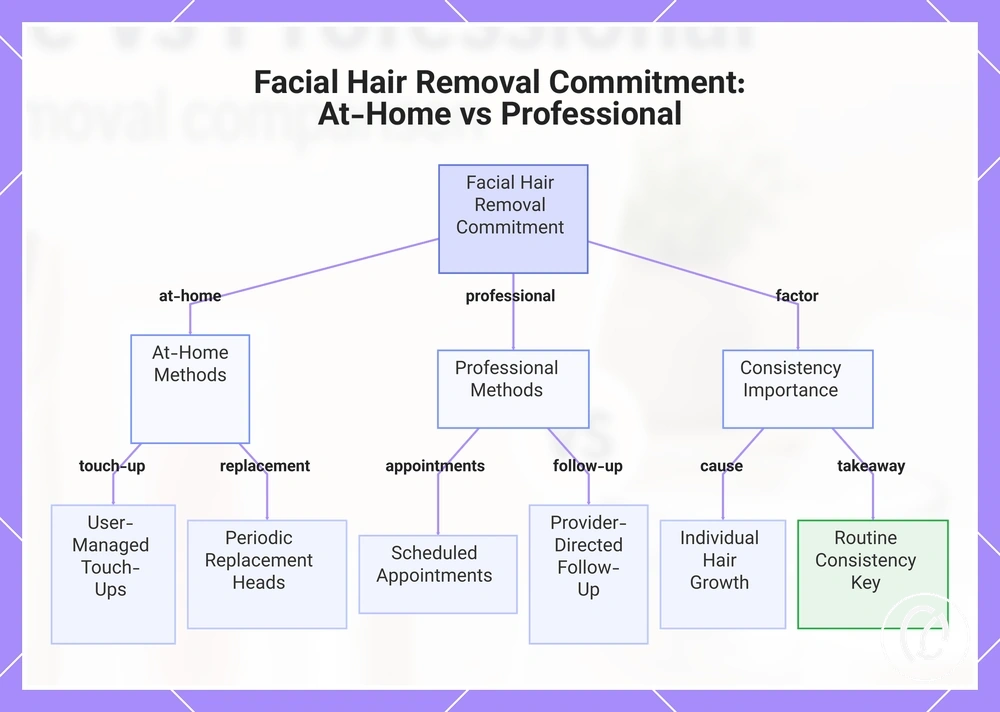
Repeat use, maintenance, and session expectations determine the ongoing practical commitment required after choosing an at-home facial hair removal tool or a professional treatment. At-home methods rely on user-managed touch-ups and routine maintenance, whereas professional methods rely on scheduled appointments and provider-directed follow-up. The appropriate frequency is not defined by a universal timetable because it is influenced by the selected method, hair growth, skin response, and treatment plan. :contentReference[oaicite:0]{index=0}
This comparison highlights that repeat use, maintenance, and session expectations affect convenience through different routines rather than fixed schedules.
For example, someone using an at-home facial hair removal tool may perform short touch-ups whenever visible regrowth no longer matches their preferred appearance, while a person receiving professional treatment usually returns only when advised by their provider as part of an ongoing treatment plan. This comparison highlights that repeat use, maintenance, and session expectations affect convenience through different routines rather than fixed schedules. :contentReference[oaicite:1]{index=1}
Repeat use, maintenance, and session expectations can be compared through these practical criteria:
- Frequency: Repeat use follows individual hair growth, the chosen removal method, and personal grooming goals instead of a fixed interval.
- Touch-ups: At-home tools support small, user-controlled touch-ups whenever maintenance becomes necessary.
- Appointments: Professional treatments normally require planned sessions and follow-up visits scheduled according to provider guidance and treatment progress.
- Replacement heads or blades: Consumer tools that use replaceable heads or blades require periodic replacement according to the manufacturer's maintenance instructions to maintain intended performance.
- Consistency: Maintaining a consistent routine, whether through repeat home use or attendance at professional sessions, is generally more important than attempting to follow the same timetable as another person because hair growth patterns differ.
This chart compares the ongoing practical commitment required for at-home and professional facial hair removal methods, focusing on maintenance, scheduling, and consistency.
Cost, Sessions, and Long-Term Value
Cost, sessions, and long-term value should be evaluated as the total cost and effort required over time rather than as a single purchase price or appointment fee. Upfront tool cost, professional session cost, repeat frequency, maintenance products, and result duration all contribute to long-term value, while no authoritative source specifies a universal price because costs differ by treatment method, facial area, provider, geographic region, and the number of sessions required. Value is therefore the combined effect of ongoing cost, maintenance effort, and expected result duration rather than the lowest initial expense. :contentReference[oaicite:0]{index=0}
Cost, Sessions, and Long-Term Value are therefore better assessed through the cost drivers shown below than through isolated prices.
For example, someone maintaining only upper-lip hair with a reusable facial hair removal tool may pay most of the cost when purchasing the device and then incur periodic expenses for replacement heads or blades, whereas professional waxing, laser treatment, or electrolysis distributes costs across multiple appointments. The number of professional sessions, the facial area being treated, and regional pricing policies all influence total expenditure, so comparing only one appointment or one product price does not reflect long-term value. Cost, Sessions, and Long-Term Value are therefore better assessed through the cost drivers shown below than through isolated prices. :contentReference[oaicite:1]{index=1}
A common misconception is that at-home tools always cost less or that professional treatments always provide better financial value.
A common misconception is that at-home tools always cost less or that professional treatments always provide better financial value. In reality, neither claim can be supported universally because budget, repeat frequency, maintenance burden, and result duration change the overall cost-value relationship. The most appropriate decision comes from comparing the complete ownership or treatment pattern rather than expecting guaranteed savings. :contentReference[oaicite:2]{index=2}
| Cost driver | Condition that changes it | Likely value effect | Decision caution |
|---|---|---|---|
| Upfront tool cost | Tool category, build quality, included accessories, and intended lifespan | A higher upfront investment may reduce future purchase frequency when the same tool is reused. | Initial purchase cost alone does not represent total long-term value. |
| Professional session cost | Treatment method, facial area, provider, geographic region, and number of sessions | Total treatment cost increases as additional appointments become part of the treatment plan. | No universal session price or total treatment cost applies across all providers or regions. |
| Repeat frequency | Hair growth pattern, selected removal method, and personal grooming routine | More frequent maintenance generally increases both ongoing time commitment and total cost. | Compare maintenance schedules rather than a single treatment. |
| Maintenance products | Replacement heads, blades, batteries, or other consumable components required by the tool | Consumable items increase total ownership cost throughout the product's useful life. | Maintenance requirements differ between manufacturers and product designs. |
| Result duration | Chosen removal method and the interval before routine maintenance becomes necessary | Methods associated with longer-lasting results may reduce maintenance frequency and improve long-term value. | Longer result duration should not be interpreted as guaranteed savings or permanent hair removal. |
Skin, Hair, and Facial Area Suitability
Skin suitability depends on matching the facial hair removal method to the facial area, hair type, skin sensitivity, and method intensity. The American Academy of Dermatology states that laser-treatment results are affected by the treatment area, hair colour and thickness, laser type, and skin colour, so compatibility cannot be assumed from the home or professional setting alone. The main suitability variables are facial area, hair texture, skin response, irritation history, skin tone, and coarse growth. :contentReference[oaicite:0]{index=0} :contentReference[oaicite:1]{index=1}
Skin, Hair, and Facial Area Suitability can therefore be assessed through the condition-led comparison below.
For example, fine peach fuzz across the cheeks may fit a controlled surface-removal method when the skin has no active irritation, whereas coarse recurring growth on the chin may justify professional assessment when frequent removal is not meeting the intended outcome. An irritation history changes the method fit because repeated friction or greater method intensity can worsen an existing skin response; Cleveland Clinic describes dermaplaning as a temporary surface procedure and advises clinical consideration of the person's skin condition before treatment. Skin, Hair, and Facial Area Suitability can therefore be assessed through the condition-led comparison below. :contentReference[oaicite:2]{index=2}
| Suitability factor | Condition to check | Method fit signal | Caution |
|---|---|---|---|
| Facial area | Upper lip, chin, cheeks, jawline, or skin close to the eyes | Small facial zones favour methods that provide controlled targeting and clear visibility. | Mayo Clinic identifies the upper lip and chin as common laser-treatment areas but states that laser hair removal should not be used on the eyelids, eyebrows, or surrounding areas. :contentReference[oaicite:3]{index=3} |
| Hair texture | Fine peach fuzz, isolated hairs, or coarse growth | Fine surface hair may fit trimming or dermaplaning, while persistent coarse hair may support consideration of root removal or professionally assessed hair reduction. | The American Academy of Dermatology reports that hair colour and thickness affect laser results, so light-based suitability should not be inferred from texture alone. :contentReference[oaicite:4]{index=4} |
| Skin sensitivity | Previous redness, burning, rash, active irritation, or another adverse skin response | A controlled method with less friction or treatment intensity is the clearer direction when previous reactions were linked to more intensive removal. | Active or persistent skin concerns require professional assessment rather than increasing method intensity. |
| Skin tone | Skin colour, hair colour, and the technology or practitioner used for light-based treatment | Professional laser treatment may be considered when the selected device and practitioner experience match the person's skin and hair characteristics. | The American Academy of Dermatology states that skin colour and laser type affect results, so suitability should not be assumed for every skin tone or device. :contentReference[oaicite:5]{index=5} |
| Recurring growth | Occasional fine regrowth or persistent coarse growth requiring repeated touch-ups | Occasional regrowth may fit at-home maintenance, while persistent coarse growth may justify professional assessment of longer-term options. | Recurring coarse facial hair can have causes beyond cosmetic grooming, so a removal method should not be treated as a medical diagnosis. |
A common misconception is that one method has the same skin suitability across every facial area, hair type, and skin tone. In practice, active irritation, a history of adverse skin response, treatment near the eyes, or uncertainty about light-based compatibility changes the risk profile and supports professional assessment before proceeding. :contentReference[oaicite:6]{index=6}
Fine Hair, Peach Fuzz, and Surface-Level Facial Hair
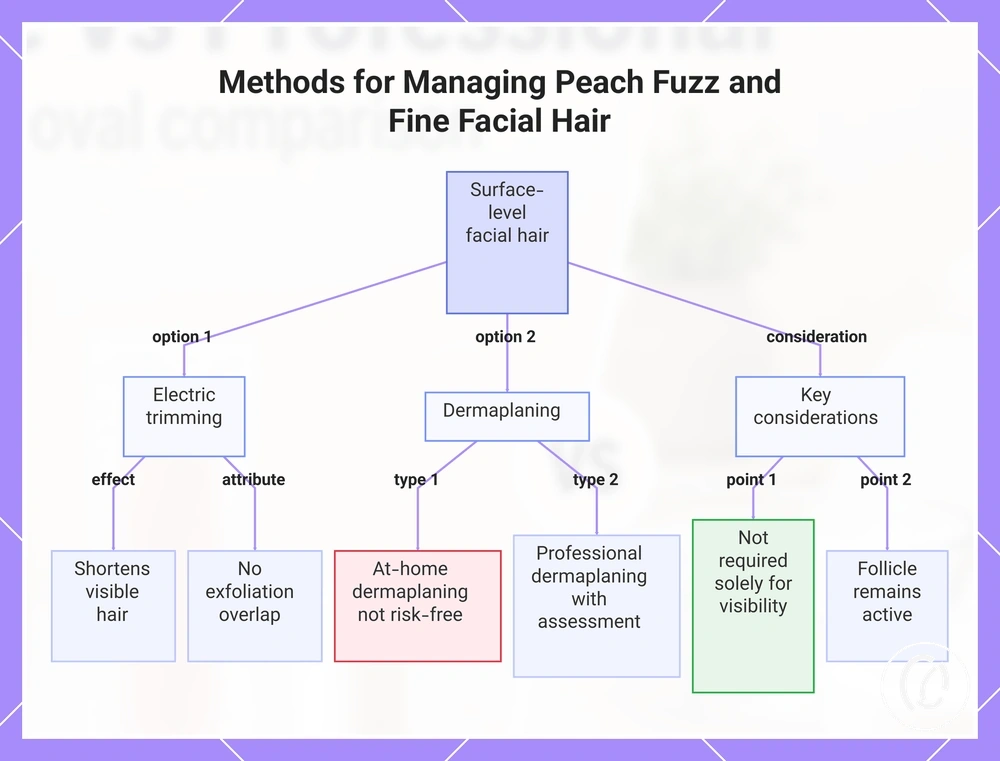
Fine hair, peach fuzz, and other surface-level facial hair commonly fit surface-level methods such as electric trimming, at-home dermaplaning, or professional dermaplaning when the intended result is temporary visibility control and surface smoothness. Cleveland Clinic describes peach fuzz as vellus hair that is fine, short, and commonly present on the face, while dermaplaning removes unwanted surface hair and superficial skin cells rather than stopping follicle activity. Lighter facial hair therefore does not require professional treatment solely because it is visible. :contentReference[oaicite:0]{index=0}
Lighter facial hair therefore does not require professional treatment solely because it is visible.
For someone whose peach fuzz affects makeup feel, electric trimming shortens visible hair without exfoliation overlap, whereas dermaplaning can create a smoother surface by removing hair and superficial skin cells together. Professional dermaplaning transfers technique and skin assessment to a trained provider, but at-home dermaplaning is not risk-free when irritation, acne, or a reactive skin response is present. Electric trimming and dermaplaning both leave the follicle capable of producing hair, so short-term regrowth and future touch-ups remain expected. :contentReference[oaicite:1]{index=1}
Electric trimming and dermaplaning both leave the follicle capable of producing hair, so short-term regrowth and future touch-ups remain expected.
This chart shows the main surface-level methods for fine facial hair, including electric trimming and dermaplaning, along with key considerations.
Coarse Facial Hair and Recurring Growth
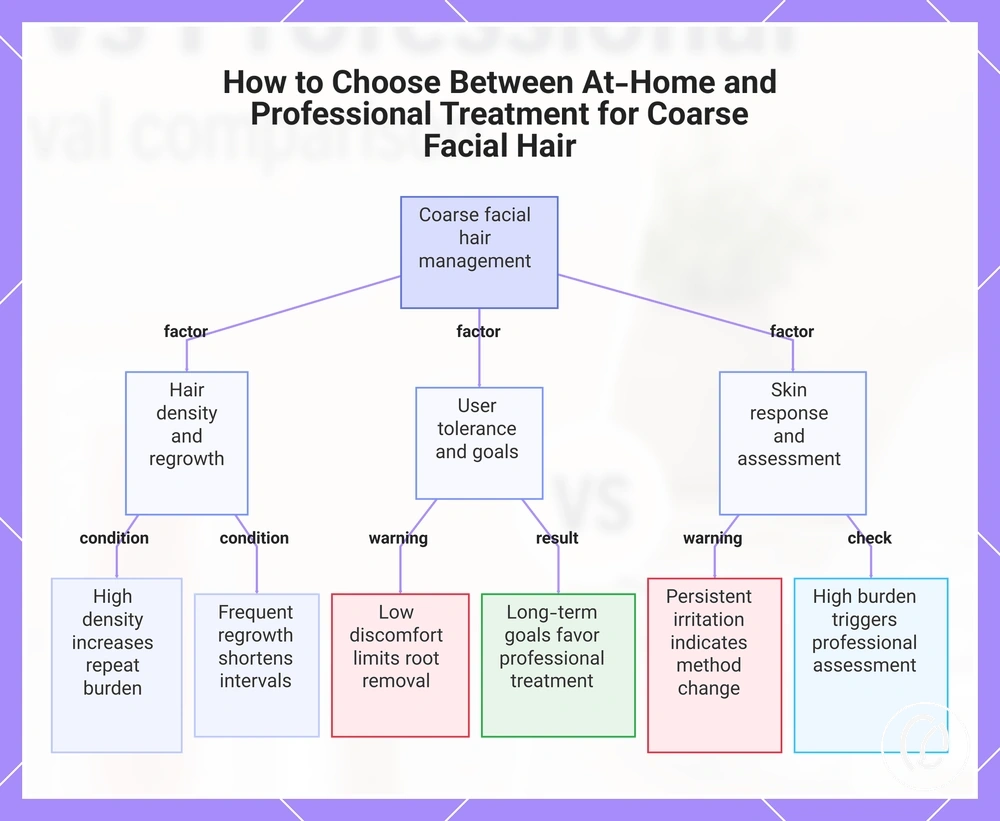
Coarse facial hair and recurring growth increase the comparison between quick at-home management and professional treatment because greater hair density and frequent regrowth raise the repeat burden of ongoing maintenance. Trimming provides surface-level management, while epilation and waxing remove hair from the root but generally require greater discomfort tolerance than trimming. When recurring growth repeatedly requires short maintenance intervals, longer-term treatment goals such as laser or electrolysis become comparison criteria rather than automatic recommendations. :contentReference[oaicite:0]{index=0}
This comparison focuses on reducing repeat burden rather than assuming professional treatment is necessary for every case.
For example, a person with a few coarse chin hairs may find occasional trimming or epilation sufficient, whereas dense recurring growth across the chin or jawline can make repeated trimming, epilation, or waxing more time-consuming and uncomfortable over months of maintenance. In that situation, laser or electrolysis may be appropriate to discuss with a qualified practitioner if the desired duration extends beyond routine home management and the person's skin response and treatment suitability have been assessed. This comparison focuses on reducing repeat burden rather than assuming professional treatment is necessary for every case. :contentReference[oaicite:1]{index=1}
Coarse facial hair and recurring growth can be assessed using the following practical criteria:
- Hair density: A small number of isolated coarse hairs often suits targeted trimming or epilation, while denser growth increases maintenance time and repeat burden.
- Recurring growth: Hair that becomes cosmetically noticeable soon after removal generally requires more frequent trimming, epilation, or waxing.
- Discomfort tolerance: Epilation and waxing remove hair from the root and may be less suitable if repeated discomfort limits consistent maintenance.
- Desired duration: Quick cosmetic management favours trimming or root-removal methods, whereas longer-term treatment goals may justify considering laser or electrolysis after suitability assessment.
- Skin response: Persistent irritation or poor tolerance after repeated removal is a practical reason to reconsider the chosen maintenance method before increasing treatment intensity.
- Professional assessment trigger: Assessment may be useful when coarse facial hair creates a high repeat burden, recurring growth remains difficult to manage, or longer-term treatment goals become the priority.
This chart shows the key factors that determine whether at-home management or professional treatment is more suitable for coarse facial hair, based on hair density, regrowth, tolerance, goals, skin response, and burden.
Skin Tone, Sensitivity, and Irritation Risk
Skin tone, skin sensitivity, and irritation risk affect facial hair removal suitability because previous skin response, pigmentation risk, and method intensity can change both home-tool comfort and professional-treatment fit. A history of irritation or product reactions supports choosing a less intensive approach or seeking provider assessment, while light-based devices require compatibility checks for the specific skin tone, hair characteristics, and device instructions. Skin response is therefore a decision condition, not a universal guarantee of suitability. :contentReference[oaicite:0]{index=0}
This is a compatibility boundary rather than a medical diagnosis or treatment plan.
For example, recurring redness after waxing or discomfort after a depilatory product is a caution signal against repeating the same method without reviewing the cause, whereas uncertainty about pigmentation risk with a light-based device supports professional guidance before treatment. Active skin conditions, broken skin, or an unresolved reaction also shift the decision away from immediate cosmetic removal until the treatment area is suitable under the relevant product instructions or provider guidance. This is a compatibility boundary rather than a medical diagnosis or treatment plan. :contentReference[oaicite:1]{index=1}
Skin tone, sensitivity, and irritation risk can be checked through these local suitability criteria:
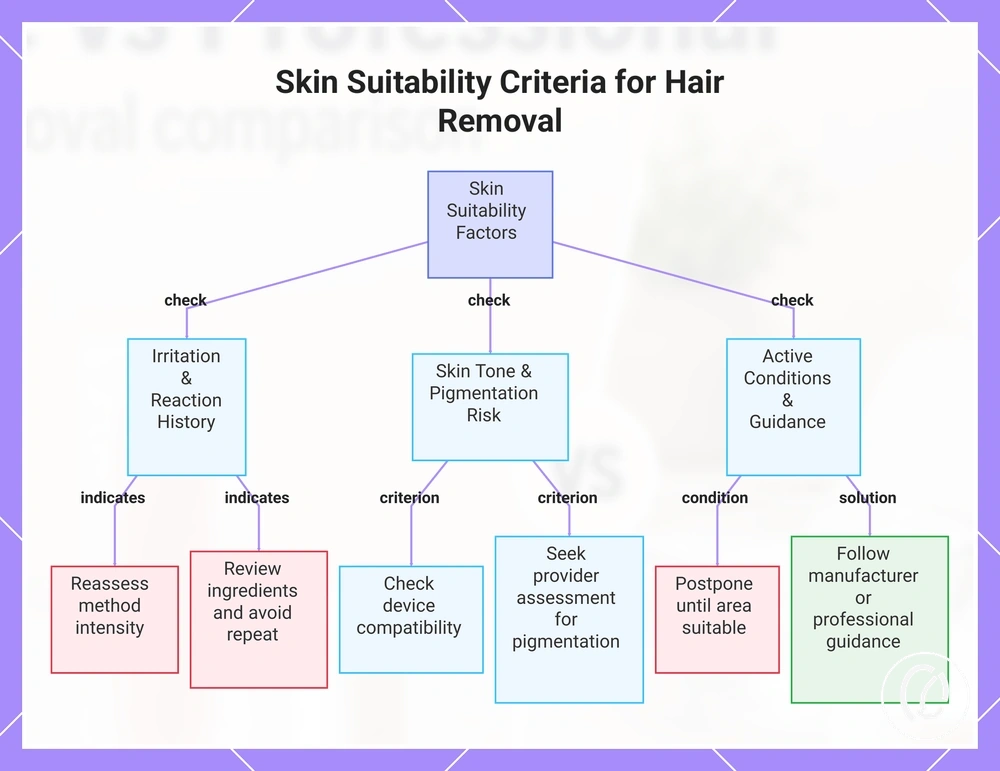
- Irritation history: Previous burning, stinging, persistent redness, or swelling indicates that the same method or intensity requires reassessment before reuse.
- Skin tone: Light-based devices require a supported skin-and-hair compatibility category in the manufacturer’s device instructions; unsupported combinations should not be assumed suitable.
- Pigmentation risk: A history of post-inflammatory darkening or lightening increases the value of provider assessment before methods that generate heat, light, or repeated skin trauma.
- Active skin conditions: Active irritation, broken skin, rash, or inflamed lesions are caution conditions that favour postponing cosmetic removal until the area is appropriate for treatment.
- Product reactions: A previous reaction to waxes, creams, or skincare products supports reviewing ingredients and avoiding repeat exposure until compatibility is clarified.
- Device instructions and provider assessment: Manufacturer guidance defines the supported operating conditions for a home device, while professional assessment is appropriate when skin sensitivity, pigmentation risk, or treatment suitability remains uncertain.
This chart shows the key skin-related factors to check before choosing a facial hair removal method, based on irritation history, skin tone, pigmentation risk, active conditions, and product reactions.
Safety, Side Effects, and Professional Oversight
Safety, side effects, and professional oversight vary according to method intensity, user technique, skin condition, and whether trained screening is available rather than whether facial hair removal is performed at home or professionally. Surface-removal methods are more commonly associated with temporary irritation or nicks, while light- or heat-based procedures introduce additional considerations such as burns or pigment concerns if treatment settings or user suitability are inappropriate. Safety should therefore be evaluated by matching the method to the person's skin and hair characteristics instead of assuming one setting is inherently safer than another. :contentReference[oaicite:0]{index=0}
Safety should therefore be evaluated by matching the method to the person's skin and hair characteristics instead of assuming one setting is inherently safer than another.
For example, a person using a facial trimmer with excessive pressure may experience temporary irritation or small nicks, whereas a person receiving a light-based procedure without appropriate screening for skin tone, hair characteristics, or active skin irritation may have a greater likelihood of burns or pigment changes. Root-removal methods such as epilation or waxing are also more commonly associated with ingrown hairs than surface trimming because the hair regrows from the follicle after removal. Professional oversight adds screening, treatment planning, and controlled technique when higher-intensity procedures or recurring adverse reactions increase uncertainty, but it does not eliminate every possible side effect. :contentReference[oaicite:1]{index=1}
Root-removal methods such as epilation or waxing are also more commonly associated with ingrown hairs than surface trimming because the hair regrows from the follicle after removal.
Safety, Side Effects, and Professional Oversight are easier to compare when risks are grouped by the condition that creates them rather than by whether treatment is performed at home or in a clinic.
| Risk factor | Home-tool consideration | Professional-removal consideration | When to be cautious |
|---|---|---|---|
| Irritation | Repeated friction, shaving, trimming, or poor user technique can cause temporary redness or irritation. | Procedure intensity is selected according to treatment planning, although temporary irritation may still occur. | Use additional caution when active irritation, eczema, rash, or inflamed skin is already present. |
| Cuts or burns | Nicks are primarily associated with blades or dermaplaning when technique is poor. | Burns are mainly associated with light- or heat-based procedures when treatment settings or suitability are inappropriate. | Extra caution is appropriate when skin is damaged, recently treated, or device instructions are not met. |
| Ingrown hairs | More commonly associated with root-removal methods such as epilation or waxing than with trimming. | Professional assessment may recommend an alternative method if recurring ingrown hairs become a persistent concern. | Recurring ingrown hairs after repeated removal justify reviewing the chosen technique. |
| Pigment concerns | Home light-based devices should only be used within the manufacturer's supported skin-tone and hair-characteristic guidance. | Professional screening helps determine whether the selected device and treatment approach are appropriate. | People with darker skin tones or a history of pigmentation changes should seek appropriate assessment before light-based treatment. |
| Infection risk | Using damaged tools or treating broken skin increases the possibility of contamination. | Professional hygiene procedures reduce contamination opportunities but cannot remove every risk. | Delay cosmetic hair removal if the treatment area has broken skin or signs of infection. |
| Recurring reactions | Repeated redness, swelling, or discomfort after the same method suggests reassessing technique or method choice. | Professional screening can help determine whether another treatment approach is more suitable. | Seek professional assessment when adverse reactions continue after repeated facial hair removal. |
Best Fit Scenarios for Home and Professional Removal
Best fit scenarios for home and professional removal are determined by the user's result goal, repeat-use tolerance, skin and hair compatibility, supervision needs, and budget rather than by one universally better option. Home removal is generally the better fit for routine maintenance and occasional touch-ups, while professional removal is generally the better fit when longer-term hair reduction, clinical assessment, or supervised treatment planning is the primary objective. The most appropriate choice therefore depends on the specific user scenario instead of universal superiority. :contentReference[oaicite:0]{index=0}
The most appropriate choice therefore depends on the specific user scenario instead of universal superiority.
Routine maintenance, peach fuzz management, and convenience commonly support a home removal path, whereas coarse recurring hair, uncertainty about skin response, or a longer-term reduction goal more often support professional removal with supervision. Budget also changes decision fit because home removal usually concentrates costs in reusable tools and replacement parts, while professional removal spreads costs across scheduled treatment sessions. Best Fit Scenarios for Home and Professional Removal become easier to evaluate when each situation is compared individually through the scenario matrix below. :contentReference[oaicite:1]{index=1}
| User scenario | At-home path fit | Professional path fit | Main caution |
|---|---|---|---|
| Routine touch-ups | Suitable when small facial areas require convenient repeat maintenance between normal grooming routines. | Usually unnecessary unless another treatment goal exists. | Hair regrowth means routine maintenance remains necessary regardless of the chosen home method. |
| Peach fuzz | Suitable when temporary surface smoothness and short-term cosmetic improvement are the primary goals. | Professional dermaplaning may be appropriate when supervised exfoliation and surface hair removal are preferred. | Surface-removal methods improve appearance temporarily but do not reduce future hair growth. |
| Coarse recurring growth | Suitable when only a small number of coarse hairs require ongoing maintenance. | Often a better fit when recurring growth creates a high maintenance burden or longer-term reduction is the treatment goal. | Professional suitability depends on skin response, hair characteristics, and treatment assessment before sessions begin. |
| Sensitive skin concerns | Suitable only when previous skin reactions, manufacturer guidance, and method intensity support safe repeat use. | Professional supervision may be appropriate when skin compatibility or irritation risk is uncertain. | Active irritation, inflamed skin, or previous adverse reactions should be evaluated before continuing cosmetic hair removal. |
| Longer-term reduction goals | Home removal methods mainly support ongoing maintenance rather than follicle-targeted hair reduction. | Professional laser treatment or electrolysis may be appropriate when longer-term reduction is the intended outcome after suitability assessment. | Professional treatment normally requires multiple planned sessions rather than a single appointment. |
| Budget-sensitive users | Suitable when lower upfront long-term spending and self-managed maintenance align with the user's budget. | Suitable when the user accepts higher cumulative treatment costs in exchange for professionally supervised care and longer-term treatment goals. | Total long-term value depends on maintenance frequency, planned sessions, replacement costs, and treatment objectives rather than initial price alone. |
When at-home facial hair removal tools make sense
At-home facial hair removal tools make sense when the practical fit is private, convenient repeat use for fine hair, peach fuzz, or small-area touch-ups rather than longer-term hair reduction. They are also suitable when the user prefers a lower upfront commitment and is comfortable following device instructions carefully for ongoing maintenance. The fit therefore depends on convenience, privacy, treatment area, hair type, and willingness to repeat the process. :contentReference[oaicite:0]{index=0}
The fit therefore depends on convenience, privacy, treatment area, hair type, and willingness to repeat the process.
For example, home removal can suit occasional upper-lip or chin touch-ups when the goal is temporary surface smoothness and the user accepts short-term regrowth. Fine hair and peach fuzz can be managed with surface-level methods, but the result remains temporary because these methods do not stop future hair growth. :contentReference[oaicite:1]{index=1}
Fine hair and peach fuzz can be managed with surface-level methods, but the result remains temporary because these methods do not stop future hair growth.
When at-home facial hair removal tools make sense can be checked through these practical fit signals:
- Convenience: At-home tools are a practical fit when regular touch-ups are easier to manage within a personal routine than scheduled appointments.
- Privacy: Home removal suits users who prefer to manage facial hair privately and can follow the relevant device instructions.
- Lower upfront commitment: A reusable home tool can suit users who want to try routine removal without committing to a planned series of professional sessions.
- Small-area touch-ups: Upper-lip, chin, or isolated facial areas fit home use when the treatment area is limited and precise repeat maintenance is acceptable.
- Fine hair and peach fuzz: At-home methods can suit lighter surface-level hair when temporary smoothness is the objective rather than permanent reduction.
- Repeat use: Home tools fit users who are comfortable with careful ongoing maintenance and who stop using the method if irritation or an unexpected skin response occurs.
When professional facial hair removal is the better fit
Professional facial hair removal is the stronger fit when the goal extends beyond routine at-home maintenance and requires supervision, greater treatment intensity, trained assessment, or longer intervals between maintenance sessions. It is conditionally appropriate for recurring coarse growth, irritation concerns after repeated home removal, complex hair concerns, or uncertainty about whether light-based devices are suitable for a person's skin tone and hair characteristics. Professional facial hair removal should be selected according to treatment suitability and desired outcome rather than assuming every professional method is appropriate for every user. :contentReference[oaicite:0]{index=0}
Professional facial hair removal should be selected according to treatment suitability and desired outcome rather than assuming every professional method is appropriate for every user.
For example, a person with recurring coarse chin hair that repeatedly requires home maintenance, ongoing irritation after waxing or epilation, or uncertainty about light-based devices may benefit from trained assessment before beginning a professionally supervised treatment plan. Professional supervision helps match treatment intensity, skin response, hair characteristics, and longer-term reduction goals to the most appropriate method, but the final choice still depends on individual suitability rather than the treatment setting alone. :contentReference[oaicite:1]{index=1}
The following conditions commonly indicate that professional facial hair removal is the stronger fit:
- Supervision needs: Professional treatment is appropriate when provider guidance is needed to select a method that matches skin characteristics, hair type, and treatment goals.
- Recurring coarse growth: Persistent coarse facial hair that creates a frequent maintenance burden can justify professionally supervised treatment when longer intervals between maintenance sessions are the objective.
- Irritation concerns: Repeated redness, ingrown hairs, or discomfort after home removal are practical reasons to seek trained assessment before increasing treatment intensity.
- Light-based device uncertainty: Professional guidance is appropriate when uncertainty exists about skin tone, hair characteristics, or suitability for laser or other light-based devices.
- Longer-term outcome goals: Professional facial hair removal is a stronger fit when the desired outcome is longer-lasting hair reduction through a planned series of treatment sessions rather than routine home touch-ups.
Choosing Between At-Home Tools and Professional Removal
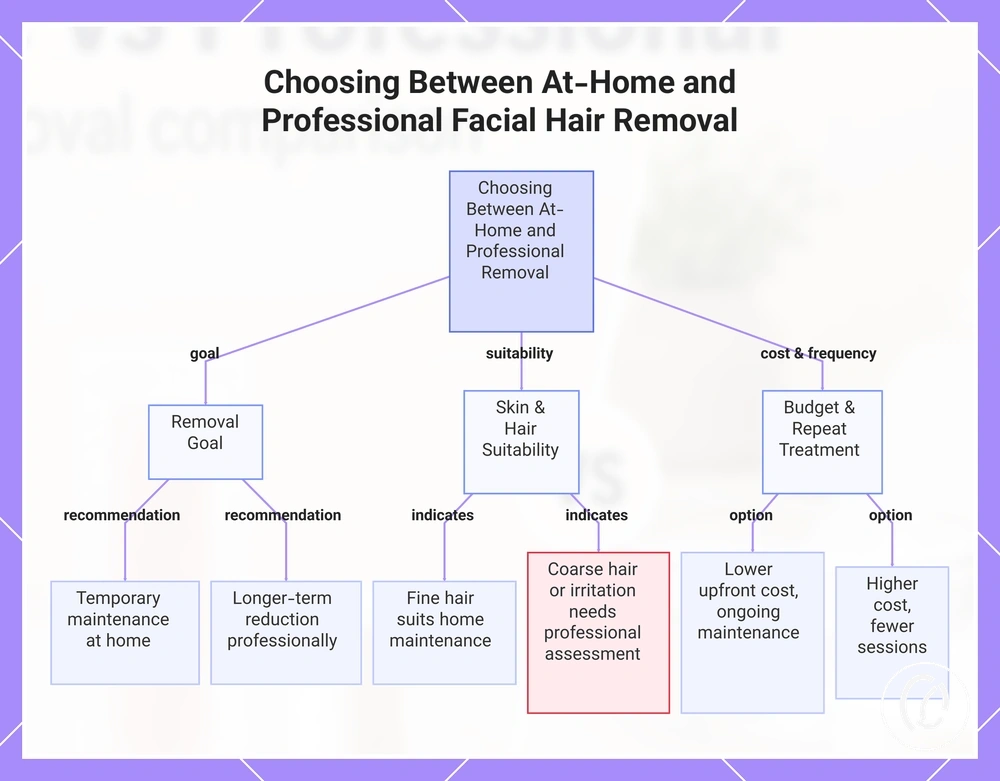
Choosing between at-home tools and professional removal should be based on five criteria: removal goal, skin suitability, hair suitability, budget, and willingness to repeat treatment. At-home tools are generally the appropriate direction for temporary hair removal and routine maintenance, while professional removal is generally the appropriate direction for people seeking longer-term hair reduction, supervised treatment, or assessment of recurring coarse facial hair. The final decision is criteria-based rather than a universal recommendation. :contentReference[oaicite:0]{index=0}
The final decision is criteria-based rather than a universal recommendation.
If your removal goal is routine management of facial hair, at-home tools usually provide the most practical decision path because they allow convenient repeat treatment whenever hair becomes visible again. If your goal is longer-lasting reduction with fewer maintenance sessions, professional removal becomes the more suitable direction after confirming treatment suitability. For example, someone managing occasional upper-lip peach fuzz may reasonably begin with home maintenance, while a person with persistent coarse chin hair requiring frequent touch-ups may benefit from comparing professional treatment options. Match your decision to the desired result duration before considering other criteria. :contentReference[oaicite:1]{index=1}
Match your decision to the desired result duration before considering other criteria.
Skin suitability and hair suitability are the next decision criteria because they determine whether routine home maintenance is likely to remain practical. Fine facial hair and peach fuzz generally fit surface-maintenance methods, whereas recurring coarse growth, repeated irritation, or uncertainty about light-based treatment suitability support professional assessment before selecting a higher-intensity method. If skin response is unpredictable or irritation repeatedly occurs after home treatment, delaying escalation until appropriate assessment is the safer decision direction. :contentReference[oaicite:2]{index=2}
Budget, repeat treatment, and risk tolerance complete the comparison because they determine the long-term practicality of each option.
Budget, repeat treatment, and risk tolerance complete the comparison because they determine the long-term practicality of each option. Users who accept ongoing maintenance and prefer a lower initial financial commitment often align with home tools, while users willing to attend planned treatment sessions for longer-term reduction may find professional removal a better fit. Before choosing at-home facial hair removal tools, compare expected maintenance frequency, personal budget, and comfort with self-treatment against the value of professional supervision. :contentReference[oaicite:3]{index=3}
Choosing Between At-Home Tools and Professional Removal becomes simpler when every criterion is checked before selecting a treatment path.
Choosing Between At-Home Tools and Professional Removal becomes simpler when every criterion is checked before selecting a treatment path.
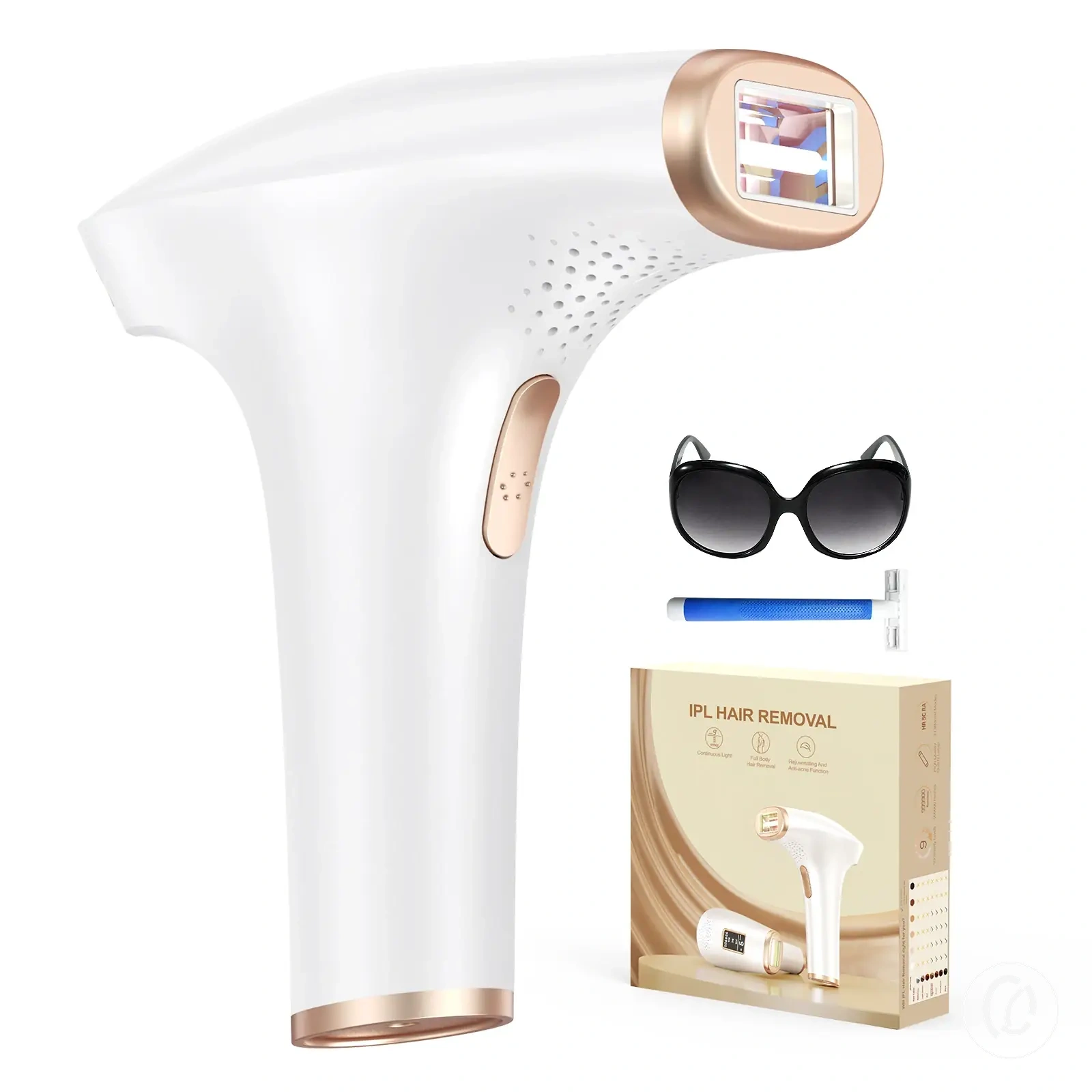
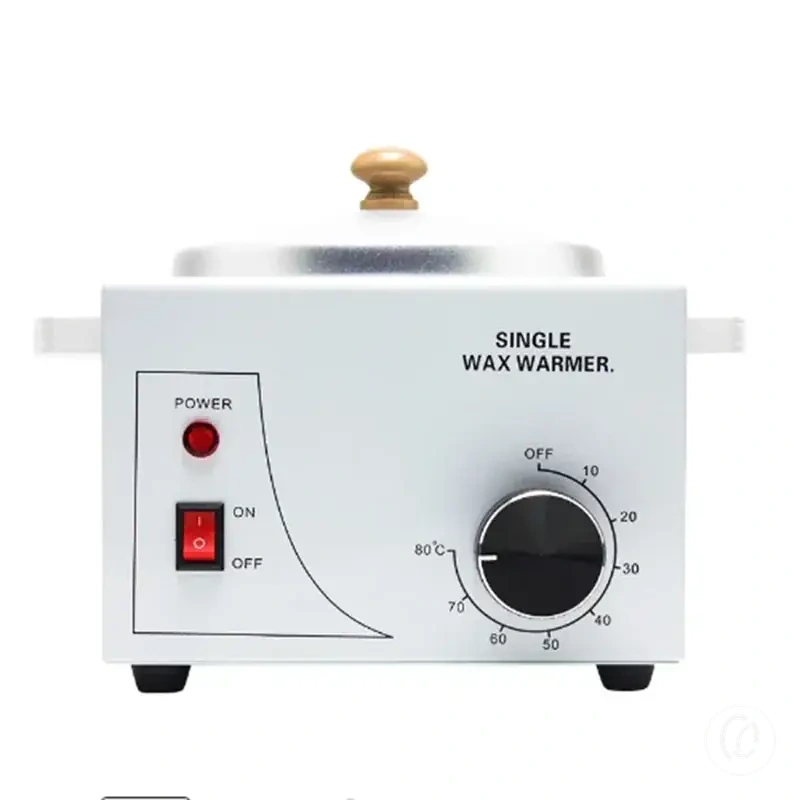
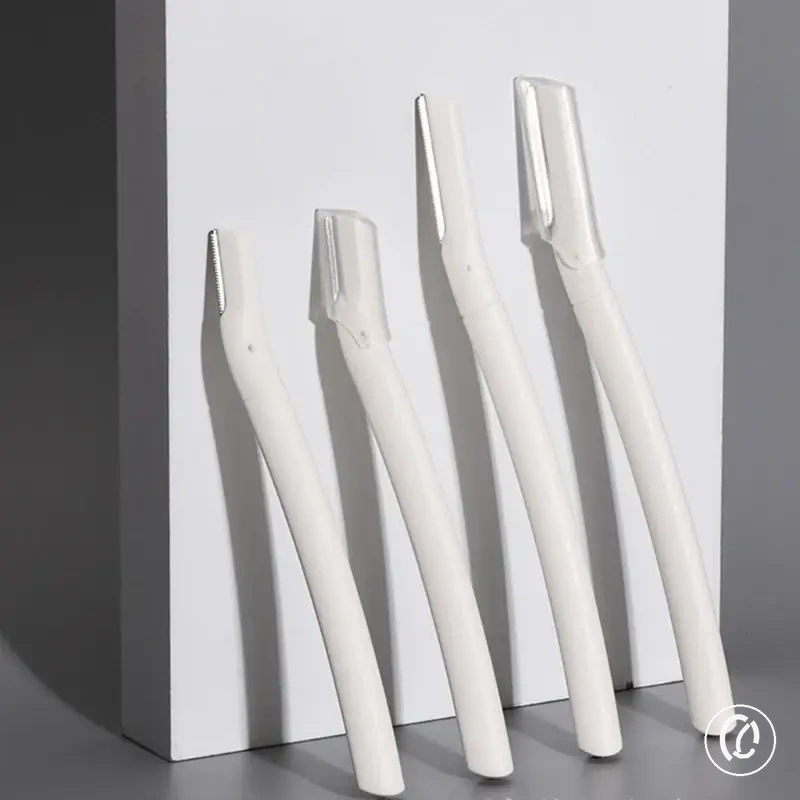
The products below are useful examples for comparing available options.
The products below are useful examples for comparing available options. Before buying, check that the compatibility criteria, key features, and product details match your needs.


- Removal goal: Choose at-home tools for temporary maintenance; consider professional removal when longer-term reduction is the objective.
- Hair suitability: Fine facial hair generally supports home maintenance, while persistent coarse facial hair supports professional assessment.
- Skin suitability: Previous irritation, uncertain skin response, or questions about light-based treatment compatibility favour professional guidance before treatment.
- Budget: Home tools suit users seeking lower upfront costs and self-managed maintenance, while professional removal suits those planning for multiple treatment sessions.
- Repeat treatment: Select at-home tools if regular touch-ups are acceptable; consider professional removal if reducing maintenance frequency is a higher priority.
- Risk tolerance and escalation: If uncertainty remains after applying these criteria, seek professional assessment before progressing to higher-intensity treatment.
As a next step, compare best at-home tool options by need if home maintenance remains the preferred direction after completing the decision checklist. If the checklist instead indicates recurring coarse growth, persistent irritation, or uncertainty about treatment suitability, professional assessment is the more appropriate next step. :contentReference[oaicite:4]{index=4}
As a next step, compare best at-home tool options by need if home maintenance remains the preferred direction after completing the decision checklist.
This chart shows the three main criteria to consider when deciding between at-home tools and professional facial hair removal, with specific recommendations for each scenario.