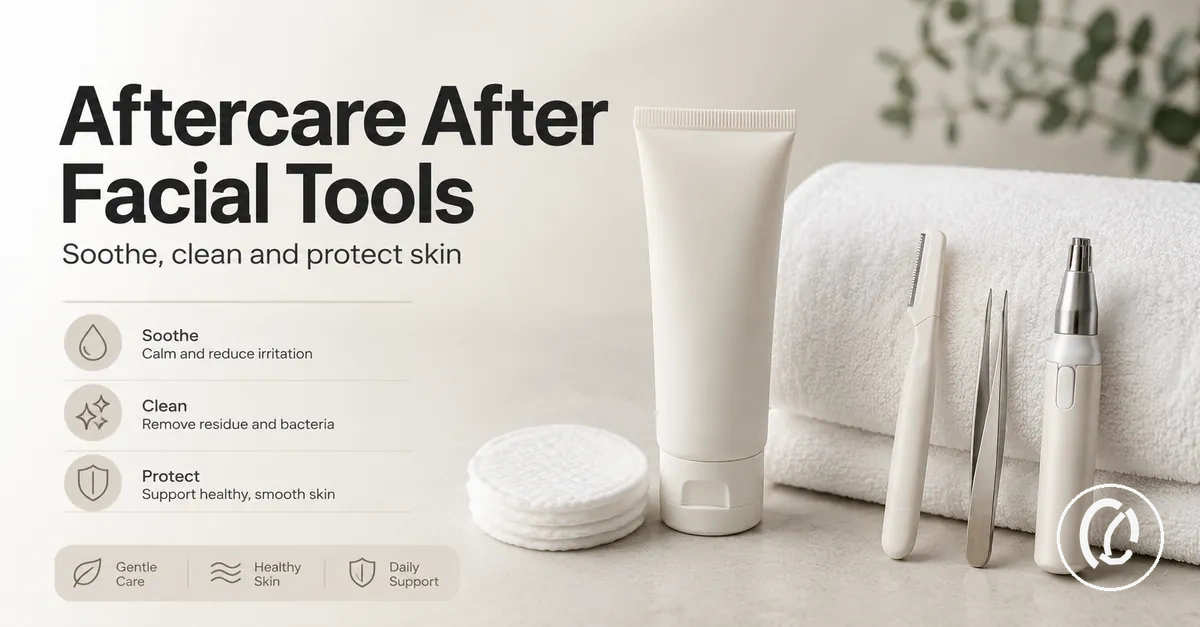
Facial Hair Removal Tool Aftercare for Calm, Protected Skin
Facial hair removal tool aftercare is gentle post-tool support that keeps freshly treated facial skin clean, comfortable, and protected while its immediate response settles. The appropriate care depends on the removal method, but the main safety goal is to reduce additional friction, heat, and irritating product exposure rather than promise a fixed recovery time.
Tool contact can leave treated skin with temporary sensitivity, redness, warmth, or tenderness.
Tool contact can leave treated skin with temporary sensitivity, redness, warmth, or tenderness. The American Academy of Dermatology advises soothing waxed skin with a cold pack when painful, avoiding hot baths and showers, and applying an oil-free or non-comedogenic moisturizer; its laser hair removal guidance also identifies a cool compress as an option for post-treatment discomfort. :contentReference[oaicite:0]{index=0} Cooling, a gentle moisturizer, and temporary avoidance of extra irritation therefore form the main aftercare pillars for supporting comfort and the skin barrier.
:contentReference[oaicite:0]{index=0} Cooling, a gentle moisturizer, and temporary avoidance of extra irritation therefore form the main aftercare pillars for supporting comfort and the skin barrier.
For example, after treating the upper lip with a facial hair removal tool, a person can monitor redness and sensitivity over the next 24 to 48 hours while using gentle soothing care and avoiding added heat or exfoliation on skin that still stings. The American Academy of Dermatology states that redness or swelling lasting more than 2 days after waxing should be assessed by a board-certified dermatologist, so persistent or worsening irritation falls outside routine aftercare and needs deeper troubleshooting or appropriate professional advice. :contentReference[oaicite:1]{index=1}
Table of Contents
How Facial Skin Can React After Hair Removal Tools
Facial skin can react to hair removal tools with temporary redness, warmth, sensitivity, tenderness, dryness, or small bumps because the treated area experiences brief friction or hair-follicle stress. According to the American Academy of Dermatology, mild redness and swelling are expected immediately after some hair removal methods and commonly improve within a few hours to 2 days, depending on the technique used. These short-lived changes represent the most common expected response rather than a caution signal.
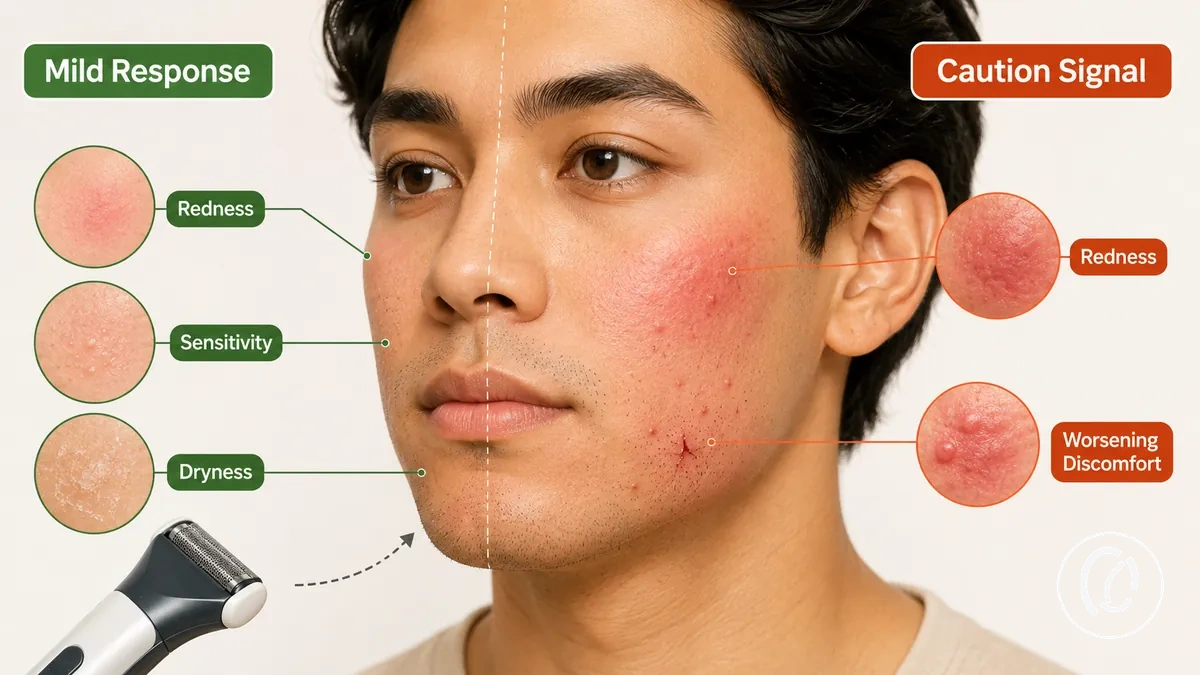
A skin response describes the type, intensity, duration, and aftercare implication of changes seen after using facial hair removal tools. The American Academy of Dermatology reports that redness and swelling after waxing that continue beyond 2 days should be evaluated by a board-certified dermatologist, while Mayo Clinic notes that mild swelling and discomfort after laser hair removal generally resolve within a few hours. These method-specific findings show that response duration depends on the removal technique, so aftercare should match the skin's condition rather than follow a fixed timetable.
A skin response describes the type, intensity, duration, and aftercare implication of changes seen after using facial hair removal tools .
Facial skin responses differ by both intensity and duration, making it useful to separate expected temporary reactions from changes that deserve more caution before choosing aftercare.
| Mild temporary response | Needs more caution |
|---|---|
| Redness, warmth, sensitivity, tenderness, dryness, or small bumps that gradually improve within the expected timeframe reported for the treatment method. | Redness, swelling, pain, or discomfort that continues to worsen, persists beyond the expected recovery period for that method, or is accompanied by broken skin. |
For example, if upper-lip redness becomes noticeably lighter during the first several hours after treatment, the response is following the temporary pattern described by Mayo Clinic for laser hair removal. If redness instead becomes more intense or remains beyond the expected timeframe for the specific hair removal method, it represents a caution signal and supports stopping further treatment until the skin is reassessed.
Expected Redness, Warmth, and Temporary Sensitivity
Expected redness, warmth, and temporary sensitivity are common mild responses that can appear on freshly treated skin after using facial hair removal tools. According to the American Academy of Dermatology, mild redness and swelling can occur after hair removal procedures and typically improve as the skin recovers, although recovery differs by hair removal method and individual skin response. These local signs may also include tenderness and dryness, and they should remain temporary rather than progressively worsening.
The illustration below highlights these mild local signs without suggesting a medical diagnosis or severe skin reaction.
Expected redness, warmth, and temporary sensitivity are easier to identify when grouped by how freshly treated skin feels. The illustration below highlights these mild local signs without suggesting a medical diagnosis or severe skin reaction.
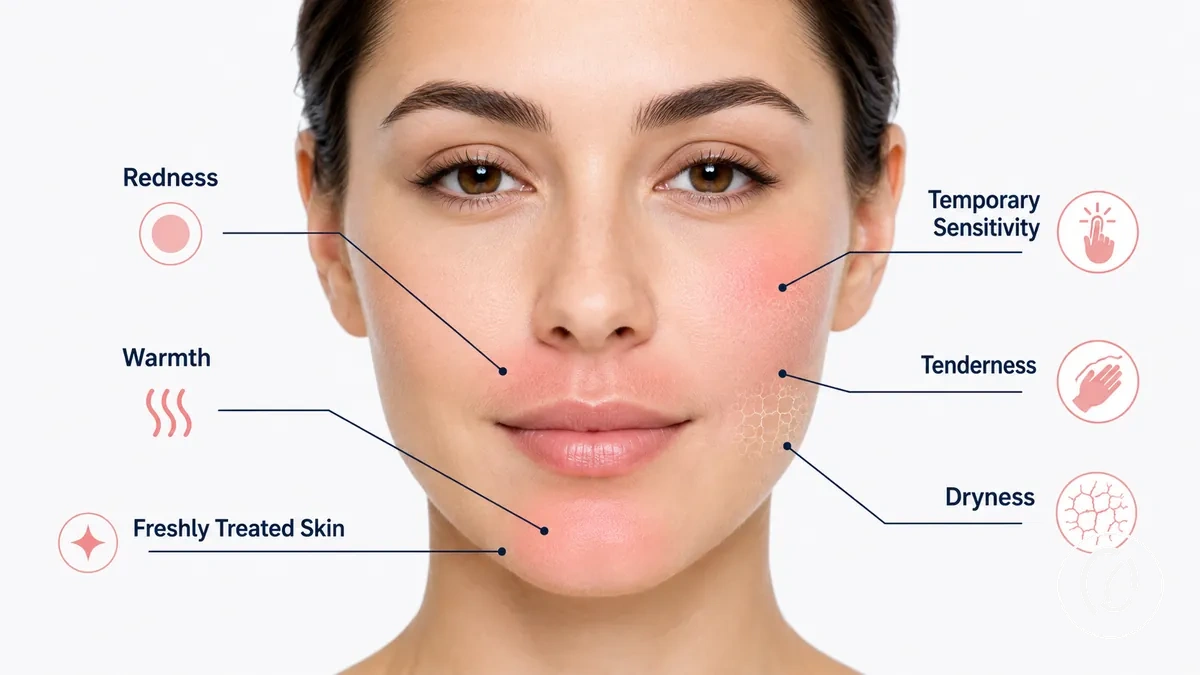
- Redness: Mild colour change limited to the treated area.
- Warmth: A temporary warm feeling caused by brief skin stimulation.
- Temporary sensitivity: Short-lived tenderness when the freshly treated skin is touched.
- Tenderness: Local discomfort confined to the area where hair was removed.
- Dryness: Mild tightness that reflects temporary skin barrier disruption and may improve with gentle moisture.
For example, using firmer tool pressure on a dense chin area can produce more noticeable redness and tenderness than using lighter pressure on fine upper-lip hair, while naturally sensitive skin can make temporary sensitivity feel more pronounced. This comparison illustrates how response level changes with tool pressure, hair density, and skin sensitivity without implying that every person experiences the same reaction.
Reactions That Need Extra Caution
Reactions that need extra caution after using facial hair removal tools are those that become more severe, persist instead of improving, or continue to worsen beyond the expected mild response. According to the American Academy of Dermatology, increasing pain, persistent redness or swelling, broken skin, a burning sensation, rash-like changes, and worsening irritation are not typical features of routine post-removal sensitivity and should be treated as caution signals rather than normal aftercare findings. These reactions remain non-diagnostic but indicate that routine aftercare is no longer sufficient and that the situation has crossed the caution threshold into troubleshooting.
The diagram below separates caution signals from mild temporary sensitivity to help identify when additional evaluation may be appropriate.
Reactions that need extra caution are best recognised by their severity, persistence, and worsening pattern rather than by a single symptom. The diagram below separates caution signals from mild temporary sensitivity to help identify when additional evaluation may be appropriate.
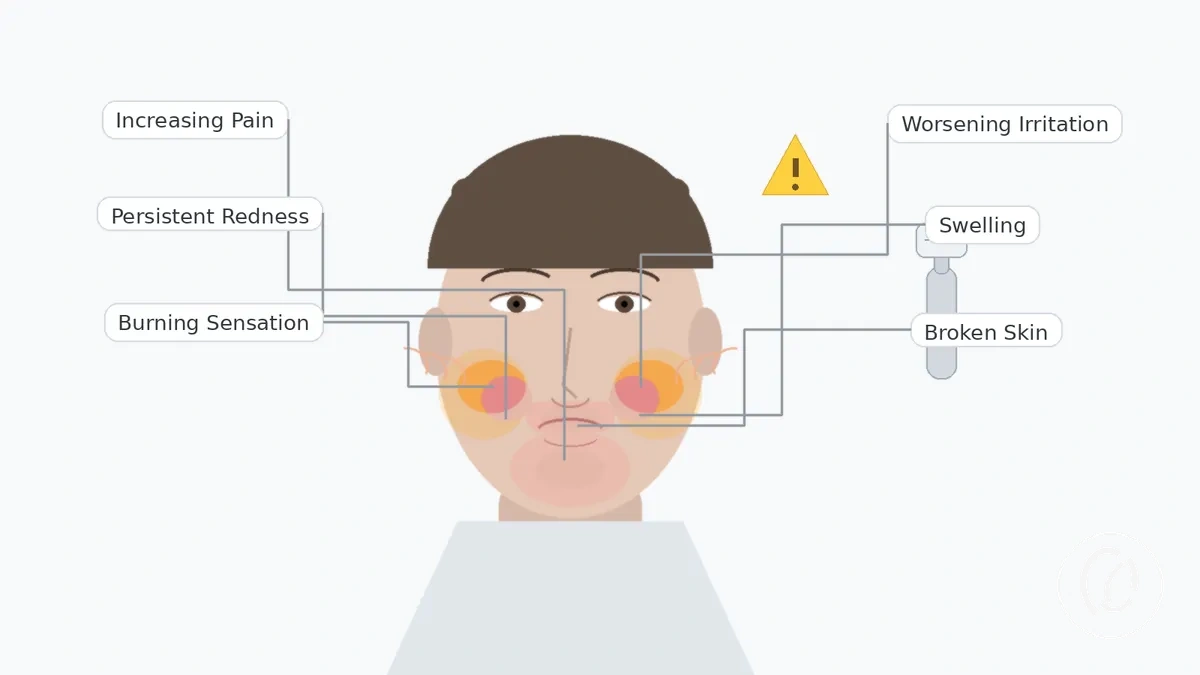
- Increasing pain: Pain becomes progressively stronger instead of easing after hair removal.
- Prolonged redness: Redness remains persistent rather than gradually fading as expected.
- Swelling: Swelling increases or extends beyond the immediate treated area.
- Broken skin: Cuts, cracks, or open areas appear on the treated skin surface.
- Burning sensation or rash-like changes: Burning discomfort or new widespread irritated patches develop instead of remaining a mild local response.
- Worsening irritation: Redness, tenderness, or discomfort continues to intensify rather than improve.
If these caution signals develop, pause extra skincare products, avoid additional facial hair removal until the skin has been reassessed, and simplify the routine to gentle skin care only. For example, if redness spreads, swelling increases, and discomfort continues instead of improving over the following day, the reaction should be considered persistent irritation rather than routine temporary sensitivity and belongs in a troubleshooting context or appropriate professional assessment instead of continued home aftercare.
Cooling and Soothing the Skin After Removal
Cooling and soothing methods can help reduce immediate post-removal discomfort when treated facial skin feels warm, tender, or sensitive, provided they are applied gently and within individual skin tolerance. According to the American Academy of Dermatology, a cool compress can help relieve discomfort after hair removal procedures, while direct ice application is not recommended because excessive cold may increase skin stress. Gentle cooling supports comfort without implying that any single method prevents irritation.
Gentle cooling supports comfort without implying that any single method prevents irritation.
Cooling and soothing the skin after removal depends on the cooling method, temperature, contact time, and skin tolerance. The photo below demonstrates gentle cooling and calming options for treated facial skin before choosing the most appropriate method for comfort.
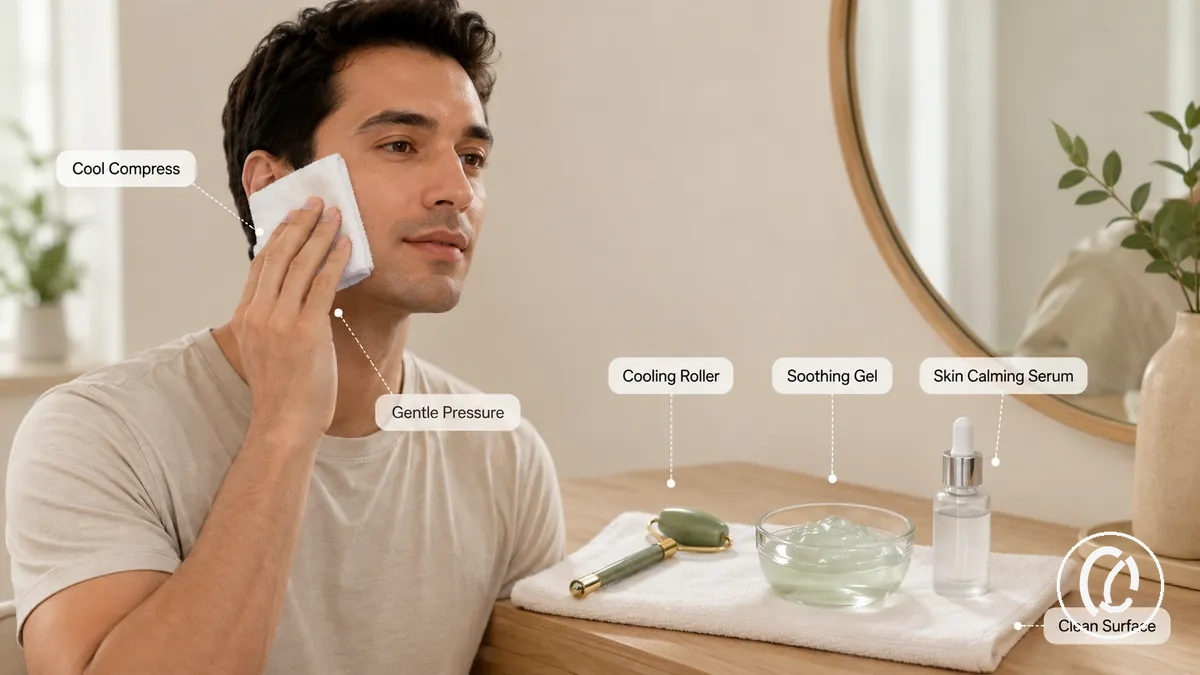
Cooling and soothing should prioritise gentle contact rather than maximum cold. A practical approach includes:
- Use a cool temperature: Apply a cool compress or chilled facial cooling roller. Avoid placing ice directly on treated facial skin.
- Limit contact time: Apply cooling for approximately 5 to 10 minutes at a time, then reassess skin comfort before repeating if needed. This duration is commonly recommended in dermatology aftercare guidance for temporary comfort support.
- Apply light pressure: Hold the cool compress or roller gently against a clean skin surface instead of rubbing the area.
- Choose a calming formula: If warmth has settled but the skin feels tight, a fragrance-free soothing gel or skin calming serum may improve comfort when well tolerated.
- Stop if stinging increases: If cooling or a topical product causes increased stinging, burning, or discomfort, discontinue that method and simplify aftercare until the skin settles.
If treated facial skin mainly feels warm immediately after hair removal, a cool compress is often the most suitable first choice. For example, applying a cool compress for 5 to 10 minutes before considering a facial cooling roller or fragrance-free soothing gel allows the skin response to be reassessed first, helping match the cooling method to skin feel rather than using multiple products unnecessarily.
Cool Compresses and Facial Cooling Rollers
Cool compresses and facial cooling rollers can help improve comfort after facial hair removal when treated skin feels warm or tender, provided they are used on a clean surface with a cool temperature, light pressure, and a short contact time. According to the American Academy of Dermatology, a cool compress may help relieve discomfort after hair removal procedures, while direct ice should not be applied to freshly treated skin because excessive cold can increase irritation risk. For both cooling methods, the safest approach is cool, clean, and light contact rather than prolonged or forceful application.
- Cleanliness: Use a clean cloth for a cool compress, and clean the facial cooling roller before it touches the treated skin.
- Temperature: Keep the compress or roller cool, not frozen, and avoid direct ice contact.
- Pressure: Apply light pressure or let the roller glide gently to minimise unnecessary friction.
- Contact time: Limit each cooling session to approximately 5 to 10 minutes, then reassess skin comfort before repeating if needed, consistent with commonly recommended dermatology aftercare guidance.
- Stop if discomfort increases: Discontinue use if cold sensitivity or rolling friction causes increasing discomfort instead of improved comfort.
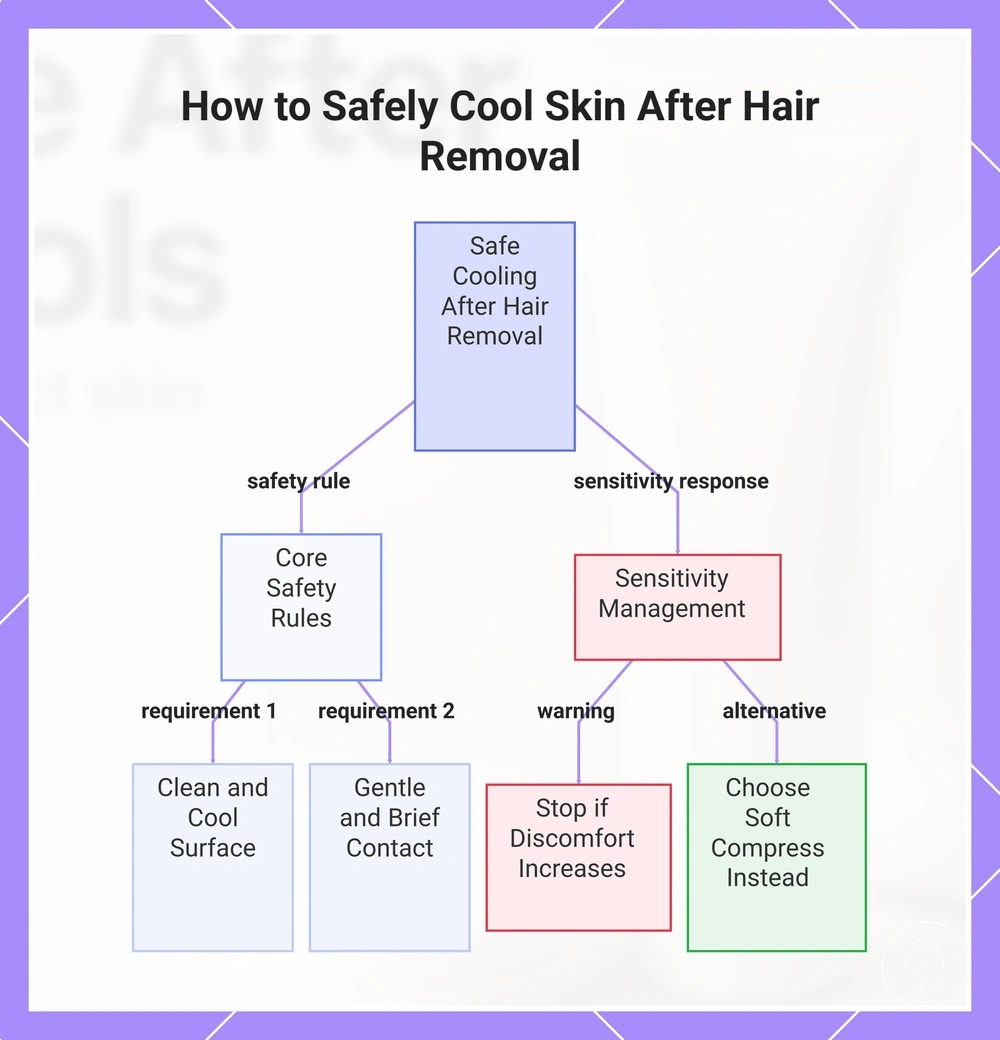
If your skin has cold sensitivity or reacts to rolling friction, choose a soft cool compress instead of a facial cooling roller or reduce the contact time. For example, using a clean cool compress for about 5 minutes before reassessing skin comfort provides gentle cooling with less friction than repeated rolling, making it a practical option for skin with lower cold tolerance.
If your skin has cold sensitivity or reacts to rolling friction , choose a soft cool compress instead of a facial cooling roller or reduce the contact time.
This chart shows the key safety guidelines for using cool compresses and facial cooling rollers after hair removal, including required practices and sensitivity management.
Soothing Gels and Skin Calming Serums
Soothing gels and skin calming serums can support comfort after facial hair removal when they have a lightweight texture, a fragrance-free or very low fragrance level, and are applied only if freshly treated skin tolerates them without increased stinging. According to the American Academy of Dermatology, fragrance-free moisturisers are preferred for irritated or sensitive skin because fragrance can increase irritation risk, while strong active ingredients such as retinoids and exfoliating acids should be delayed until the skin barrier has recovered. Formulas should feel gentle on freshly treated skin rather than increase discomfort. :contentReference[oaicite:0]{index=0}
Formulas should feel gentle on freshly treated skin rather than increase discomfort.
Before using a soothing gel or skin calming serum, check that the formula is compatible with your skin tolerance because even products marketed as calming can cause discomfort on recently treated skin. Use the following checklist to verify that the formula is more likely to provide lightweight comfort rather than increase the stinging risk.
- Texture: Choose a lightweight texture that spreads easily without vigorous rubbing.
- Fragrance level: Prefer fragrance-free or very low-fragrance formulas to reduce unnecessary irritation risk.
- Calming ingredients: Select bland formulas with moisturising and calming ingredients instead of exfoliating acids or retinoids.
- Skin feel: The formula should feel comfortable after application and should not increase warmth, tightness, or irritation.
- Stop if stinging: Discontinue the product if stinging or burning persists for several minutes or becomes more intense after application instead of improving. :contentReference[oaicite:1]{index=1}
A common misconception is that every serum is suitable immediately after hair removal. In practice, a soothing gel or skin calming serum provides lightweight support, whereas strong active treatments are commonly delayed for at least 24 to 48 hours, consistent with dermatology aftercare guidance, because freshly treated skin has a temporarily more vulnerable barrier and a higher stinging risk. :contentReference[oaicite:2]{index=2}
Moisture and Barrier Support After Facial Hair Removal
Moisture and barrier support after facial hair removal means maintaining the facial skin barrier by reducing dryness and tightness with a gentle moisturizer that the skin tolerates well. According to the American Academy of Dermatology, fragrance-free moisturizers are recommended for irritated or sensitive skin because they help reduce additional irritation while supporting skin hydration. Moisture support promotes barrier comfort after tool-based hair removal without guaranteeing barrier repair. :contentReference[oaicite:0]{index=0}
Moisture support promotes barrier comfort after tool-based hair removal without guaranteeing barrier repair.
When freshly treated skin feels dry or tight, the most appropriate solution is to choose a moisturizer based on its texture and ingredient tolerance rather than selecting the richest formula. Lightweight lotions suit skin that feels mildly tight, while simple fragrance-free creams may provide more comfort when dry patches are present. Strong active ingredients such as retinoids and exfoliating acids are commonly postponed for 24 to 48 hours after hair removal in dermatology aftercare guidance because the temporarily weakened facial skin barrier has a greater irritation risk. For example, if mild tightness remains 30 minutes after hair removal, applying a fragrance-free gentle moisturizer once the skin is clean and dry can improve comfort while avoiding unnecessary barrier stress during the first 24 to 48 hours. :contentReference[oaicite:1]{index=1}
Moisture support should match both skin feel and formula tolerance.
Moisture support should match both skin feel and formula tolerance. The table below compares common post-removal skin conditions with appropriate moisturizer textures to help maintain barrier comfort while reducing irritation risk.
| Skin feel | Moisture choice | Why it helps |
|---|---|---|
| Tight skin | Lightweight gentle moisturizer | Provides moisture support without leaving a heavy layer on freshly treated skin. |
| Dry patches | Fragrance-free cream | Helps retain moisture and reduces the feeling of dryness and tightness. |
| Comfortable skin | Light moisturizer if needed | Maintains barrier comfort without unnecessary product layering. |
| Easily irritated skin | Simple non-irritating formula with good ingredient tolerance | Reduces irritation risk by avoiding fragrance and strong active ingredients. |
Gentle Moisturizers for Freshly Treated Skin
Gentle moisturizers for freshly treated skin should have a fragrance-free or very low fragrance level, a lightweight to moderately occlusive texture, and good sensitivity fit to support barrier comfort while reducing the chance of a heavy or clogged-feel risk. According to the American Academy of Dermatology, fragrance-free moisturizers are preferred for irritated or sensitive skin because added fragrance can increase irritation. These qualities make a gentle moisturizer more suitable after facial hair removal without implying that one formula suits everyone. :contentReference[oaicite:0]{index=0}
- Fragrance level: Choose a fragrance-free or very low-fragrance formula to reduce unnecessary irritation on freshly treated skin.
- Weight and occlusiveness: A lightweight lotion is often more comfortable for skin that feels slightly tight, while a moderately occlusive simple cream may better support dry patches without creating an unnecessarily heavy skin feel.
- Application amount: Apply a thin, even layer to clean, dry skin instead of repeatedly layering large amounts, which can increase a clogged-feel risk with heavier formulas.
- Skin feel and when to pause: If warmth, stinging, or discomfort becomes more noticeable after application, stop using that moisturizer and switch to a simpler formula with better sensitivity fit.
If the skin feels tight, dry, or mildly flaky about 30 minutes after hair removal, applying a thin layer of a fragrance-free gentle moisturizer can improve comfort without making the skin feel unnecessarily heavy. Waiting at least 24 to 48 hours before reintroducing stronger active ingredients, as reflected in dermatology aftercare guidance, also helps minimise additional irritation while the skin settles. :contentReference[oaicite:1]{index=1}
Ingredients and Textures That Reduce Irritation Risk
Ingredients and textures that reduce irritation risk on freshly treated facial skin are those with gentle formula strength, a fragrance-free or very low fragrance profile, minimal alcohol feel, little or no exfoliating activity, and a lightweight or appropriately occlusive texture weight matched to the skin's condition. According to the American Academy of Dermatology, fragrance-free skin care products are preferred for irritated or sensitive skin because added fragrance can increase irritation, while strong active ingredients such as retinoids and exfoliating acids are commonly delayed until the skin barrier has recovered. Ingredient fit is therefore determined by tolerance, including concentration and current skin condition, rather than by a single ingredient alone. :contentReference[oaicite:0]{index=0}
Use these criteria to compare formulas before applying them to freshly treated facial skin.
Ingredients and textures that reduce irritation risk are judged by formula strength, fragrance, alcohol feel, and skin tolerance rather than marketing claims. Use these criteria to compare formulas before applying them to freshly treated facial skin.
- Formula strength: Choose a bland formula with gentle ingredient strength because higher concentrations of active ingredients are more likely to increase stinging or dryness on freshly treated skin.
- Fragrance and alcohol feel: Prefer fragrance-free or very low-fragrance formulas with minimal alcohol feel when the skin already feels sensitive, as these characteristics are generally associated with improved comfort and a lower chance of added irritation.
- Exfoliating activity: Delay active formulas containing exfoliating acids or retinoids for approximately 24 to 48 hours, consistent with dermatology aftercare guidance, to reduce added irritation while the skin barrier settles. :contentReference[oaicite:1]{index=1}
- Texture weight: A lightweight texture often feels more comfortable on mildly tight skin, while a moderately occlusive texture may better support dry areas without creating an unnecessarily heavy skin feel.
- Tolerance check: If stinging or dryness becomes more noticeable within the first few minutes after application, stop using that formula and choose a simpler bland formula with fewer potentially irritating ingredients.
Myth: Strong active formulas calm freshly treated skin faster. Truth: Bland formulas are generally better suited to temporary barrier support immediately after hair removal, whereas active formulas with greater exfoliating activity are commonly postponed for at least 24 to 48 hours because ingredient concentration, skin condition, and individual tolerance influence irritation risk. :contentReference[oaicite:2]{index=2}
What to Avoid While Facial Skin Is Freshly Treated
Freshly treated facial skin should avoid behaviours and products that increase friction, heat, or chemical stress because these factors increase irritation risk while the skin barrier is temporarily more vulnerable after hair removal. According to the American Academy of Dermatology, gentle aftercare includes avoiding irritating products and unnecessary heat exposure until the skin has recovered, while the evidence reviewed for this section also supports delaying strong active skincare for approximately 24 to 48 hours after treatment. The main avoidance groups are environment, skincare, touch, makeup, and repeat hair removal. :contentReference[oaicite:0]{index=0}
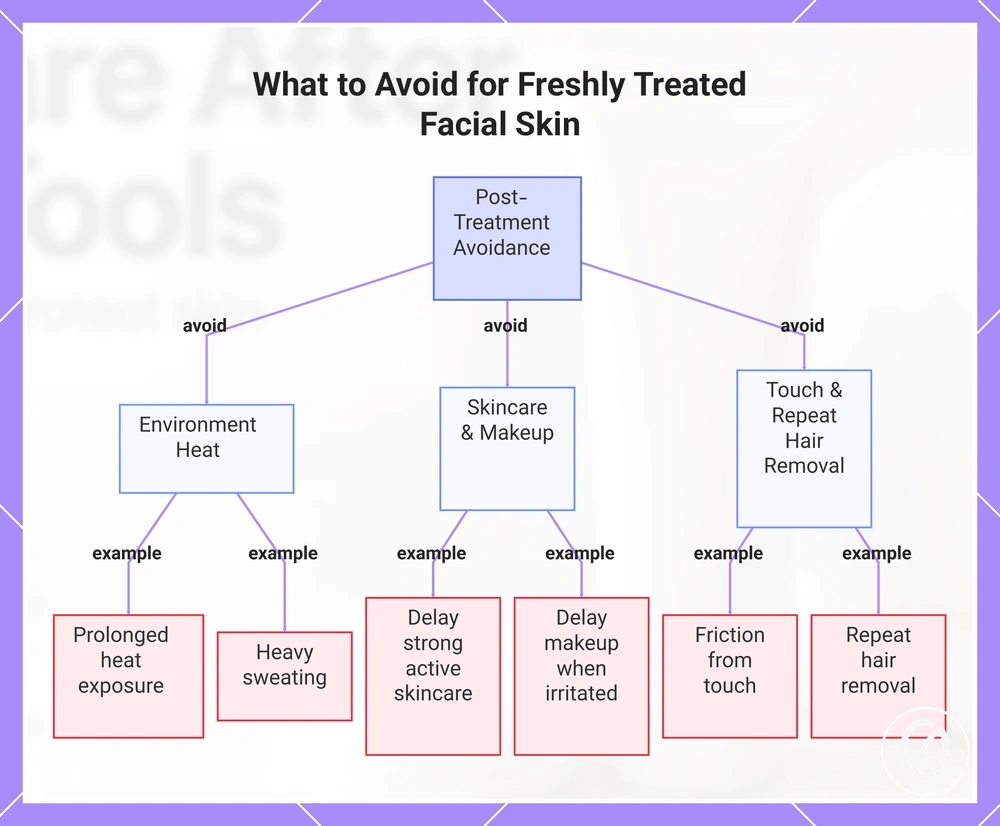
The main avoidance groups are environment, skincare, touch, makeup , and repeat hair removal .
Problem: Recently treated skin is more likely to become irritated when rubbing, heat, or strong skincare products are introduced before the skin barrier settles. Solution: Organise aftercare around reducing friction, heat, and chemical stress by following this checklist, which groups behaviours according to their effect on irritation risk during the first 24 to 48 hours. :contentReference[oaicite:1]{index=1}
- Environment: Avoid prolonged sun exposure, hot showers, saunas, and heavy sweating because excess heat and flushing can prolong temporary redness and discomfort.
- Skincare: Delay products containing fragrance, exfoliants, retinoids, or other strong active ingredients for approximately 24 to 48 hours to reduce chemical stress on freshly treated facial skin. :contentReference[oaicite:2]{index=2}
- Touch: Avoid rubbing, scratching, picking, or repeated extra contact because additional friction can increase tenderness and irritation risk.
- Makeup: Delay makeup if the treated area feels irritated or has broken skin. When makeup is resumed, use clean applicators to reduce contamination of recently treated skin.
- Repeat hair removal: Avoid repeat hair removal on the same area until the skin has settled because repeated treatment increases cumulative friction and irritation risk.
If your skin is naturally reactive or a hair removal tool required firmer contact to remove coarse hair, extend the recovery period before restarting active skincare or another hair removal session. For example, if noticeable redness remains after 24 hours, delaying exfoliating products and additional hair removal until the skin feels comfortable again reduces the chance of adding unnecessary irritation; before your next session, review safe use before and during removal. :contentReference[oaicite:3]{index=3}
This chart groups the main behaviors and products to avoid after hair removal to reduce friction, heat, and chemical stress on the skin barrier.
This chart groups the main behaviors and products to avoid after hair removal to reduce friction, heat, and chemical stress on the skin barrier.
Heat, Sun Exposure, and Heavy Sweating
Heat, sun exposure, and heavy sweating can increase discomfort and irritation risk on freshly treated facial skin because heat promotes warmth, flushing, and sweat, while sweat and friction can further irritate a temporarily sensitive skin barrier. According to the American Academy of Dermatology, reducing unnecessary heat exposure after hair removal helps minimise additional skin irritation, although the effect depends on exposure intensity, individual skin response, and friction rather than every heat exposure causing the same outcome. If the treated area still feels warm, tender, or flushed, delaying heat-related activities until the skin feels comfortable again is a sensible precaution instead of following a fixed time rule. :contentReference[oaicite:0]{index=0}
- Hot shower: Hot water and steam increase skin warmth and flushing, which can make recently treated skin feel more uncomfortable.
- Sauna: Intense heat encourages flushing and heavy sweating, increasing irritation risk while the skin remains sensitive.
- Direct sun: Sun exposure adds heat and UV exposure that can increase discomfort on freshly treated skin, particularly if redness is still present.
- Intense exercise: Heavy sweating and repeated facial movement increase moisture and friction, which can make irritation more noticeable.
Fragrance, Exfoliants, and Strong Active Ingredients
Fragrance, exfoliants, and strong active ingredients are more likely to cause stinging, dryness, or increased irritation risk on freshly treated facial skin because the skin barrier is temporarily more sensitive after hair removal. According to the American Academy of Dermatology, fragrance-free skin care is preferred for irritated skin, while stronger active ingredients such as retinoids and exfoliating acids are generally better reintroduced after the skin has settled to reduce additional irritation. The likelihood of discomfort depends on the skin's temporary condition, the concentration of the formula, and individual tolerance rather than every product causing the same reaction. :contentReference[oaicite:0]{index=0}
The likelihood of discomfort depends on the skin's temporary condition, the concentration of the formula, and individual tolerance rather than every product causing the same reaction.
Use extra caution with the following skincare categories while freshly treated facial skin is recovering:
- Fragrance and scented formulas: Added fragrance can increase stinging and sensitivity, making fragrance-free products a better choice during the early recovery period.
- Exfoliants and acids: Alpha hydroxy acids (AHAs), beta hydroxy acids (BHAs), and other exfoliating acids remove additional surface skin cells, which can aggravate irritation on recently treated skin.
- Retinoids: Retinoid products may increase dryness, peeling, and irritation before the skin barrier has recovered, so they are usually better delayed until the skin feels comfortable again.
- Strong vitamin C: Higher-strength or low-pH vitamin C formulas may produce temporary stinging on freshly treated facial skin and are generally better postponed until sensitivity has settled.
- Harsh toners and alcohol-heavy formulas: Products containing high levels of alcohol or strongly astringent ingredients can increase dryness and discomfort by removing additional surface moisture from temporarily sensitive skin.
Myth: A skincare product that is well tolerated every day should also be suitable immediately after hair removal. Truth: Freshly treated facial skin has temporarily reduced tolerance, so gentle formulas are usually the better first choice, while stronger active ingredients are commonly reintroduced only after the skin barrier has settled and stinging has resolved. :contentReference[oaicite:1]{index=1}
Rubbing, Picking, Makeup, and Extra Hair Removal
Rubbing, picking, makeup, and extra hair removal can interfere with calm post-removal recovery because friction, contamination, and repeated contact increase irritation risk while freshly treated facial skin is temporarily more sensitive after hair removal. According to the American Academy of Dermatology, reducing unnecessary friction and using gentle skin care after hair removal helps minimise additional irritation, while makeup and repeat hair removal should be guided by the skin's condition rather than a fixed waiting period. If redness, stinging, or broken skin is still present, limiting further manipulation until the skin feels comfortable helps reduce additional irritation risk. :contentReference[oaicite:0]{index=0}
- Rubbing and scratching: Repeated rubbing or scratching increases friction and can make redness, tenderness, and skin sensitivity more noticeable.
- Picking: Picking at flakes, scabs, or broken skin increases contamination risk and can interfere with normal skin recovery.
- Heavy makeup and dirty applicators: Applying heavy makeup with dirty applicators increases repeated contact and contamination risk if the treated area remains red, stinging, or has broken skin.
- Extra hair removal: Repeat removal or repeat tool use on skin that has not settled increases friction and repeated contact, making worsening discomfort more likely.
- Unnecessary touching: Frequent touching transfers oils, dirt, and microbes from the hands to freshly treated skin, increasing contamination risk without improving recovery.
The First 24 to 48 Hours After Facial Hair Removal
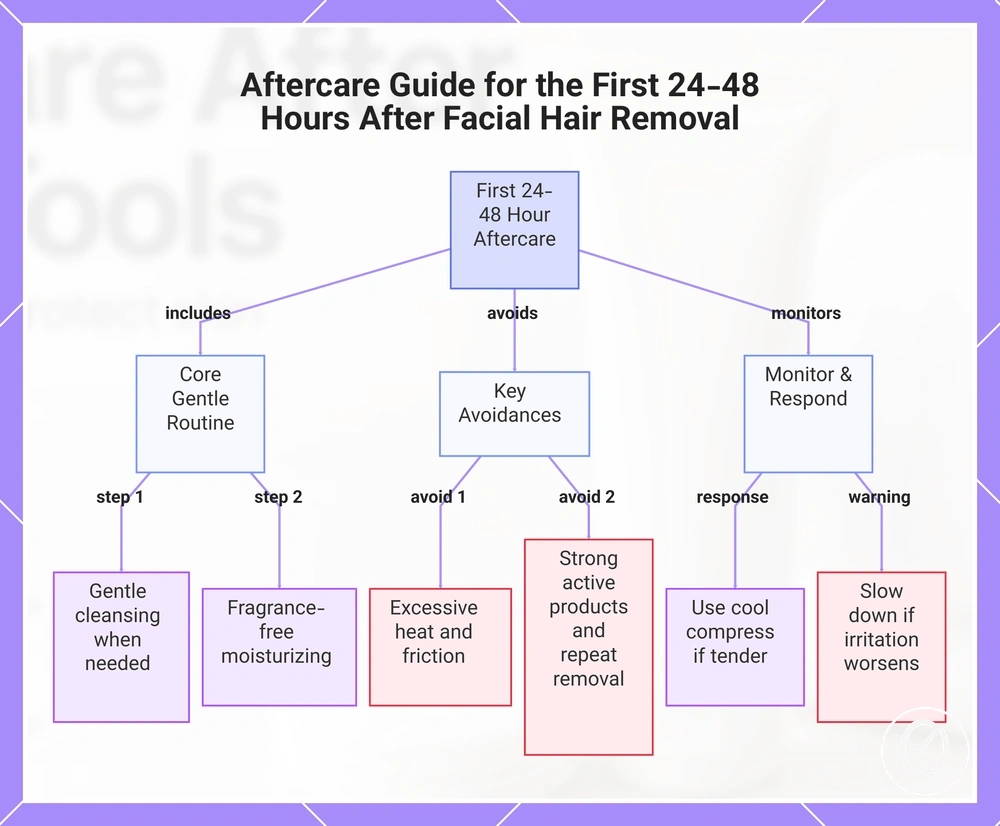
The first 24 to 48 hours after facial hair removal are a practical early-aftercare window that prioritises lighter care because freshly treated facial skin is temporarily more sensitive to friction, heat, and strong skincare products. According to the American Academy of Dermatology, gentle cleansing, fragrance-free moisturising, and avoiding unnecessary irritation help support skin comfort after hair removal. The 24 to 48-hour period is a flexible caution window rather than a guaranteed healing timeline, so each step should be adjusted according to skin tolerance. :contentReference[oaicite:0]{index=0}
Problem: Returning to a full skincare routine too quickly can increase irritation risk .
Problem: Returning to a full skincare routine too quickly can increase irritation risk. Solution: Organise aftercare by timing and skin response instead of following a rigid schedule.
- Immediately after facial hair removal: Keep the treated area clean and, if it feels warm or tender, use gentle cooling, such as a cool compress, for approximately 5 to 10 minutes, consistent with commonly recommended dermatology aftercare guidance. :contentReference[oaicite:1]{index=1}
- During the first day: Perform gentle cleansing with a mild fragrance-free cleanser only when needed, avoiding vigorous rubbing or exfoliating cleansers.
- After cleansing: Apply a fragrance-free moisturizing product to help reduce dryness and tightness while supporting skin comfort.
- Throughout the first 24 to 48 hours: Continue avoidance of excessive heat, friction, exfoliating acids, retinoids, and repeat hair removal while the treated skin remains sensitive.
- Routine reintroduction: Gradually resume your normal skincare routine only after redness, stinging, and tenderness have settled, introducing stronger active products one at a time instead of restarting everything together. :contentReference[oaicite:2]{index=2}
If redness or mild tenderness is improving during the first 24 to 48 hours, continue the gentle routine until the skin feels comfortable. If redness worsens, stinging increases, or new irritation risk signs such as broken skin appear, slow down, stop extra skincare, continue gentle care only, and seek advice from a qualified healthcare professional if symptoms continue or become more severe. :contentReference[oaicite:3]{index=3}
If redness or mild tenderness is improving during the first 24 to 48 hours , continue the gentle routine until the skin feels comfortable.
This chart shows the essential aftercare steps, key avoidances, and how to respond to skin signals during the first 24-48 hours after facial hair removal.
Washing, Showering, and Keeping the Face Clean
Washing, showering, and keeping a clean face after facial hair removal should remove sweat, oil, and surface debris without adding friction to treated facial skin. According to the American Academy of Dermatology, gentle cleansing with a mild, fragrance-free cleanser and avoiding unnecessary irritation helps support skin comfort after hair removal. The main rule is to use lukewarm water, a gentle cleanser, light pressure, and minimal towel contact during cleansing. :contentReference[oaicite:0]{index=0}
Problem: Hot showers, vigorous washing, and rough drying can increase irritation on recently treated facial skin.
Problem: Hot showers, vigorous washing, and rough drying can increase irritation on recently treated facial skin. Solution: Follow these low-friction cleansing steps, and if cleansing causes persistent stinging, increasing discomfort, or the skin has broken areas, stop rubbing, rinse gently with lukewarm water, and seek advice from a qualified healthcare professional if symptoms continue or worsen. :contentReference[oaicite:1]{index=1}
- Use lukewarm water: Wash or shower with lukewarm water instead of prolonged hot water or heavy steam exposure because excess heat can increase temporary redness and discomfort.
- Cleanse gently: Apply a gentle cleanser with clean fingertips using light pressure, allowing the cleanser to glide over treated facial skin rather than rubbing repeatedly.
- Rinse thoroughly: Rinse away the cleanser with lukewarm water, letting the water flow over the treated area instead of using repeated wiping motions, particularly if mild tenderness is still present.
- Pat dry: Keep towel contact brief by gently patting the skin dry with a clean, soft towel instead of wiping, helping reduce friction while maintaining comfort after cleansing.
Returning to Normal Skincare Gradually
Returning to normal skincare after facial hair removal should happen gradually and only after the skin shows readiness signals, including reduced stinging, reduced redness, and comfortable tolerance of a simple moisturizer. According to the American Academy of Dermatology, fragrance-free moisturizers and gentle skin care are appropriate while the skin remains sensitive, whereas stronger products should only be reintroduced after the skin has settled. A gradual return guided by skin feel and product tolerance is safer than restarting a complete routine at once. :contentReference[oaicite:0]{index=0}
A gradual return guided by skin feel and product tolerance is safer than restarting a complete routine at once.
If gentle cleansing and a simple moisturizer no longer cause discomfort, the following checklist helps confirm whether the skin is ready for a gradual return to a regular routine. Continue using a simple moisturizer if it remains comfortable, but delay an exfoliant or another stronger active ingredient until the skin continues to tolerate basic care without renewed irritation. :contentReference[oaicite:1]{index=1}
- Reduced redness: Redness has largely settled and does not become more noticeable after cleansing or moisturizing.
- Reduced stinging: A gentle cleanser and simple moisturizer no longer cause persistent stinging, burning, or increasing discomfort.
- Dryness improving: Tightness or dry patches continue to improve with a simple moisturizer, indicating better barrier comfort before introducing stronger formulas.
- Formula strength: Reintroduce products from the mildest formula strength to stronger formulas, adding only one new active ingredient at a time.
- Patch-style caution: Apply one returning product to a small facial area first and observe comfortable tolerance before using it across the full treated area.
Aftercare for Sensitive Facial Skin
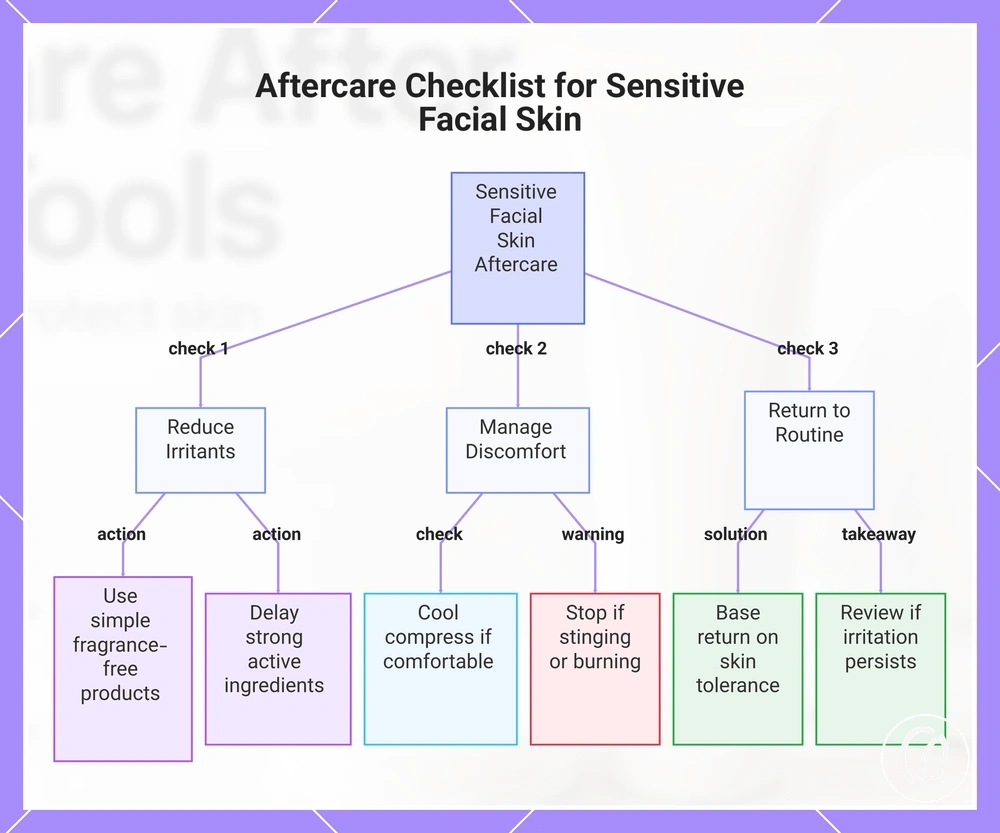
Sensitive facial skin requires aftercare that reduces exposure to friction, heat, and irritating skincare after using hair removal tools, because reactive skin has a temporarily lower tolerance while the skin barrier recovers. According to the American Academy of Dermatology, gentle cleansing, fragrance-free moisturising, and avoiding unnecessary irritants help reduce additional discomfort after hair removal. For this reason, aftercare for sensitive facial skin should rely on simpler, narrower choices rather than introducing multiple products during the early recovery period. :contentReference[oaicite:0]{index=0}
For this reason, aftercare for sensitive facial skin should rely on simpler, narrower choices rather than introducing multiple products during the early recovery period.
If your skin usually reacts after shaving, waxing, threading, dermaplaning, or when trying new skincare, minimise extra tool contact, pressure, and unnecessary ingredients until the skin feels comfortable again. Aftercare for sensitive facial skin depends on reducing possible irritants, so use the following checklist to prioritise formula simplicity, cooling tolerance, and fragrance avoidance. For example, if the treated area still feels warm after hair removal, a cool compress applied for approximately 5 to 10 minutes, consistent with common dermatology aftercare guidance, may improve comfort without adding further friction. :contentReference[oaicite:1]{index=1}
- Product simplicity: Continue using a simple fragrance-free cleanser and a basic moisturiser that your reactive skin already tolerates instead of introducing multiple new skincare products.
- Cooling tolerance: Use a cool compress for approximately 5 to 10 minutes only if it feels comfortable, and stop if cooling increases stinging or discomfort.
- Fragrance avoidance: Avoid fragranced skincare and scented facial products until the treated skin no longer feels irritated because fragrance can increase irritation in sensitive facial skin.
- Delayed actives: Delay exfoliating acids, retinoids, and other strong active ingredients until gentle cleansing and moisturising no longer cause stinging or redness.
- Stop if stinging: If a product causes persistent burning, increasing redness, or worsening discomfort after application, stop using it and return to the simplest routine your skin comfortably tolerates.
Problem: Returning to a full skincare routine too early can increase irritation risk in reactive skin. Solution: Base your delayed routine return on skin tolerance rather than the calendar, and review sensitive skin considerations if you regularly experience irritation after hair removal or when introducing new skincare products. :contentReference[oaicite:2]{index=2}
Problem: Returning to a full skincare routine too early can increase irritation risk in reactive skin .
This chart shows the key aftercare steps for sensitive facial skin after hair removal, grouped into reducing irritants, managing discomfort, and avoiding premature return to full routine.
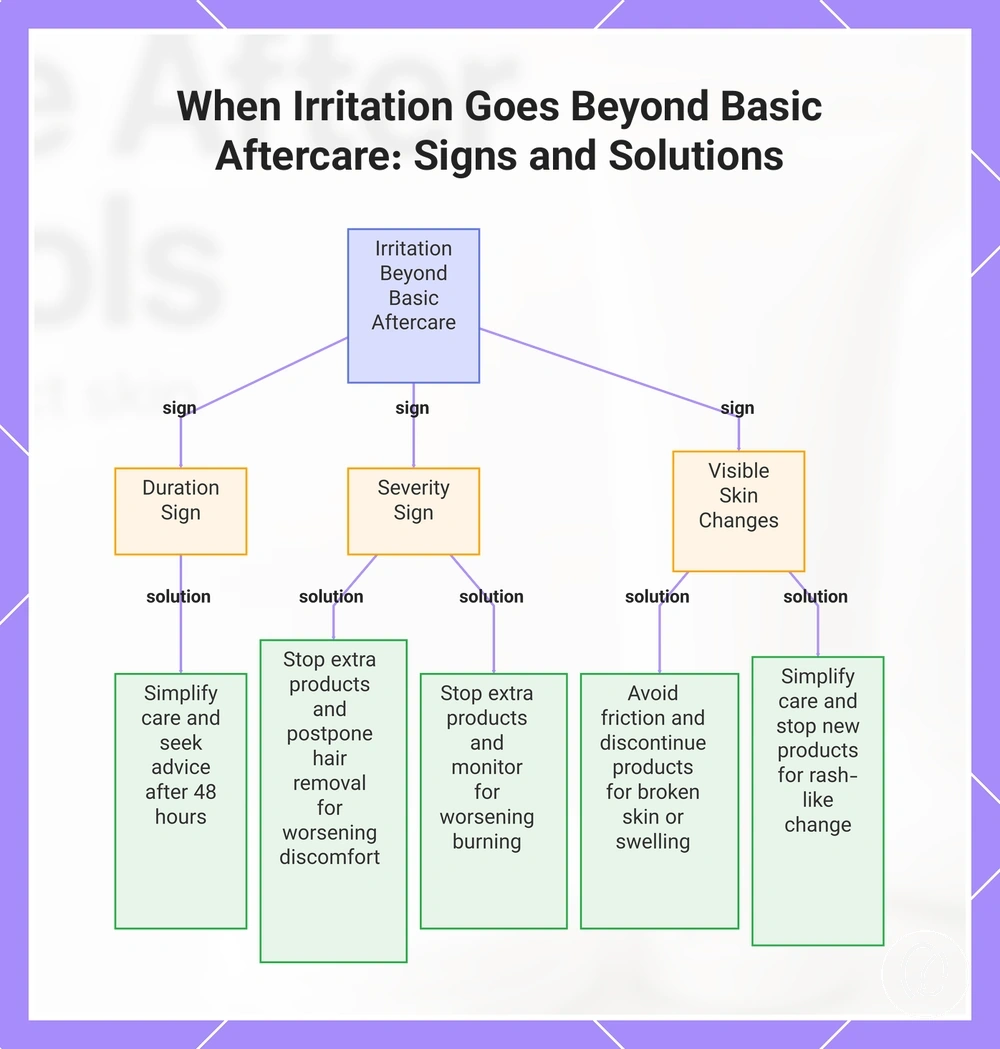
When Irritation Goes Beyond Basic Aftercare
Irritation that is persistent, worsening, or clearly different from normal temporary sensitivity should no longer be managed with basic aftercare alone and instead requires a cautious troubleshooting path. According to the American Academy of Dermatology, mild redness and sensitivity after hair removal typically improve with gentle care, whereas symptoms that become more severe, involve broken skin, or continue without improvement require a different response and may warrant professional assessment. The purpose of the checks below is to separate expected short-term recovery from persistent or unusual irritation. :contentReference[oaicite:0]{index=0}
The purpose of the checks below is to separate expected short-term recovery from persistent or unusual irritation.
Problem: When irritation goes beyond basic aftercare, continuing the same routine or adding more skincare products can make it harder to recognise whether the skin is improving. Solution: Use the following diagnostic checklist to match each irritation sign with a safe next action based on its duration, severity, and visible skin changes. For example, if redness and tenderness remain unchanged after approximately 48 hours despite simplified care, stop introducing additional skincare products and seek appropriate advice rather than restarting active ingredients. :contentReference[oaicite:1]{index=1}
- Duration: If irritation continues for more than 48 hours without noticeable improvement, simplify care, avoid unnecessary products, monitor the skin, and seek appropriate advice if symptoms persist.
- Severity: If discomfort becomes progressively stronger instead of gradually improving, stop extra skincare products and postpone further hair removal until the skin has recovered.
- Broken skin: If broken skin develops, avoid additional friction, keep the area clean with gentle care, and seek appropriate advice instead of continuing routine aftercare.
- Swelling: If swelling increases, spreads, or does not begin to settle, discontinue non-essential skincare products and seek appropriate advice.
- Rash-like change: If a new rash-like change appears or spreads after hair removal, stop introducing new products, simplify care, and seek appropriate advice rather than attempting self-treatment.
- Worsening discomfort: If burning, stinging, or tenderness continues to worsen despite simplified care, stop extra skincare, monitor the affected area, and seek appropriate advice.
Scenario: If these caution signs are present, detailed explanations of possible causes and management belong in the dedicated guide to irritation after facial hair removal, because persistent or unusual irritation requires a separate troubleshooting approach rather than routine aftercare alone. :contentReference[oaicite:2]{index=2}
This chart shows the key signs that indicate irritation requires troubleshooting beyond basic aftercare, and the recommended actions for each sign.
This chart shows the key signs that indicate irritation requires troubleshooting beyond basic aftercare, and the recommended actions for each sign.